A call is being made for Samsung to reinstate the SD card slot in the Galaxy S26.
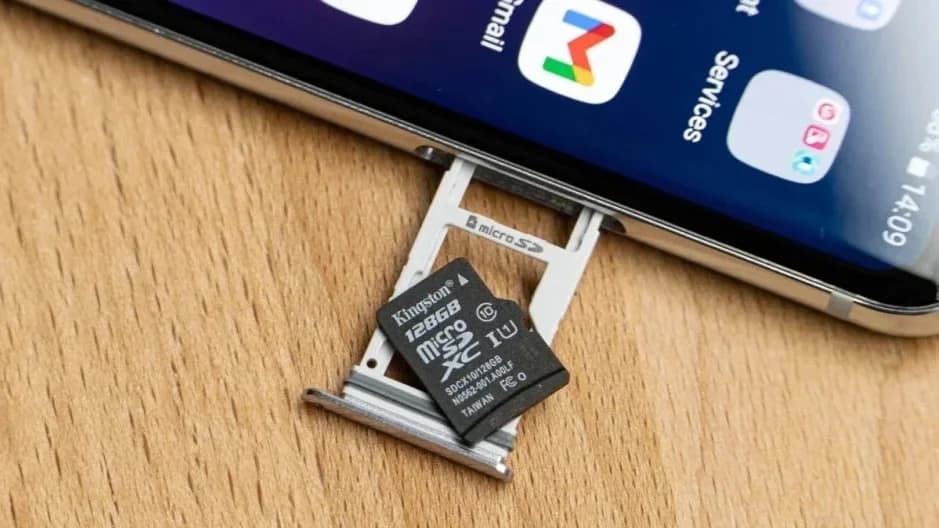
The microSD card slot might be making a surprising comeback on smartphones!
It may be time for Samsung to reinstate the microSD card, and for several compelling reasons. First, here’s a look at the timeline of microSD card slots in smartphones.
The Galaxy S21 was the first flagship series to omit the microSD card. It has been almost a half-decade since the slot was removed from premium Galaxy phones. Subsequent models continued this trend, and the microSD card was seemingly gone for good. As a result, many other brands began excluding the microSD card slot from their smartphones, leaving only a few like Sony's Xperia series. Today, it's rare to find a popular flagship with a microSD card slot, besides the Xperia. What led to this change?
In 2021, when Samsung eliminated the microSD card slot from the Galaxy line, reasons included a sleeker, more contemporary design, more internal space for larger batteries, and the relatively slow read/write speeds of microSD cards compared to onboard storage.
Another argument was that an additional slot might affect the phone's IP rating, making it more vulnerable to water damage. However, this is questionable since many phones with microSD card slots share it with the SIM slot and still maintain an IP rating.
Some believed that there were hidden reasons for this decision. Without a microSD card slot, consumers have to purchase more expensive phones with greater internal storage to keep content on their devices instead of relying on cloud storage. While these are valid points, one detail contradicts them.
The Galaxy A55, along with other A-series models, still feature a microSD card slot. These phones share design similarities with the flagship S-series, have an IP rating, and sometimes even have larger batteries than S-series phones from the same year. It seems odd that a more affordable A-series phone offers a feature absent in the company's top-tier models.
Could speed be the issue? Can slow microSD cards cause lag in fast flagships? Not necessarily, as there is a recent microSD card standard.
The microSD Express standard, announced by the SD Association in late 2023, isn't exactly new but has gained traction recently. While it initially went unnoticed in the smartphone market, it is now being adopted by more companies and devices.
Samsung launched its P9 microSD card on October 30, created specifically for the Nintendo Switch 2. The P9 Express has sequential read speeds of up to 800 MB/s, comparable to other top-performing microSD Express cards. This microSD Express card uses the PCIe 3.0 x1 interface, boosting transfer performance by about four times compared to standard microSD UHS-1 cards. PCIe 4.0 could theoretically enable speeds of up to 2000 MB/s.
In comparison, Samsung's UFS 4.0, used in many Galaxy flagships, provides read speeds of 4200 MB/s and write speeds of 2800 MB/s. The speed argument may soon become less relevant.
Samsung, a major memory chip producer, has the knowledge, production capacity, and resources to integrate a microSD Express slot in future models like the Galaxy S26 and offer compatible cards. There are no technical barriers to this, and the microSD Express standard supports older microSD standards. Samsung still produces phones with a microSD card slot (like the Galaxy A16), making production adjustments easier. While many would welcome this change, pricing is a concern.
The 256GB and 512GB P9 microSD Express cards cost $54 and $99, respectively. The question is: would consumers purchase a 1TB Galaxy S26 Ultra if the 256GB version offered a much cheaper microSD card slot option?
Given technological advancements, incorporating microSD card slots back into smartphones seems reasonable. What are your thoughts on this? Would you like the Galaxy S26 series to include a microSD card slot?