A Huawei executive claims the company has surpassed the U.S. by succeeding independently.
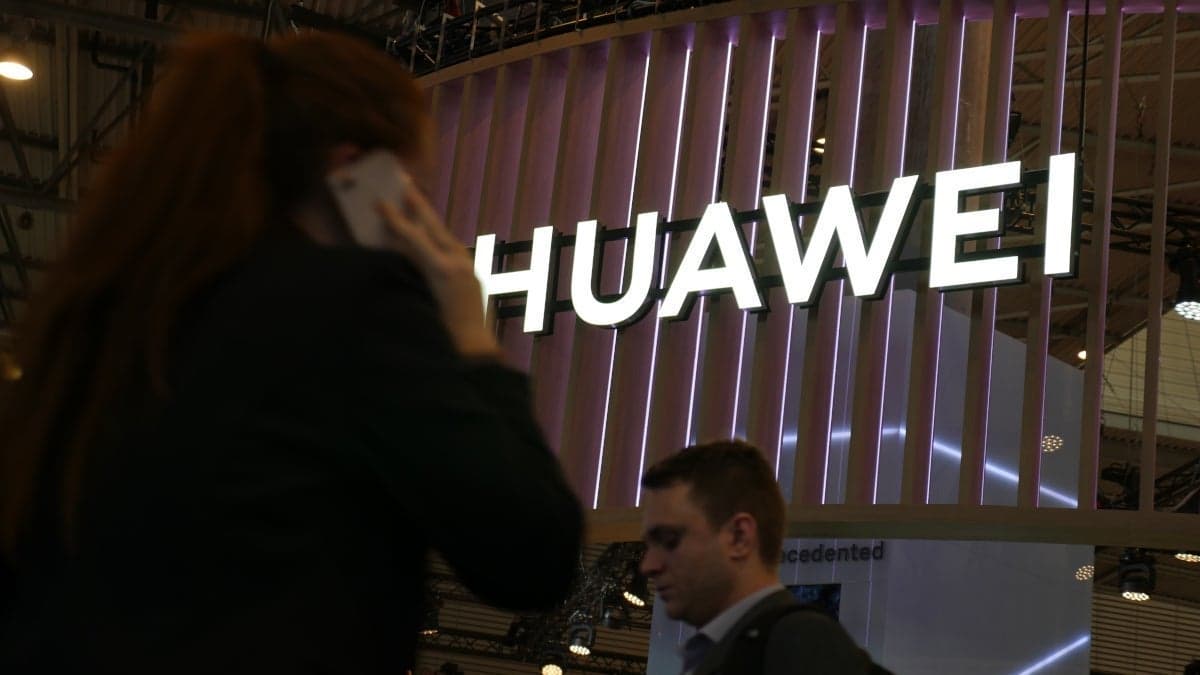
Despite U.S. sanctions, Huawei is beginning to get its groove back.
In 2012, a U.S. House Intelligence Committee draft report identified Huawei and ZTE as national security threats. Huawei consistently denied allegations of spying on U.S. consumers and businesses through its devices. In 2019, the company was added to the Department of Commerce's Entity List, which restricts U.S. companies from exporting "U.S.-origin" technology to listed entities without government licenses. This action limited Huawei's access to its U.S. supply chain, including Google, preventing it from using the proprietary Android version, though it could still use the open-source version.
The open-source Android lacks the Play Store and Google's default apps. A year after the Entity List placement, the U.S. Commerce Department modified the Foreign-Produced Direct Product Rule, preventing Huawei from acquiring advanced chips made using American equipment. Despite predictions of Huawei's decline due to these sanctions, the company led in global smartphone shipments in Q2 2020 but saw a downturn by Q4 2020.
Huawei adapted by creating an ecosystem independent of the U.S., according to Tao Jingwen, including the HarmonyOS operating system and its App Gallery. By 2021, with its Huawei Mobile Services ecosystem, the company seemed less reliant on Google. However, the absence of Google services significantly affected Huawei outside China, especially in Europe. The company also needed 5G chips. After exhausting its supply of 5G Kirin application processors (AP), Qualcomm was licensed to supply Huawei with 4G-compatible APs.
Huawei circumvented sanctions again in August 2023 with the Mate 60 Pro, its first flagship since 2020 powered by a Huawei-designed AP, the Kirin 9000S. This chipset, made by SMIC using a 7nm process, restored 5G support to Huawei's flagship line for the first time since the Mate 40 series. Tao stated that China's tech industry's self-reliance, inspired by Huawei's resilience, could enable it to surpass the U.S. in AI applications due to China's economy. Huawei continues to resist U.S. control efforts as it aims to regain its leading position in smartphone shipments from Q2 2020.
Tao believes the Chinese tech sector's commitment to self-sufficiency, driven by Huawei's ability to succeed without U.S. suppliers, will allow China to overtake the U.S. in AI applications, supported by the country's economy. Huawei is pushing back against U.S. attempts to exert more control as the company strives to return to the top of the smartphone shipment rankings, where it was in Q2 2020, before the U.S. sanctions took full effect.
A new book titled "Iconic Phones: Revolution at Your Fingertips" is set to release in a few months. It explores the technological revolution of the 21st century.