A new camera phone is expected to be the best in 2025 based on recent findings.
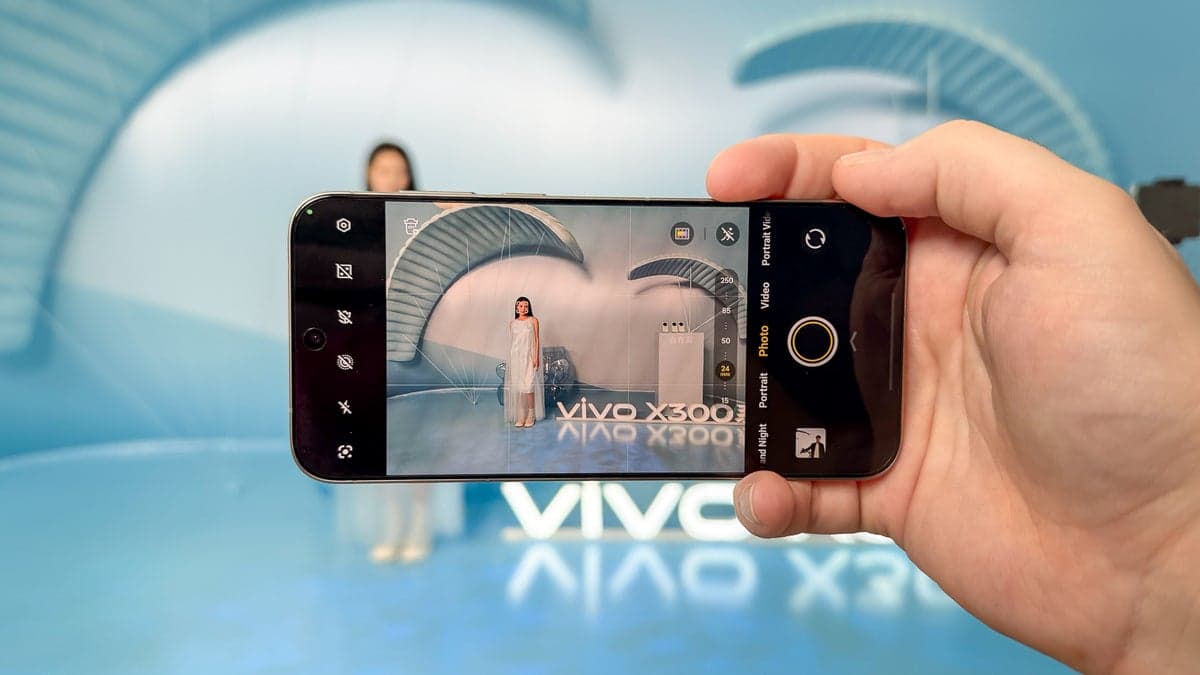




We've tested countless phone cameras this year, but none made us want to keep shooting like this one did.
## A Camera System That's Balanced and Consistent
When comparing the specifications of the Vivo X300 Pro and the Vivo X200 Ultra, the similarities in their camera systems are apparent.
Both phones feature a primary 50-megapixel camera with a sizable 1/1.28-inch sensor, a 50-megapixel ultra-wide lens, and a 200-megapixel periscope telephoto lens. Each lens utilizes Zeiss T* coatings to improve light transmission while minimizing flare.
Vivo has also incorporated the new Vivo Imaging Chip VS1 to manage color processing, tone mapping, and multi-frame HDR.
This results in consistent image quality across the zoom range. Shifting from 1x to 10x or even 100x magnification maintains similar colors and processing, creating a uniform look.
### Is This the Ultimate Focal Range?
The X300 Pro's periscope camera stands out as a key feature.
At 3.5x zoom, images maintain sharpness and realism, avoiding the over-processed look common in telephoto shots. The 10x images are particularly impressive, offering crisp detail, natural colors, and balanced contrast. The viewfinder remains stable at 10x, aiding precise framing. Even the 100x hybrid zoom is useful for reading signs or capturing distant details.
The external Zeiss telephoto converter pushes the zoom capabilities even further, achieving an equivalent of 5400mm. The magnification power is remarkable; it's possible to discern light fixtures inside a window across a river. This capability highlights the potential of mobile photography when manufacturers are willing to experiment.
While third-party camera accessories exist for iPhone and Galaxy devices, the Vivo X300 Pro Photographer Kit demonstrates the possibilities of a company-designed camera tool ecosystem.
### Excellent Low-Light Performance
Vivo's expertise in low-light photography is evident in the X300 Pro, showcasing mature processing and hardware capabilities.
In images, colors are rendered with nuance. Both cool and warm tones are visible without creating an artificial effect. The exposure is balanced, providing enough brightness to reveal texture while preserving the ambiance of the night.
Even in more challenging scenes, the X300 Pro prevents excessive shadow brightening or highlight flattening. The phone’s multi-frame HDR and Zeiss color science work together to create a more film-like aesthetic, capturing reality with impressive fidelity.
### Portrait Mode
Vivo’s Portrait Mode produces authentic results. Sample portraits exhibit realistic skin tones, detailed features, and a smooth bokeh effect without harsh edges.
However, improvements could be made to depth transition. The background blur is uniform, whereas areas closer to the subject should retain more focus, with the blur increasing with distance. This is an area where software updates could improve performance.
### Image Processing
The phone combines software and hardware to achieve these results. The MediaTek Dimensity 9500 chip delivers processing power, while the new VS1 imaging processor is dedicated to photography tasks. It accelerates capture times, reduces motion blur, and manages multiple exposures accurately.
Vivo's image engine, BlueImage, feels faster and more refined in this iteration. Shots appear almost instantly, and previews closely reflect the final image – a valuable enhancement for frequent phone photographers.
### A Camera-Like Experience
The Vivo X300 Pro emphasizes its optics, processing, and user experience. It offers a precise, balanced, and satisfying shooting experience that photographers will appreciate.
Following the experimental approach of last year's X200 Ultra, the X300 Pro embodies the lessons learned, resulting in a capable and rewarding device.
Full camera tests and detailed comparisons against Apple, Samsung, and Google rivals are forthcoming.
The phone has a 50-megapixel primary camera with a 1/1.28-inch sensor, a 50-megapixel ultra-wide camera, and a 200-megapixel periscope telephoto camera. Each has Zeiss T* coatings for better light transmission and reduced flaring.
Vivo's new VS1 Imaging Chip handles color processing, tone mapping, and multi-frame HDR.
The result is consistency throughout the zoom range. Moving from 1x to 10x to 100x produces images with similar colors and processing.
The X300 Pro's periscope camera stands out.
At 3.5x, images are sharp and true-to-life, avoiding the overprocessed look of telephoto cameras. The 10x images are crisp, detailed, and have natural colors and balanced contrast. The phone stabilizes the viewfinder at 10x for precise framing. The 100x hybrid zoom can read street signs or capture distant details.
The Zeiss telephoto converter extends the reach to 5400mm equivalent. This magnification closes incredible distances; light fixtures are visible inside a window across the river. This highlights what mobile photography can achieve through experimentation.
While third-party accessories exist for iPhone and Galaxy phones, the Vivo X300 Pro Photographer Kit shows what's possible when a company designs its own camera tools.
Vivo has refined low-light photography, and the X300 Pro shows its processing and hardware advancements.
For example, a shot of a tree shows colors rendered delicately. The exposure balance shows texture and preserves the atmosphere.
The X300 Pro avoids over-brightening shadows or flattening highlights, even in complex scenes. Multi-frame HDR stacking and Zeiss color science create a filmic look, capturing reality beautifully.
Vivo’s Portrait Mode is authentic, with lifelike skin tones, detail, and a soft bokeh without artifacts.
However, it lacks natural depth transition; the background blur is uniform instead of increasing with distance. Vivo can improve this through software updates.
The MediaTek Dimensity 9500 chip powers the phone, while the new VS1 imaging processor focuses on photography, speeding up capture times, reducing motion blur, and handling multiple exposures.
Vivo calls its image engine BlueImage, and it feels faster and more deliberate. Shots appear quickly, and previews match the final output.
The Vivo X300 Pro trusts its optics, processing, and user. It's precise, balanced, and satisfying.
The X300 Pro reflects the lessons learned from last year’s X200 Ultra. Its capabilities make you want to keep shooting.
Stay tuned for full camera tests and comparisons against Apple, Samsung, and Google devices.