A new iPhone Air model boasts a sleek design, but not all of Apple's design choices are worth imitating.
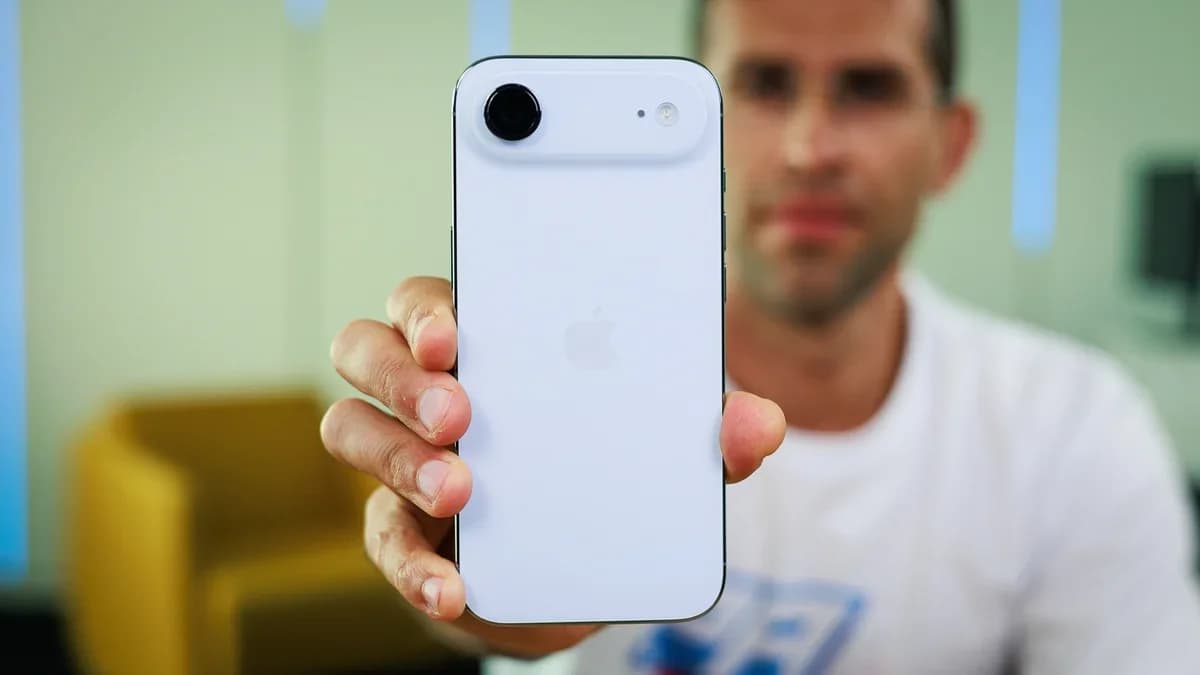
The thin phone trend is hitting a wall, and I believe it’s for a good reason.
## Slim Phone Designs Often Sacrifice Too Much
Ultra-thin flagship phones often underperform relative to their high prices. While devices like the S25 Edge and iPhone Air offer fast processors, their cameras and batteries may not meet expectations for a $1,000+ phone.
The Galaxy S25 Edge features a dual-camera system with a 200MP main sensor and a 12MP ultra-wide lens, similar to the Galaxy S25 Ultra. However, its $1,100 price might suggest more advanced features. Its 3,900mAh battery is smaller than that of the standard Galaxy S25.
**Samsung Galaxy S25 Edge Review: Slim Design, Limited Battery**
The iPhone Air has only one 48MP rear camera. Apple's marketing emphasizes its "Fusion camera," but it still uses a single sensor.
Its battery capacity is just 3,149mAh. Slim designs reduce internal space, often affecting battery size. While the Air is suitable for daily use, its specs may not surpass those of the standard iPhone 17 or Galaxy S25, considering its $1,000 cost. It's hard to recommend the thin models over their standard counterparts.
**iPhone Air Review: Compelling in Hand, Lacking Elsewhere**
Although thin phones have potential, current compromises don't justify their premium cost, a sentiment reflected in sales figures.
**Pro Mini Models Are a Stronger Alternative**
Rather than pursuing thin designs, some companies are focusing on integrating high-end features into smaller devices, such as the vivo X200 Pro mini.
Many users prefer smaller phones over larger ones. Brands such as Oppo, OnePlus, vivo, and Honor are producing flagship-level specifications in a compact form factor.
The Oppo Find X8 Mini or vivo X200 Pro mini offer specifications comparable to their larger Pro versions but with less bulk. Some consumers hope that Samsung and Apple will also create such devices. Some consumers desire a new mini iPhone with professional-grade cameras and performance.
However, even Pro mini models may remain niche products. Until Apple or Samsung release a new form factor that combines impressive specs with a smaller size, this trend may persist.
**Thin, Mini, and Larger Phones Serve Different Purposes**
The Air's limited sales are expected, similar to previous mini and Plus models. These models are experimental, allowing companies to test new features.
The main flagship models remain successful, but these alternative models allow for experimentation.
In recent years, there have been mini, Plus, and now Air models. An iPhone Air 2 is expected next year, and the same may occur with Samsung's Edge line, despite rumors of a possible skip. A Galaxy S26 Edge could appear before the concept is discontinued.
Ultimately, consumers want value for their money. While ultra-thin phones may be visually appealing, internal components are more important. Functionality is generally preferred over appearance.