A survey reveals that while people feel they type better on physical QWERTY keyboards, they don't necessarily want them.
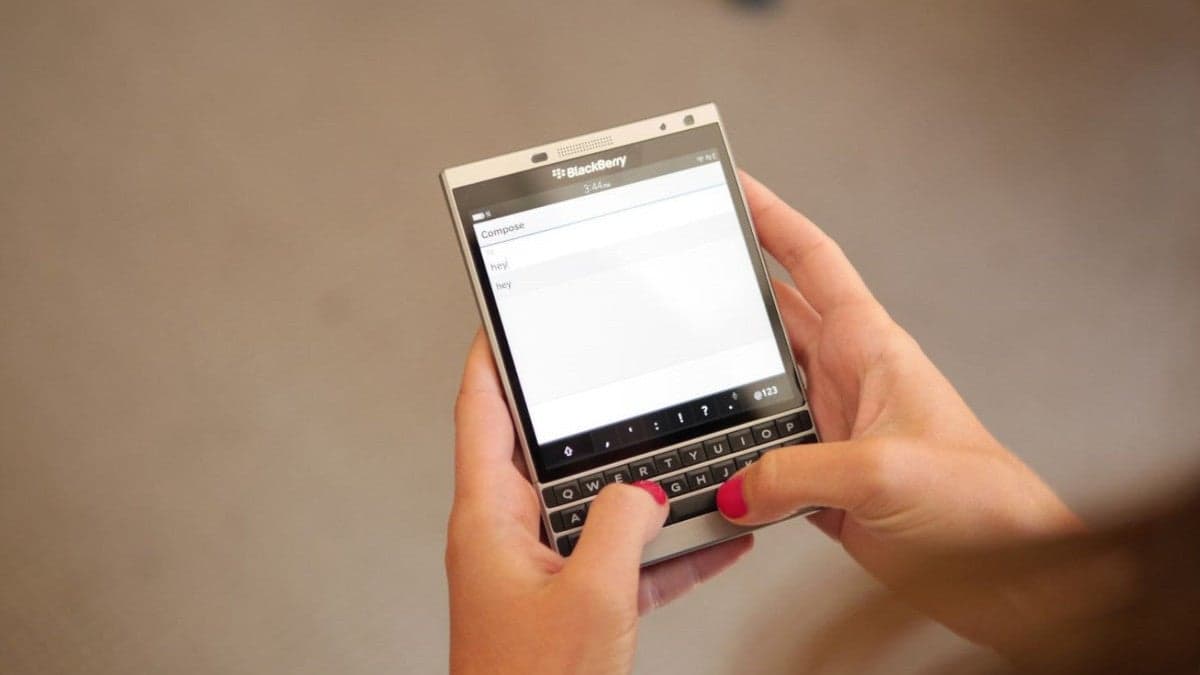
There are ways to experience using a physical QWERTY keyboard without spending a fortune.
The Zinwa Q25 Pro phone will retail for $420, with a $300 do-it-yourself kit available for current phone owners. Zinwa is also offering a kit to refurbish the BlackBerry Passport, a 2014 smartphone featuring a 4.5-inch square display with 1440 x 1440 resolution. The refurbished phone will be called the Zinwa P26. Both phones will run on Android 13, replacing BlackBerry 10 OS, and will be limited to 4G LTE connectivity, meaning they won't be compatible with 5G networks.
A previous poll showed that over 90% of users believe they type faster and more accurately with a physical keyboard. The popularity of the Clicks keyboard case for certain iPhone and Android devices supports this, as it adds a physical keyboard to these phones. The Clicks keyboard case is available at Best Buy and on the Clicks website, with prices starting at $159 depending on the phone model.
Alternatively, the Unihertz Titan 2 offers a new phone with a built-in physical keyboard. The Titan 2 has a 4.5-inch 1440 x 1440 LCD display and is powered by the Dimensity 7300 processor, along with 12GB of RAM and 512GB of UFS 3.1 storage. It has a 50MP main camera, an 8MP telephoto lens, and a 32MP front camera. The device is powered by a 5050 mAh battery, has dual SIM support, a fingerprint scanner, and facial recognition. The Titan 2 sells for $399.99.
Beyond poll results, the ongoing interest in older BlackBerry models suggests a demand for phones with physical QWERTY keyboards. The Passport model appears to be particularly popular.
There is an active market for both used and new-in-box Passport devices. While it runs on BlackBerry 10.3 and has limited app availability, it does support some Android apps via Android Runtime, specifically those developed for Android 4.3 Jelly Bean (API 18).
Personal experiences with physical keyboards may vary. After a year of using the Clicks case with an iPhone 15 Pro Max, the author found no significant improvement in typing speed or accuracy compared to the virtual keyboard, although it was useful for typing longer content.
There is debate about which phone first introduced the virtual QWERTY keyboard. Some credit the 1994 IBM Simon Personal Communicator, which had a virtual resistive touchscreen keyboard. Others point to the LG Prada, released in March 2007, as the first with a capacitive touchscreen. However, the first smartphone to use a virtual QWERTY was the original Apple iPhone. Interestingly, the initial Android phone, T-Mobile G1 (HTC Dream), featured a physical slide-out QWERTY keyboard, and a virtual keyboard wasn't added to Android until Android 1.5 Cupcake.
Lastly, a new coffee table book titled "Iconic Phones: Revolution at Your Fingertips" is set to release in a few months. The book will explore the technological revolution of the 21st century. More information is available via a provided link.