A thermal camera was used to compare the heat dissipation of aluminum and titanium iPhones.
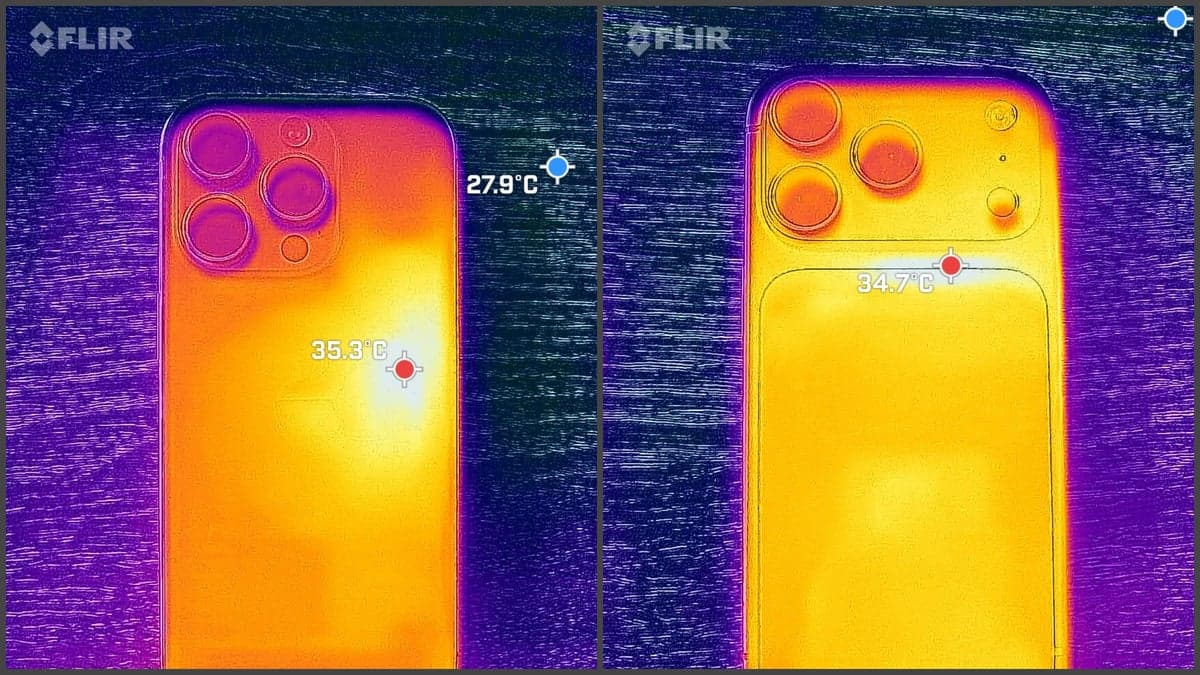
Apple said it switched from premium titanium to the good old aluminum for one reason: stop the throttling issue on iPhones
Apple stated its design choices were intended to enhance thermal management. Since the introduction of the A17 Pro, its first 3 nm chip, its high performance was limited due to overheating and thermal throttling. This impacted demanding tasks like gaming and video editing.
While stainless steel might have been preferable, the polished frames of iPhones 12 Pro through 14 Pro offered a sleek feel, despite being harder to clean. Although stainless steel's heat conduction is inferior to aluminum, it surpasses titanium. Additionally, stainless steel frames resisted chips and dents better than the iPhone 17 Pro's aluminum casing.
The inclusion of a vapor cooling chamber should help with thermal issues, even with a stainless steel frame. This technology is new to iPhones, though common in flagship Android phones from Asus, Samsung, and others.
A vapor cooling chamber contains a small amount of liquid near the heat source. As the processor heats up, this liquid transforms into vapor and disperses to cooler areas, where it releases heat through the outer walls, condensing back into liquid. In the iPhone, this heat is transferred to the metal chassis.
Aluminum seems to improve performance. Benchmark tests show the iPhone 17 Pro throttles later than the iPhone 16 Pro and maintains a higher score when throttling does occur.
The FLIR camera was used to compare the iPhone 16 Pro and iPhone 17 Pro. Initially, the phones rested for 20 minutes to establish a baseline idle temperature:
Then, the 3DMark Wildlife Extreme Stress Test was run, and thermal images were taken after 3 minutes using a FLIR One camera (±3°C tolerance). This focused on temperature variations and management rather than absolute readings.
The iPhone 16 Pro's peak temperature was concentrated near the volume keys, reaching ~41°C (~314°K). The titanium frame did not effectively dissipate this heat.
In contrast, the iPhone 17 Pro displayed heat spreading across the body, with a top temperature of ~36°C (~309°K), only five degrees above idle and five degrees cooler than the iPhone 16 Pro.
After 10 minutes of stress testing, the iPhone 16 Pro's temperature concentrated at ~45°C (~319°K). While uncomfortable, users could adjust their grip to avoid the hot spot.
The iPhone 17 Pro's aluminum body spread the heat, reaching ~42°C (~315°K). The phone felt warmer overall, but the heat was distributed more evenly.
The cooling speeds were then tested after stopping the tests.
The iPhone 16 Pro cooled down quickly, reaching ~36°C (~309°K) within 5 minutes. The iPhone 17 Pro showed similar cooling.
After 10 minutes, both phones remained at roughly the same temperature, not fully cooled but similar.
Thus, the aluminum build impacts active use. The iPhone 17 Pro's frame gets warmer during heavy tasks, but it avoids concentrated heat. The iPhone 16 Pro may feel like it needs to cool down after intense use.
However, both phones cool down at about the same rate in standby.