Apple Event 2026 Live: The First Foldable iPhone, iPhone 18 Pro, Apple Watch 12 and More - CNET
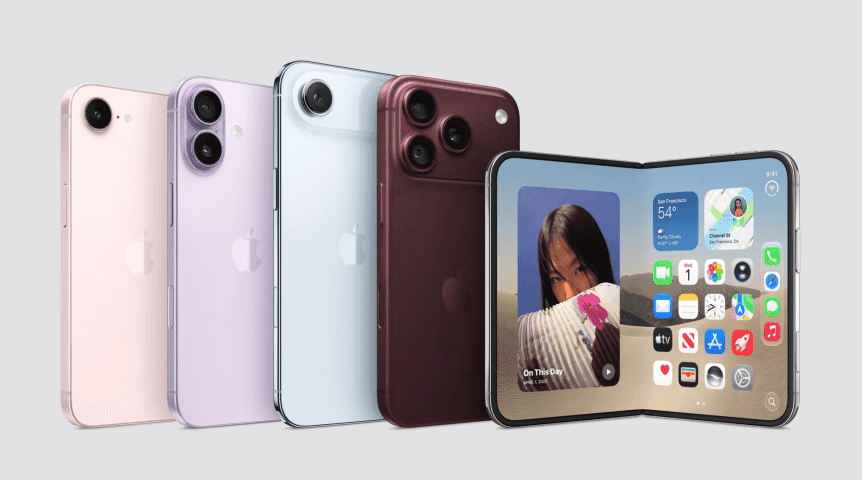
From left to right, we have the iPhone 17E, the regular iPhone 17, the Air, the iPhone 18 Pro and the big boy, the iPhone Duo. I’m not asking Apple to make the iPhone into a brick either. Apple could reveal its first foldable iPhone on Wednesday.
Here's everything you need to know about Apple's September event.
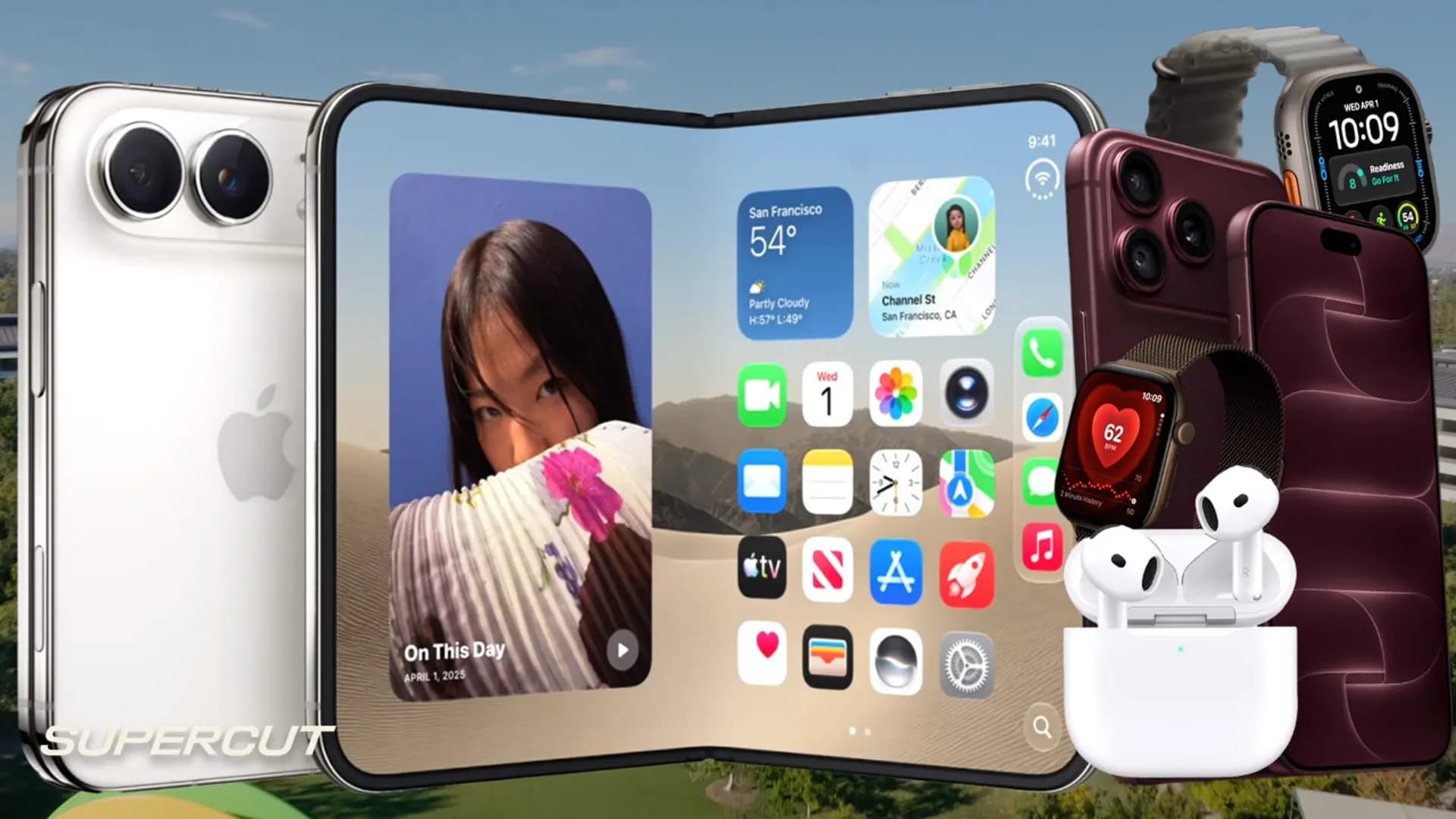
Apple’s September event included loads of reveals, but the blockbuster was the iPhone Duo — the company’s long-rumored arrival into foldable phones. The Duo arrived alongside updates to many of Apple’s other devices, including the new iPhone 18 Pro and Pro Max, Apple Watch Series 12, Apple Watch Ultra 4 and the AirPods 5.
Though Apple’s livestream has concluded, our live blog continues as CNET’s team gets its first hands-on with the new devices on the ground. You can check out our coverage during the event below, and keep checking back as we continue to dive into the new devices.
See what it’s like inside the demo room following today’s Apple event, including a look at the areas where the iPhone Duo, iPhone 18 Pro and Pro Max, Apple Watch Series 12, Apple Watch Ultra 4 and AirPods 5 are on display.
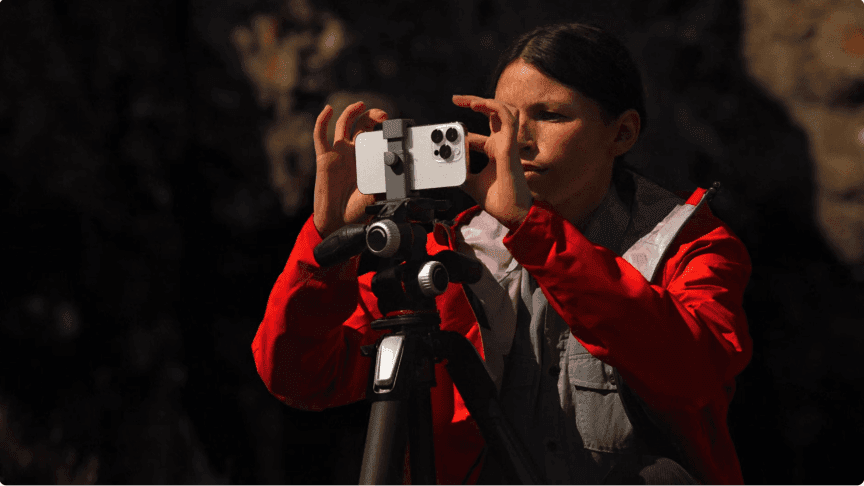
I’ve worked as a production sound mixer since 2019, so when Apple says the iPhone 18 Pro is ready for professional film sets, I notice what’s missing. Its new Pro Controls cover aperture, shutter speed, white balance and exposure, but the Camera app still lacks basic audio meters, mic selection, headphone monitoring and timecode.
The Blackmagic Camera app offers meters, adjustable levels, external-mic support, monitoring and Bluetooth timecode. Apple’s Final Cut Camera app supports timecode too. Apple TV even used four iPhone 17 Pros running Blackmagic Camera during a live MLB broadcast last year, so the hardware is clearly capable.
A professional film set also has a sound department, Apple.
The iPhone Duo is available to unfold in Apple’s demo room, and you can see how the home screen changes when you open the bigger screen.
Yeesh, the iPhone Duo is officially $1,999. Hard to believe that was the safe side of the rumored price range, but this isn’t unprecedented for a debut foldable phone. Even still, I can’t help but look at a number that big and think about all the other tech I could buy instead.
$1,999 is the equivalent of four Switch 2 consoles, three-ish PlayStation 5 Slim consoles or two of the absurdly pricey Steam Machines. And all of those systems now have their own high prices driven by the ongoing RAM shortage.
And hey, maybe those aren’t the most apt comparisons, but I’m a gamer and I like my toys. I don’t think the value proposition gets much better when you compare the iPhone Duo to other Apple devices. The newly unveiled iPhone 18 Pro has similar internal specs, but it’s priced at $1,199 (which is a sobering number in and of itself). By comparison, if you wanted to get one of Apple’s tablets, the M5 iPad Pro also starts at $1,199, and the diminutive iPad Mini starts at $599.
Is there a large enough audience to support this phone-and-tablet hybrid device at its current asking price? I know I’d rather just carry two lower-priced machines around and save a few hundred bucks. A recent CNET survey found that only 25% of US adults were interested in the concept of an Apple foldable in the first place – and certainly not for the best part of $2,000. Maybe Apple’s name recognition will make the iPhone Duo a hit in due time, but I’m not so sure.
Apple’s September event has now wrapped, but our coverage of the new iPhone, Apple Watch and AirPods lineups has just begun. This is the slide wrap-up including many of the iPhone Duo’s features, and keep checking back to our live blog as our ground team gets in-person time with the new devices.
Apple’s first foldable phone is definitely being positioned alongside its premium handset lineup. The iPhone Duo is powered by the A20 Pro chip with a large vapor chamber, which Apple says allows the device to achieve up to 35% higher sustained performance metrics in comparison to the iPhone 17 Pro.
The Duo also features the C2 cellular modem, which improves connectivity in areas with sparser coverage zones. Apple touts that the C2 modem works in tandem with the A20 Pro chip to improve upload speeds while consuming less battery life than its iPhone 17 predecessors. Apple’s first foldable will match the power of the iPhone 18 lineup – but it remains to be seen if folks will spring for this new design.
Apple’s first foldable iPhone starts at $1,999 with 256GB of storage, precisely one dollar below $2,000, because marketing remains undefeated. Storage options run up to 2TB, with preorders beginning Oct. 16 and availability starting Oct. 23.
What a nice family photo. From left to right, we have the iPhone 17E, the regular iPhone 17, the Air, the iPhone 18 Pro and the big boy, the iPhone Duo. Looks like a nice range of color options as well, and I appreciate that they’re all pretty visually distinct from each other. I have my eye on that burgundy color.
I’ll be honest: I was expecting a camera compromise for the Duo, but by all indications, it’s the same 48-megapixel fusion ultrawide as the 18 Pro. The Duo supports 4K Dolby Vision HDR and upgraded photographic styles. There’s a 12-megapixel “Center Stage” front camera on the Duo’s outside screen, while the inside display has an invisible FaceTime camera that works when fully open or propped up. Apple says it supports dual capture of front and rear camera scenes, and a friend can even join a video call on the outer display. The outer display also has other useful features, such as letting you preview selfies before taking them and playing animations on the screen to get your kid’s attention.
The iPhone Duo is eSIM-only worldwide, making it the second iPhone after the Air to ditch the physical SIM tray. Apple says removing it freed up precious internal space for two batteries, one in each half, so at least it died for something useful. RIP.
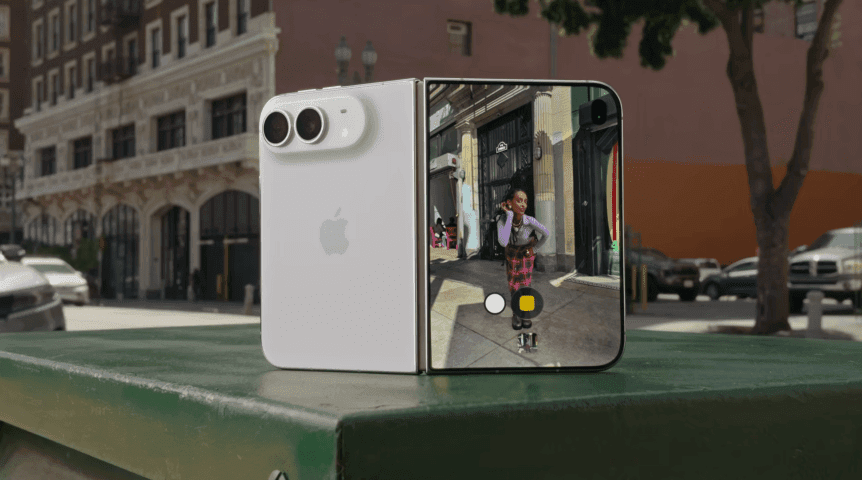
With Apple’s first foldable reveal, the company highlighted key design features that set the device apart from others. The FaceTime camera is hidden behind the display, completely invisible until you need it. Also invisible is the new hinge, which lies completely flat when the screen is opened. These are subtle design flourishes I expected Apple to focus on, since foldables aren’t new. But a foldable device that perfects the design quirks of others is what Apple needs to set the Duo apart.
Apple’s Watch’s new Siri Recap feature can use conversations it hears throughout the day to remind you what happened. That sounds convenient, except every conversation has at least one other person who may not realize your watch is listening, and probably didn’t consent to becoming part of your AI-generated diary.
Yes, it’s a small tech industry miracle in 2026 – at a time when RAMageddon continues to push hardware component prices ever higher, and when even Apple’s budget devices are getting hit with nasty price increases. The Apple Watch Series 12 and Apple Watch Ultra 4 have maintained the starting prices of their predecessors at $400 and $800, respectively. Both of Apple’s new smartwatches are available for preorder today, and will begin shipping on Sept. 18.
The new S11 chip derived from the A20 Pro is powering a lot of the unique features you’ll find in the newest Apple Watch, including Audio Intelligence. It has an always-on processor that’s more power-efficient while powering the new intelligence and accessibility features. There’s a quad-core neural engine, a CPU with two efficiency cores and a Neural Accelerator and a single-core GPU with increased bandwidth and compute.
Apple has officially unveiled the iPhone Duo, marking its highly anticipated debut in the foldable market. Confirming prior rumors, the device features a dual rear-camera setup and a wider design similar to Samsung’s Galaxy Z Fold 8.
Product ecosystem synergy, ahoy! The Apple Health app will be getting overhauled later this year, integrating data from your iPhone and Apple Watch to learn a frankly pretty creepy amount of information about your body. You’ll get scored on metrics like sleep, movement and heart health, before Apple Intelligence chimes in to gamify your workout.
Apple says its AI model will adapt to your health data to provide custom workouts, which will be tweaked based on your current needs. And if that wasn’t enough personal information to hand off to the app, you can feed in your recent lab results – or order a full panel of Quest diagnostic biomarker readings for $120, right within the Health app.
Alongside Apple Watch Series 12, the Apple Watch Ultra 4 also updates the high-end wearable with the company’s newest S11 processor. While two years passed between the Apple Watch Ultra 2 and Ultra 3, Apple likely launched the Ultra 4 to ensure its most expensive smartwatch fully supports the newest WatchOS 27 features.
The Apple Watch Series 12 has debuted, placing Siri AI front and center. The watch’s heavy AI focus could make the device more practical, allowing you to simply ask Siri to handle tasks instead of digging through apps on a tiny screen.
Apple introduced the AirPods 5 with a train station demo showing off Live Translation and improved active noise cancellation. The open-ear buds promise 50% more noise reduction than the previous generation, helping you understand the people nearby, or just tune them out entirely.
Apple did a quick rundown of the iPhone 18 Pro, which starts at $1,199. The iPhone 18 Pro Max starts at $1,299. Preorders start Saturday Sept. 12 ahead of availability on Sept. 18.
Dynamic Island has sometimes been overlooked on iPhones because it doesn’t provide enough information to be broadly useful. That’s changing with the upgraded Dynamic Island, which can now show up to three live activities, like directions, music playback and other useful features.
Apple says the iPhone 18 Pro’s new vapor chamber improves thermal management, allowing the phone to handle demanding experiences like games running at up to 120 frames per second. The redesigned cooling system also contributes to what Apple calls its best iPhone battery yet (as always).
The iPhone 18 Pro comes with one of the biggest battery improvements from Apple in a few years. The Pro Max comes with 36 hours of video playback, while the Pro Max can get 45 hours. Apple says you should get 24 hours of use per full charge for the Pro and 30 hours for the Pro Max. There’s also faster wired charging: 15 minutes of charge should top your device to 50%, and 5 minutes of charge should give you 6 hours of video playback. This is a pretty big improvement if you’re constantly worried about battery life, though Apple still won’t disclose the battery’s actual size.
As previous rumors have reported, the iPhone 18 Pro and Pro Max will have a variable-aperture lens. This means it can narrow or expand to further optimize your photos.
Apple’s A20 Pro chip has an impressive level of performance from some big-name games. Tencent’s Monster Hunter Outlanders doesn’t look quite as good as one of Capcom’s mainline titles, but the increased graphical fidelity on the iPhone 18 Pro is striking nonetheless. The game will run at 120 frames per second with Apple touting in-game “console-level lighting.” How well the game performs during a real-life lunch break remains to be seen, but for the time being, this game looks genuinely fantastic on the new iPhone.
You didn’t think you’d get through an Apple event without mention of Siri AI and Apple Intelligence, did you? Some of this was covered during WWDC, but Apple is bringing our attention back to how on-device Siri AI focuses on privacy and security. It can also work across third-party apps and is integrated into the camera app. Naturally, it’s the “most advanced on-device model ever,” in case you had any doubts.
The next generation of Apple handsets is here with the iPhone 18 Pro and Pro Max, even if the regular ole iPhone 18 remains absent for the time being. These phones feature minor design tweaks compared to their predecessors, including a shrunken Dynamic Island cutout. Apple touted the iPhone 18 Pro model as an “intelligent personal hub,” which is marketing mumbo-jumbo that means it’ll be synced up with Apple Intelligence and the newest Siri AI models.
But what might justify the premium cost of these devices are the A20 Pro chips that power them, alongside bigger batteries and variable-aperture cameras, confirming the rumors about some of the most important features in these phones.
Apple opened its first major event of the John Ternus era with a literal handoff. Tim Cook emerged at the start of the company’s elaborate cinematic intro but stepped away before opening the floor to Ternus as the new CEO.
Am I watching a movie? Apple just kicked things off with some dramatic scenes that seem to be inspired by some famous movies, ranging from Westerns, Kurosawa, Fast and the Furious and maybe some Harry Potter. I’m sensing a real hint about camera capabilities and media consumption from this. And… there’s Ternus, so that was his intro. Literally fire.
Apple’s Surprise and Shine event is officially starting with some electronic beats and a light blue waiting room. There’s even a hazy rainbow in the background, so the vibes are pretty cool heading into the keynote.
The CNET team is getting into the theater just minutes before Apple’s event gets started.
With each new iPhone event, my eyes are glued to what’s changing in the cameras. It’s the ultimate battleground where Apple, Google, Samsung, Xiaomi and others pour billions so we can take better photos more easily with our phones.
This year, the biggest camera rumor is the addition of a variable-aperture lens. In traditional photography, an aperture is a mechanism that controls light and depth – but most standard smartphone cameras rely on a fixed setting, with no aperture at all. What would a variable-aperture feature bring to the iPhone photo experience? I explore the options here.
With the potential new iPhone foldable set to arrive today, Samsung is trying to entice you away by offering you some savings ahead of the event. The company has knocked $300 off the latest Galaxy Fold 8. I know, I know, we’re here for the iPhone, but if it doesn’t end up tickling your fancy, Samsung is ready and waiting.
All signs point to Apple releasing two new Apple Watches at its “Surprise and shine” launch event: a Series 12, and an Ultra 4. The Series 12 is to be expected – Apple has launched a new flagship Apple Watch every year since its debut – but the Ultra 4 would be more of a surprise. The Ultra 3 launched just last year, and Apple’s rugged smartwatch hasn’t followed the same annual cadence, with a two-year gap between the Ultra 2 and Ultra 3.
But Apple isn’t one to gatekeep new features, and since both the 2025 Apple Watch Series 11 and Ultra 3 kept the same S10 chip as their predecessors, it makes sense that Apple wouldn’t leave Ultra fans in the lurch with an older processor. Bloomberg’s Mark Gurman reports that both watches are now in late-stage testing, with faster chips expected for both.
Beyond the processing boost, we’re expecting more modest upgrades: potentially longer battery life from efficiency gains, a larger battery and new health and fitness features. No dramatic changes to the design. One wild card still up in the air for this year: Touch ID, with leaked code hinting Apple has been testing a fingerprint sensor for the wrist. As for a bigger makeover, Gurman points to more dramatic changes within the next two years.
Read our full Apple Watch Series 12 and Ultra 4 rumor roundup for everything we’re expecting from Apple’s next watches.
One announcement that I’d welcome at the “Surprise and shine” event would be a new Apple TV remote. The current version came out four years ago.
Code in MacOS 26.7 mentions a new Apple TV box will come with an upgraded Siri Remote, according to a MacRumors report. Maybe it’s a Siri AI Remote, now? Or maybe it’ll have the same Find My power as an AirTag – the current “find remote” feature is OK at best.
The iPhone Air is an impressive piece of engineering, sure. At just 5.64mm thick, it’s built around the bold assumption that batteries take up too much space.
Which makes it especially funny that Apple also sells a magnetic battery that makes the phone thick again. Apparently, the missing millimeters are available separately.
Apple says the iPhone Air can give you up to 27 hours of video playback, or 40 hours with its MagSafe battery attached. The thicker iPhone 17 Pro Max gets up to 39 hours all by itself, like a grown-up. These are Apple’s estimates, not a promise of what you’ll get in the real world, but the comparison makes the trade-off painfully obvious.
I recently spent a month traveling through Europe, where my iPhone was simultaneously my boarding pass, train ticket, map, camera, translator, wallet and connection to everyone back home. When the battery dropped to 4% in an unfamiliar city, I wasn’t admiring how elegantly thin my phone was. I was calculating how many more minutes of Google Maps I could afford before I became geographically fucked.
I’m not asking Apple to make the iPhone into a brick either. Add another millimeter or two and use the space for more battery and better cooling. The iPhone 17 Pro already has a vapor chamber, so Apple clearly understands that a powerful phone also has to deal with the deeply inconvenient laws of thermodynamics.
Apple has proven it can make a remarkably thin phone. We get it. Now make one that stays alive for longer. If that requires a couple of extra millimeters, I would like mine preinstalled, please.
This is a mock-up of what a possible iPhone Fold might look like, according to CNET designer Jeffrey Hazelwood.
Despite industry analysts’ predictions that the foldable phone market could grow by roughly 20% by the end of the year, the flashy phones still haven’t completely caught on in the mainstream. Foldables represented less than 2% of the global smartphone market in 2025, and many folks still see these phones as a novelty conversation piece. On the surface, it’s easy to question why Apple might even try to bring the long-rumored iPhone Duo to fruition, at a time when only 25% of US adults report any interest in buying a foldable iPhone.
But consumer habits often warp around Apple. This is the company that reinvented the smartphone and gave the entire world of Big Tech a shock when it invigorated the tablet market with the iPad. Hell, I remember a whole bunch of people were angry when Apple did away with the headphone jack on the iPhone 7 – but despite that well-earned outrage, the first AirPods were a smashing success. Now you can’t escape Bluetooth earbuds.
The fact of the matter is that Apple launching its own foldable might just be what it takes for people to get interested in that part of the phone market, even if public sentiment currently seems wishy-washy about the idea. A brand-new Apple product gets people excited (and loosens up some purse strings).
The iPhone Duo might be just the breakthrough that foldable smartphones need to go mainstream in a big way – another successful example of the Apple effect. On the other hand, the rumored price of nearly $2,000 might kill the excitement this big moment might otherwise generate, leaving the first foldable iPhone another victim of RAMageddon.
Before Apple announces a foldable iPhone, join tech experts from CNET and PCMag before and after the keynote. CNET Editor-at-Large Bridget Carey and PCMag Executive Producer Iyaz Akhtar join forces in the ultimate tech mashup to steer the mothership through Apple’s keynote. They’ll be joined by tech editors from Mashable and ZDNET, breaking down all the announcements. Tune in on Sept. 9 at 9:30 a.m. PT (12:30 p.m. ET).
And the group’s now just outside Apple Park, joined by PCMag’s Andrew Gebhart.
It’s bright and early in California, and our CNET ground team has their blue Apple badges as they make their way to Wednesday’s event.
There are a lot of rumors around AirPods equipped with cameras – about when Apple will release them, how the cameras will work and more. And I unequivocally do not care about or want these.
A leaked video of the camera-equipped AirPods shows a person looking at a book and a voice saying it can save things for later. You know what else can save the name of a book for later? A notebook. The Notes app that’s already on my iPhone. My own memory (sometimes).
I understand these AirPods could help visually impaired people, and I hope the earbuds work wonders for those folks. But I won’t be buying these. I don’t want cameras in all my things. I already worry about the privacy implications of glasses with cameras, so I don’t want those concerns to multiply.
It’s John Ternus’ first big showing as the CEO of Apple, and he’s starting up Wednesday’s big day on social media with a tease for the company’s event. He made a cryptic X post featuring a 14-second video where a beam of light illuminates a glossy curved surface. Or maybe that’s a fold… and is that supposed to be a hinge in the middle?
The rumored foldable iPhone Duo would almost certainly be the most unique device on display if the leaks about today’s lineup come true, and I reckon Ternus might want to hype it up to kick off his tenure as Apple’s chief executive with a bang.
Apple’s online store is now offline ahead of today’s event, which begins at 1 p.m. ET. The store will likely return shortly after, with pages detailing any new products unveiled during the livestream.
For months, we’ve been hearing a lot of chatter about Apple potentially releasing a new version of the AirPods Pro with tiny infrared cameras designed to power new Siri AI visual intelligence features and perhaps recognize hand gestures like Apple’s Vision Pro headset does. But the latest rumors suggest those new camera-equipped buds may not arrive until 2027. Instead, Apple will just announce new versions of its standard AirPods, the AirPods 5, and a step-up model with active noise-canceling like the AirPods 4 with Active Noise Cancellation.
Whether the AirPods 5 will include any design changes is unclear, but one would expect them to offer performance upgrades. They may be the first AirPods to be powered by Apple’s rumored H3 chip.
The AirPods 4 with Active Noise Cancellation are something of a technological marvel. ANC is a rare feature for open earbuds because it typically doesn’t work with an open design. As I said in my review, while the AirPods 4’s ANC isn’t that great compared with the AirPods Pro 3 and other top noise-canceling earbuds from Bose and Sony, the fact that it works at all and is reasonably effective is kind of wild. Apple has had two years to make the ANC even more effective, so I’d expect the AirPods 5 to see some gains on that front, which would be impressive.
I always expected the AirPods 5 to arrive this year, as Apple tends to follow a two-year refresh cycle for its AirPods models. However, I don’t quite know what to believe about the camera-equipped AirPods Pro. Could Apple announce two different AirPods models? That’s certainly possible, though not probable. Either way, we’ll know soon enough.
While the recent rumors point to a seven-core GPU for the flagship A-series silicon, I suspect the new chip will inherit some upgrades from the M6 that Apple just launched with the Mac Mini. While the M series usually follows in the footsteps of the iPhone’s A-series chips, the reverse might be true this go round.
The M6 notably moved to TSMC’s 2nm process size from 3nm, a step which Apple had delayed from last year’s A19 because of cost. A smaller process size allows for a denser die, which ultimately lets you fit more circuitry in the same size package. In this case, the M6 doubled the size of the Neural Engine, used for the on-device AI processing, from 16 to 32 cores. That’s likely an essential upgrade for decent performance with Siri AI.
John Ternus just took over as Apple CEO a week ago, on Sept. 1, succeeding Tim Cook after serving as the company’s senior vice president of hardware engineering.
While it’s not Ternus’ first appearance at an iPhone event — he introduced the iPhone Air during Apple’s September 2025 event — it is his first as the chief executive running the show. Whether he’ll have his own flair or present it differently than Cook or Steve Jobs did remains to be seen, but we’re expecting the usual run of events with Ternus just a week into the job.
As the head of the company, Ternus will also be on the hook for any massive price increases we see across the iPhone 18 lineup, even though those will have been decided long before he took the reins.
Ternus is a “products guy,” coming from a background of mechanical engineering and working his way up the ranks of Apple over 25 years on the hardware engineering side. He worked across many flagship devices, including the iPad, AirPods, iPhone, Apple Watch and, most recently, the MacBook Neo.
“There is no better person to take the helm of the company,” Cook said in his farewell note as Apple CEO last week, adding that Ternus is “brilliant and wonderful and capable.”
“Few people understand what it takes to build products that change the world the way John does,” Cook wrote.
Ternus added in his own note to Apple employees on his first day as CEO that Wednesday’s launch would be “phenomenal” and “huge.”
“I’m just as excited about what lies beyond that, including the incredible products already in the works and the ones we haven’t even imagined yet that we’ll dream up and create together,” Ternus added.
Cook now serves as executive chair of Apple, so we’re not expecting to see him present any of the new Apple devices on Wednesday.
An iPhone with a creaseless fold will likely not be cheap.
It was first nicknamed the iPhone Fold, and then it was going to be named the iPhone Ultra. Now, new rumors just hours before Apple’s Sept. 9 Surprise and Shine event say that Apple’s first foldable phone will be called the iPhone Duo. Look out, Microsoft — your Surface Duo (a double-screened phone that wasn’t quite a foldable) is about to be properly supplanted.
The iPhone Duo will start at $2,000 with storage options topping out at 2TB for $3,000, according to an X post by Bloomberg managing editor Mark Gurman. The phone will be announced tomorrow, but not ship until October. The iPhone Duo will be available in dark blue and white.
And there’s good news for stylus fans — the iPhone Duo will support the Apple Pencil.
I’ve reviewed iPads for years, and iPhones for years before that. I often carry both around with me. But will a time come, this year, when I don’t need to? In a world of folding phones, will Apple’s iPhone also be an iPad?
I’m so curious about how Apple positions its expected premium folding iPhone, especially since Apple has years of iPad experience under its belt and a whole ecosystem of iPadOS apps. If the foldable iPhone has the iPad’s passport-size screen aspect ratio is truly similar in size to an iPad Mini, will iPadOS run on it? Or will Apple adapt a new tweener-type ecosystem that’s not entirely iPhone, not entirely iPad?
In short: Would I truly be able to do everything I do on an iPad with the iPhone Fold/Ultra (or whatever the actual name is – there have been rumors of different names)?
If I were to guess, I’d expect it to approach but not truly be an iPad in the same way the iPad approaches but isn’t a Mac. It’s a classic Apple move: A new product that bridges but doesn’t quite replace. The iPad was pitched as a device to bridge the gap between a laptop and your phone. And now we’re in a place where there’s space to fill between a phone and tablet – as Samsung, Motorola, Google and others have found.
Apple also has a chance to think beyond what the iPad is now. And, close a loop. Steve Jobs envisioned an iPad before creating the iPhone, and a folding iPhone could connect the two visions in ways that might fit what was intended all the way back in the first place. I’m just wondering what happens to Pencil-connected and keyboard-ready iPadOS apps with whatever the folding iPhone becomes.
I’ve been waiting years for Apple to add side by side multitasking to the iPhone. And thanks to the rumored foldable iPhone, we might actually see it this year. But I’m puzzled why Apple has waited so long to develop this — it’s already available on the iPad, and Android phones of all sizes let you easily run apps side by side.
I just want to be able to open my notes app and calculator at the same time. That’s it. And if iOS 27 debuts this feature for a foldable iPhone and it trickles down to my iPhone 12 Pro Max – that’ll be more than enough to make me happy with this year’s iPhone event.
WWDC 2026 gave us a look at new features for iOS and MacOS, an overhaul for Siri and new AI tools.
Driving home from the G20 tech forum in Chapel Hill, I asked Siri to send my friend a text message. (Don’t text and drive, kids.) I didn’t use the exact right words I wanted to, so, per usual, Siri couldn’t understand what I meant and wrote an incoherent text. Hopefully, this is one of the last times I’ll have to deal with Siri screwups, thanks to the upcoming general release of iOS 27 with Siri AI.
We got our first glance at Siri AI inside iOS 27 at Apple’s June WWDC event. Since then, CNET reviewers have been busy testing the public betas of the new software. And so far, it seems like the new Siri lives up to the hype. Even my colleague Zach McAuliffe, who’s ignored Siri for a decade, said the revamped digital assistant was surprising and “immediately improved” – a green flag from CNET’s iOS expert.
I’m hoping the new Siri will give iPhone owners like me the quality-of-life updates we deserve. I don’t need my phone to start acting like a chatbot. I do want it to better at understand my voice commands and use improved world knowledge, two things that generative AI has gotten much better at over the past few years. So I’m unusually optimistic about Siri AI.
Rumors suggest Apple could work the iPhone Air’s sleek design into a book-style foldable iPhone.
Apple’s super-slim iPhone Air wasn’t a blockbuster when it debuted last year, but it still may be one of the company’s most important products. The 5.6mm thick handset could lay the groundwork for Apple’s highly anticipated foldable iPhone, which has speculatively been dubbed the iPhone Ultra.
Samsung, for instance, debuted the skinny Galaxy S25 Edge last year before launching the also-slim Galaxy Z Fold 7 a few months later. It’s possible that with the iPhone Air, Apple was flexing its hardware capabilities, which it could then – ahem – fold into the iPhone Ultra’s design.
“The first iPhone Air may eventually be viewed as a transitional step rather than a failed product category,” Rishi Padhi, research principal at Gartner, told me. “It proved that Apple could still make a thinner iPhone.”
You can read more about how the iPhone Air may hint at what we’ll get with Apple’s first foldable phone here.
Dbrand may be providing the easiest way to get a peek at the iPhone Ultra, as the phone accessory company is already selling skins for the rumored foldable iPhone as well as the iPhone 18 Pro and Pro Max. The iPhone Ultra skins skew closely to the various leaks we’ve been chasing about the iPhone 18 line over the last several months, featuring a wider design similar to what Samsung’s Galaxy Z Fold 8.
We’ll officially find out on Wednesday what Apple’s presumed iPhone 18 Pro and Ultra phones look like, but until then, these skins may provide a pretty close idea of what to expect from the phones’ designs.
Apple could reveal its first foldable iPhone on Wednesday.
After years of rumors and patience, the iPhone Ultra or iPhone Fold is a highly anticipated addition to Apple’s iPhone lineup and could give other foldable phones like the Galaxy Z Fold 8 series and Pixel 11 Pro Fold some serious competition.
Foldable phones are a niche tech product that may not be what everyone wants in an upgrade. Analysts expect standard and premium iPhone models to stick around, but CNET found some US adults are interested in a foldable iPhone. A recent CNET survey focused on consumer sentiment around Apple’s foldable phone shows that 1 in 4 US adults (25%) are interested in a foldable iPhone.
But how much they’re willing to spend is vastly different from the estimated $2,000 the phone could cost. US adults are willing to spend $781 on average for a foldable iPhone. Comparatively, that’s $48 less than the base model iPhone 17 and doesn’t seem likely given the phone’s expected features, RAM shortage and rumors of iPhone price hikes.
Apple went bold with its redesigned Pro models in 2025, and that was a nice change from the subdued shades of titanium on the iPhone 15 Pro and 16 Pro. For some, the iPhone 17 Pro’s design is too much, especially in a construction vest orange – great for Clemson fans. And while I think the 17 Pro looks dignified in dark blue, I want Apple to release a black iPhone 18 Pro – even if the only external change is the color. I truly love the two-tone Ceramic Shield panel on the back of the 17 Pro, and I could imagine Apple making a killer black and space gray model.
I would like Apple to add a pro mode in the Camera app, like some Android phones. With iOS 27 adding a Siri mode into the app, the lovable simplicity of the iPhone camera has felt like navigating a tiny furnished apartment. I can find everything just fine, but it just feels cluttered.
Apple increased the size of the battery on the 17 Pro, and it will be interesting to see how it powers the 18 Pro without the battery life taking a hit. Will Apple adopt silicon-carbon batteries that enable greater capacity without increasing physical size? The company’s iPhone line might sell in too many numbers for such a change, despite OnePlus, Motorola and Samsung launching phones this year using the technology.
My last wish is that the price remains the same. Even if Apple doesn’t adopt rumored price increases, there is a world in which the cheapest new iPhone announced at its “Surprise and shine” event would cost $1,100. And that’s a lot.