Apple now sees Google as its main smartwatch competitor, not Samsung.
For the first time in nearly a decade, Apple’s smartwatch crown is starting to wobble.
While Apple's hypertension detection and sleep apnea tracking are impressive and FDA-approved, they are reactive, reporting issues after they occur.
Google's AI Health Coach is proactive, offering data-driven suggestions, workout guidance, recovery plans, and adaptable goals. Though still in early development, Google appears to be ahead in wearable AI.
Leading in wearable AI is critical, as the focus shifts from sports modes and durability to how well a watch integrates with the user's body.
The Pixel Watch 4 feels more like Apple than Samsung ever achieved.
Samsung has long attempted to surpass Apple by incorporating numerous health sensors, gesture controls, and Galaxy AI features. The Galaxy Watch series has been powerful but lacked cohesion. However, Wear OS 6 provides Google with the user experience that previously gave Apple an edge.
The Pixel Watch 4 resembles software from the iPhone, but interpreted in Google's style. It’s playful, expressive, and encourages exploration.
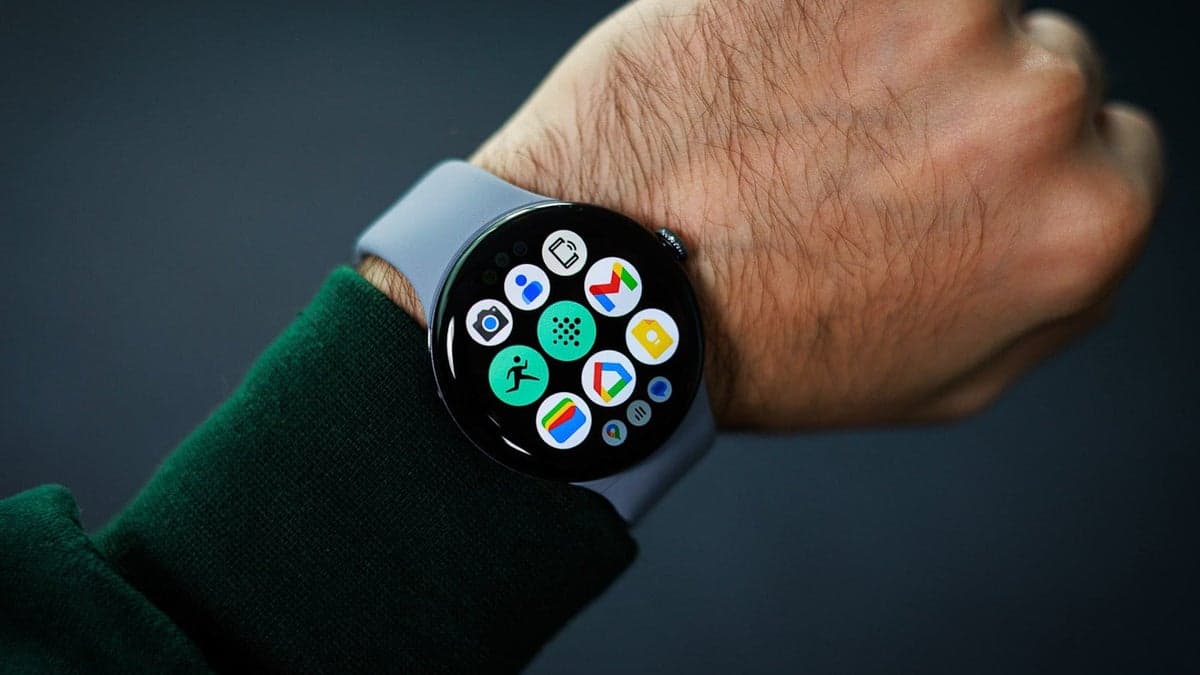
The rotating crown and Actua 360 display demonstrate that this smartwatch comes from a company that finally understands its ecosystem. The Material 3 Expressive interface is vibrant, responsive, and enjoyable. Notifications feel dynamic, animations are smooth, and Google Wallet, Maps, and the camera shutter operate seamlessly.
While Samsung’s watches often felt like mini-phones, the Pixel Watch 4 feels like an extension of the Android ecosystem.
Hardware is still important, but the overall user experience is more crucial.
Apple remains the benchmark for build quality, particularly in the US. The Series 11 offers titanium options with sapphire glass, which Google has yet to match. It is also thinner and lighter, making it more comfortable for overnight wear.
The Pixel Watch 4 is thicker and somewhat more fragile, though now more repairable. It's a beautiful device with a minimalist design and curved glass. Some may prefer its look over the Apple Watch. However, it is not built for rough handling.
The Pixel Watch 4 excels with its display and battery life. The 3,000-nit Actua 360 AMOLED display is brighter and bolder than Apple’s 2,000-nit OLED. The screen merges into the glass, making Apple’s flat panel appear dated.
While the Series 11 achieves 24 hours of battery life (increased from 18), the Pixel Watch 4 lasts up to 40 hours on a single charge or two days of typical use.
Google also leads in connectivity, offering Emergency SOS via satellite standard on the Pixel Watch 4, while Apple reserves it for the more expensive Ultra 3.
Apple remains superior in privacy.
A VPN Mentor report rated Apple’s data-sharing practices as “excellent” and Google’s as “good.” Apple does not sell or share health data for analytics or advertising, and all data requires explicit user consent.
Google, though better than Samsung or Meta, still uses data internally across its services and offers limited third-party sharing. This may not concern all users, but Apple is the safer option for privacy advocates.
Apple’s dominance isn’t absolute, and its market control is diminishing.
Apple still sells the best smartwatch for iPhone users, with sophisticated engineering and medical capabilities. However, its market dominance is less certain than before.
The Pixel Watch 4 has a sense of fun that the Apple Watch lacks. It aims to be a companion, not just a medical device.
To maintain its lead, Apple needs to make the Apple Watch more engaging, as Google has done with the Pixel Watch 4. However, Google has a significant head start.
Perhaps Samsung will introduce a new Galaxy Watch to challenge both Apple and Google. The smartwatch market is becoming increasingly competitive.