Apple's newly launched, thinnest iPhone requires users to adopt eSIM technology.
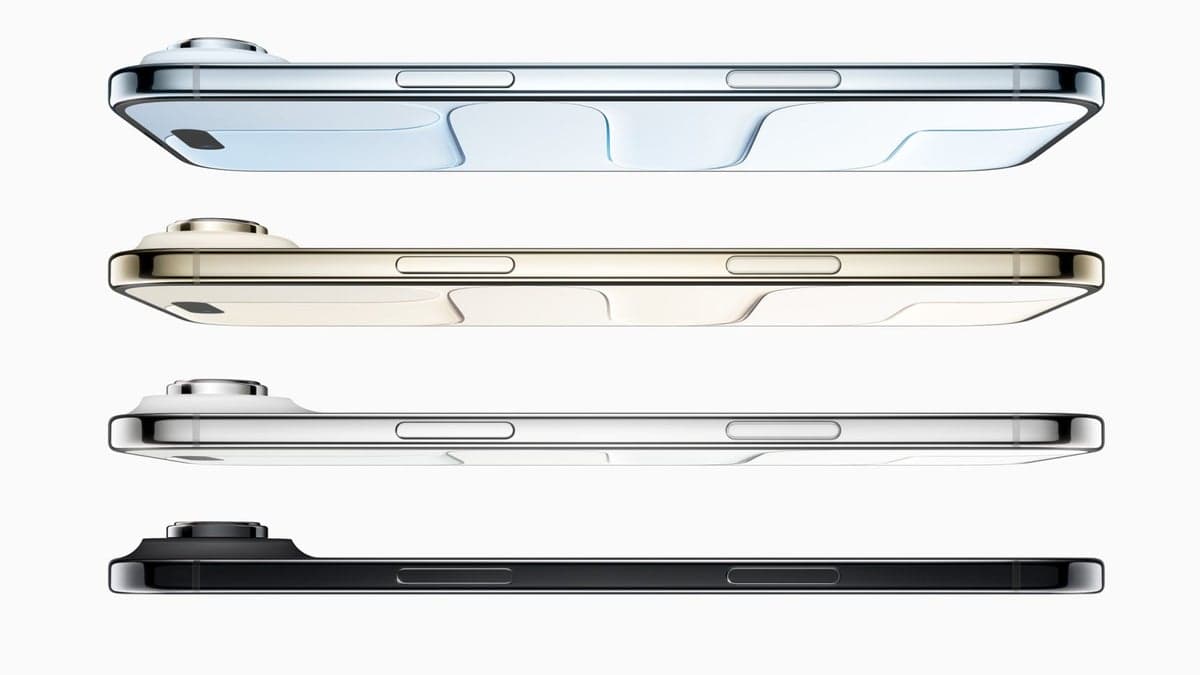
The 5.6mm iPhone Air ditches physical SIM support entirely.
To achieve its 5.6mm profile, the new iPhone Air from Apple will not have a physical SIM card. The phone will use eSIM technology, saving space internally to create a thinner, lighter device, while maintaining typical iPhone capabilities.
eSIMs offer increased flexibility, security, and connectivity in comparison to standard SIM cards. Over 500 carriers, like AT&T, T-Mobile, and Verizon, now support the industry standard. When traveling, users can utilize eSIMs for international roaming plans from their provider, or local prepaid options through over 200 networks.
In terms of security, the embedded eSIM cannot be physically taken out of a lost or stolen phone, offering a layer of protection. The management of travel eSIMs is also simplified, thanks to iOS 26's updated setup.
Apple can use the space previously taken up by the SIM tray and ejector by removing the physical SIM slot. This allows for a slightly larger battery, meeting consumers' desires for improved battery life.
The physical SIM slot also poses a vulnerability to intrusion by dust and moisture. By removing it, the phone gains better protection against these elements, improving the Air's overall durability and its IP rating.
Some might be concerned about the iPhone Air's exclusive support for eSIM. Physical SIMs allow users to quickly switch cards to another device if their phone breaks or they want to change devices. This convenience is not possible with eSIMs.
This may also limit users outside the US, because while eSIMs are useful for travel plans, not every local carrier supports the technology, and options could be limited in certain areas.
Physical SIMs can also be removed to stop phones from connecting to networks, making them harder to track, but this is not possible with eSIMs. However, the ultra-thin design of the Air relies on this trade-off, which may not affect the majority of users.
The Galaxy S25 Edge and other thin devices offer both physical SIM and eSIM support, proving that it's possible to incorporate both. However, Apple is fully embracing eSIMs, which is consistent with its strategy for many US models.
Google is also following this trend with the US version of the Pixel 10 series, which will exclusively use eSIM, except for the Pixel 10 Pro Fold. Ultimately, eSIM represents the direction of technology, and tech companies are adopting it.
"Iconic Phones" will be released this fall.
"Iconic Phones" is a book that has been in development for over a year. It features unique and memorable phones from the past two decades and will be available in just a couple of months.
"Iconic Phones: Revolution at Your Fingertips" will include stories about more than 20 popular phones, and is a journey through the technological advancements that have changed our lives. Sign up now for a special early discount.