China has created a new chip for 6G technology that significantly outperforms current 5G speeds.
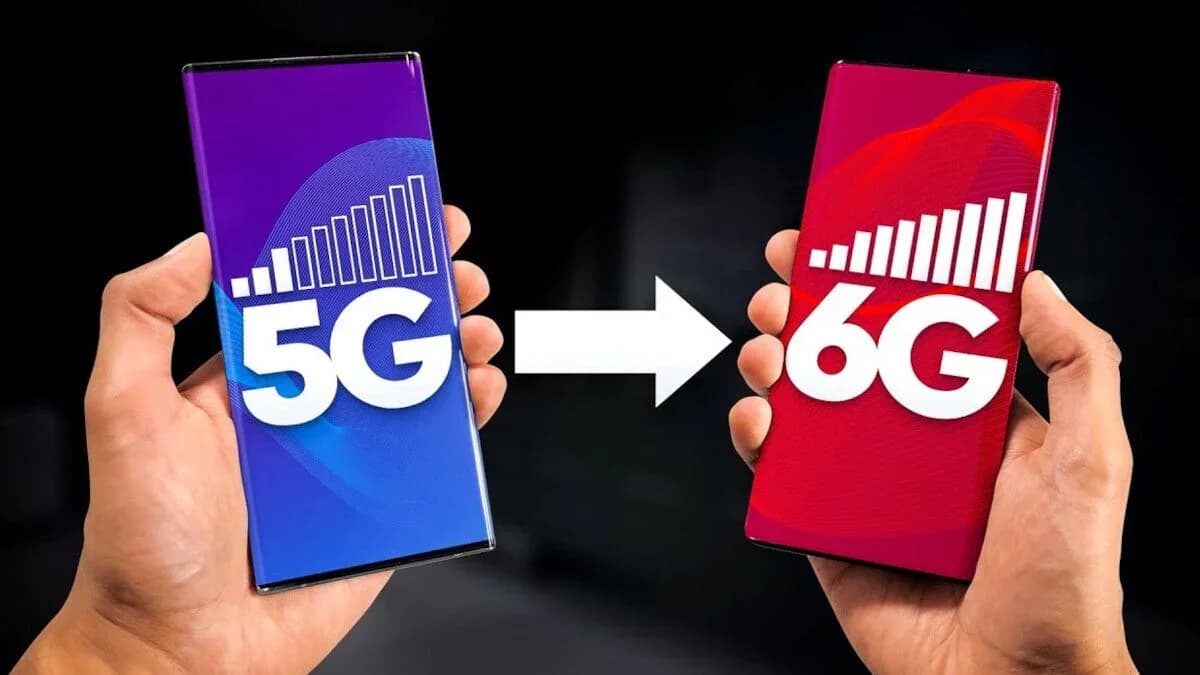
New chip first to include all consumer-used wireless frequencies in one component.
The rollout of 6G in the U.S. is projected to begin by 2030. Standardization efforts are underway by organizations such as the International Telecommunication Union (ITU-R) and the 3rd Generation Partnership Project (3GPP). The ITU-R is developing the framework for "IMT-2030," the official designation for 6G, while 3GPP is working on the technical standards.
China has reportedly created an "all-frequency" chip that is expected to be used when 6G devices are launched. This chip is designed to deliver mobile internet speeds exceeding 100Gbps across the wireless spectrum. According to Nature, this includes frequency bands used both in remote areas and in cities. Users could potentially download a 50GB HD 8K movie in a matter of seconds.
Currently, devices use various frequencies. Some smartphones use mid-band 3GHz signals, while satellite communications utilize high-band (mmWave) 30GHz signals. Future applications of 6G, such as holographic surgery, may require the 100GHz band. While it now takes nine radio systems to cover the wireless spectrum from 0.5 GHz to 115 GHz, the new chip developed in China supports all frequencies in a small component.
According to reports, the new chip replaces multiple devices, enabling multipurpose programmability and dynamic frequency adjustment, and balancing size with power consumption and performance.
The component can switch between spectrums and supports communications via mmWave and terahertz. Instead of needing different chips for different frequencies, a single chip will work with low-frequency signals below 6GHz, high-band mmWave frequencies, and higher-band terahertz frequencies.
The chip will allow devices to maintain a strong signal in various environments, switching from low-band in rural areas to mmWave frequencies in cities. While current smartphones can shift between low-band, mid-band, and mmWave frequencies, the radio-frequency (RF) system includes transceivers, power amplifiers, and antenna modules for each frequency range. The new component allows a small part to operate across the entire wireless spectrum from 0.5 GHz to 115 GHz, which could result in more versatile mobile devices.
Peking University Professor Wang Xingjun noted the need to address 6G development challenges. He said that as connected devices increase, networks must use the strengths of different frequency bands. Millimeter-wave and terahertz high-frequency bands provide bandwidth and ultra-low latency, which makes them suitable for virtual reality and surgical procedures.
The functional part of the chip measures 11mm by 1.7mm (0.4 by 0.07 inch), and communication quality was stable across the wireless spectrum. Frequency tuning, or the time it took to switch frequencies, was faster than 180 microseconds.
Single-channel data speeds exceeded 100Gbps. In comparison, the average rural mobile download speed in the U.S. is 20Mbps, while peak 5G download speeds are slightly above 1Gbps. The new chip could deliver download speeds nearly 100 times faster than current speeds. It can also locate a "clear channel" if a frequency is blocked.
The team plans to develop plug-and-play smart communication modules about the size of a USB drive for use in smartphones, base stations, and drones. The chip may also enable AI-driven wireless networks.
In other news, "Iconic Phones: Revolution at Your Fingertips," a new book about the technological revolution of the 21st century, will be released in a few months.