Compact flagship phones are now performing almost as well as their larger counterparts.
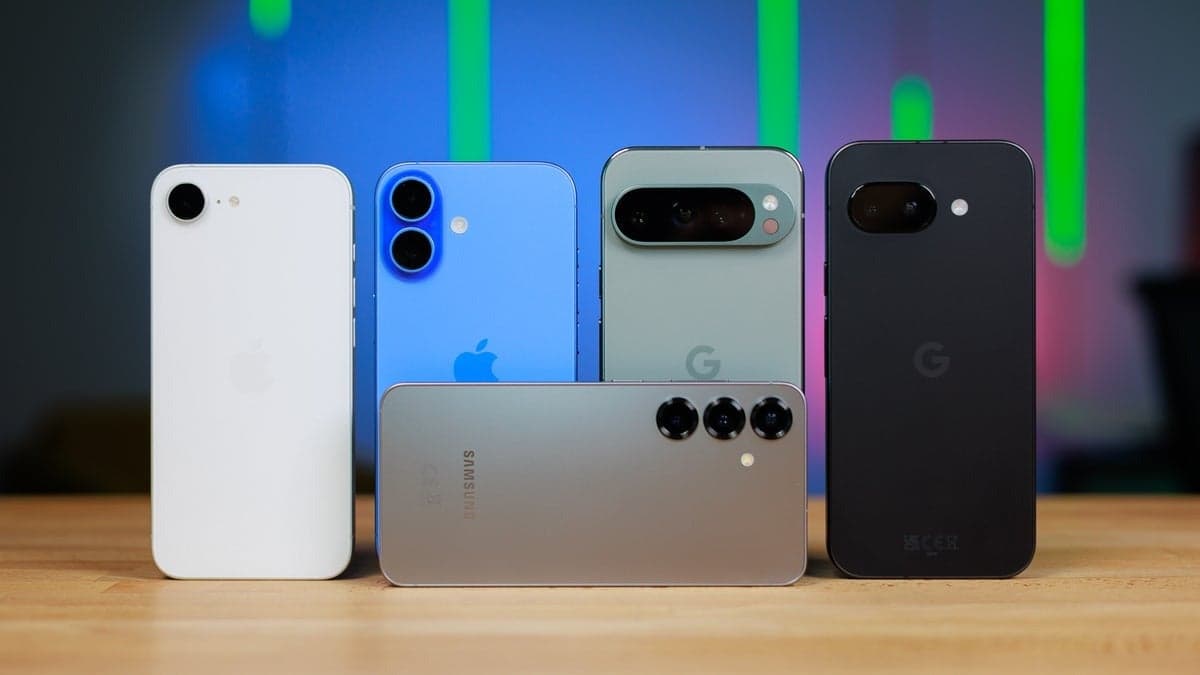
You no longer need a giant phone to get the full flagship experience.
# The Vivo X300
Vivo has openly called the Vivo X300 its "mini Pro," a fitting label despite not being the official name. Comparisons to the X300 Pro highlight their similarities.
Both feature the advanced 3 nm Dimensity 9500 processor, a smooth software interface, an identical fingerprint scanner, and a high-quality display. The X300 also boasts rapid charging capabilities comparable to Pro-level devices, with 90 W wired and 40 W wireless charging. Distinguishing it from the Pro model would be difficult without prior knowledge.
The primary distinctions lie in the camera system. The Pro offers superior zoom capabilities, larger primary and telephoto sensors, and an exclusive Shortcut Button. However, the core user experience remains nearly the same, and its smaller dimensions might make it a better everyday choice for many users.
## Google's "Mini Pro" Approach
Google adopted a similar strategy, starting with the Pixel 9 Pro last year and continuing with the Pixel 10 Pro in 2025. Both models embody the "Pro mini" concept, offering a comfortable 6.3-inch size, excellent battery performance, and no significant compromises.
Google ensures a premium experience even in a smaller form factor. Similar to Apple, opting for the standard Pixel 10 provides a comparable experience while saving money.
## Samsung's Approach
Samsung takes a slightly different approach. The Galaxy S25 stands out as a top compact flagship, equipped with the Snapdragon 8 Elite, 12 GB of RAM, and a superb 6.2-inch display, qualifying it as a genuine "Pro mini."
However, Samsung differentiates it from the Plus and Ultra models in certain aspects. It has 25W wired charging, and lacks the Gorilla Armor anti-reflective coating, a 5x telephoto camera, and S Pen support.
Regardless, its performance is excellent. The user experience is truly flagship-level, with Samsung incorporating high-end components into a compact design.
## Trade-offs in Compact Phones
Despite advancements, compact phones involve some concessions, although less significant than before.
### Battery
Physical limitations mean smaller phones have smaller batteries. The iPhone 17 Pro, Pixel 10 Pro, and Vivo X300 offer all-day battery life, but their larger counterparts last longer with heavy use.
### Zoom Capabilities
Compact phones typically lack the extreme zoom systems found in Ultra/Pro Max models. The iPhone 17 Pro has a practical 4x zoom, but lacks the 5x or 10x capabilities. The Vivo X300 has less zoom versatility than the X300 Pro.
### Thermals
While the iPhone 17 Pro's new vapor chamber improves heat management, larger phones still dissipate heat more effectively, leading to better sustained performance under heavy GPU usage.
### Audio Quality
Small phones offer impressive audio quality, but larger models can produce more volume and depth.
## An Age of Equality
The critical change is that these trade-offs no longer detract from the overall flagship experience. Advancements in performance, displays, and cameras mean brands can now offer their best technology in multiple sizes.
With AI gaining importance, companies need to use powerful chips in all models. AI systems do not function well across different hardware configurations.
Choosing a smaller flagship no longer involves compromise, regardless of the brand, whether it's the Pixel 10, iPhone 17, Galaxy S25, or Vivo X300.
## Nomad eSIM Offer
25% off eSIM data plans & global coverage with code IPHONE25.