Data suggests T-Mobile and AT&T could be better options than Verizon for certain mobile customers.
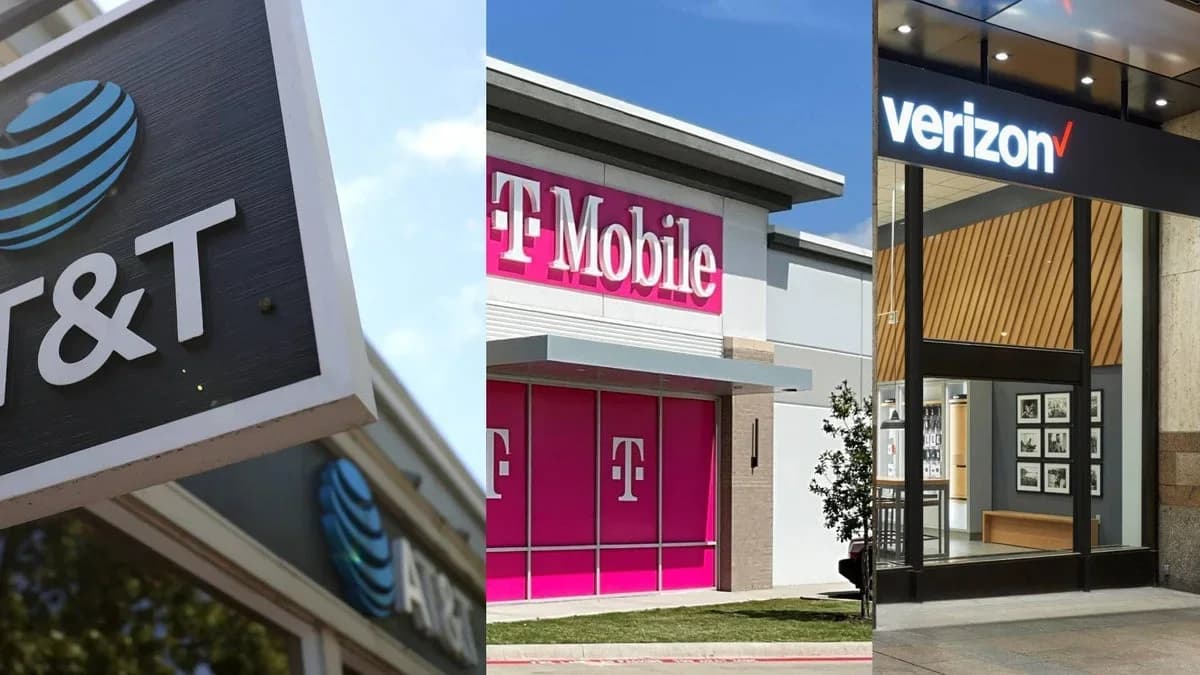
Business customers clearly have two favorites.
According to J.D. Power, AT&T was ranked highest for small business customer satisfaction, while T-Mobile led among medium enterprises, during June-August 2025.
With improvements in network performance, service costs are now a primary consideration. Loyalty programs and consistent communication regarding reliability have given customers the feeling of increased value, even without price cuts.
Carl Lepper, J.D. Power's senior director of technology, media & telecom, stated in October 2025 that satisfaction is increasing among business wireless users as network quality improves, making cost a critical factor.
J.D. Power classifies businesses with 20 to 499 workers as medium-sized. Their satisfaction was measured across these seven criteria: network quality; sales representatives; cost; billing; plans and promotions; digital support; and phone support. The study incorporated feedback from 4,260 business decision-makers.
T-Mobile was number one for medium-sized businesses, scoring 746, followed by Spectrum Business (723) and AT&T (722).
J.D. Power defines small businesses as those with a maximum of 19 employees. Six factors were used to gauge satisfaction among these small companies: network quality; cost; billing; plans and promotions; digital support; and phone support.
AT&T secured first place in this category with a score of 688, followed closely by Verizon with 686 points, and T-Mobile in third with 681.
Choosing plans requires extra care for business customers compared to individual consumers.
T-Mobile attributes its success with medium businesses to its superior network and their SuperMobile plan. The study raises questions about why T-Mobile was behind AT&T in the small business category, even though AT&T's business plans start at $30 monthly per line for five lines, whereas T-Mobile's most affordable plan is $21 monthly per line for six lines.
AT&T's network covers 300,000 more square miles than T-Mobile's, which might explain why it is seen as a more dependable choice for small businesses that are focused on key service metrics.
T-Mobile's value per line, along with a five-year price lock, may be more appealing to medium-sized businesses. Features such as T-Satellite and in-flight internet may also be attractive to them. This value proposition is compelling for larger operations.
The satisfaction scores are relatively close, suggesting that both T-Mobile and AT&T are good options for small to medium enterprises. Verizon appears to be viewed more positively by smaller businesses than T-Mobile, possibly due to better 4G coverage.
Although service differences among AT&T, T-Mobile, and Verizon business plans may be small, being a category leader has value. These carriers, including Verizon, often leverage such wins to claim superiority over competitors. Therefore, these results are noteworthy for businesses that prioritize optimal performance.
However, all three are reliable business choices, and the best decision depends on specific needs.