Garmin HUD MicroLED: RayNeo Proves the Tech Is Now Feasible - the5krunner
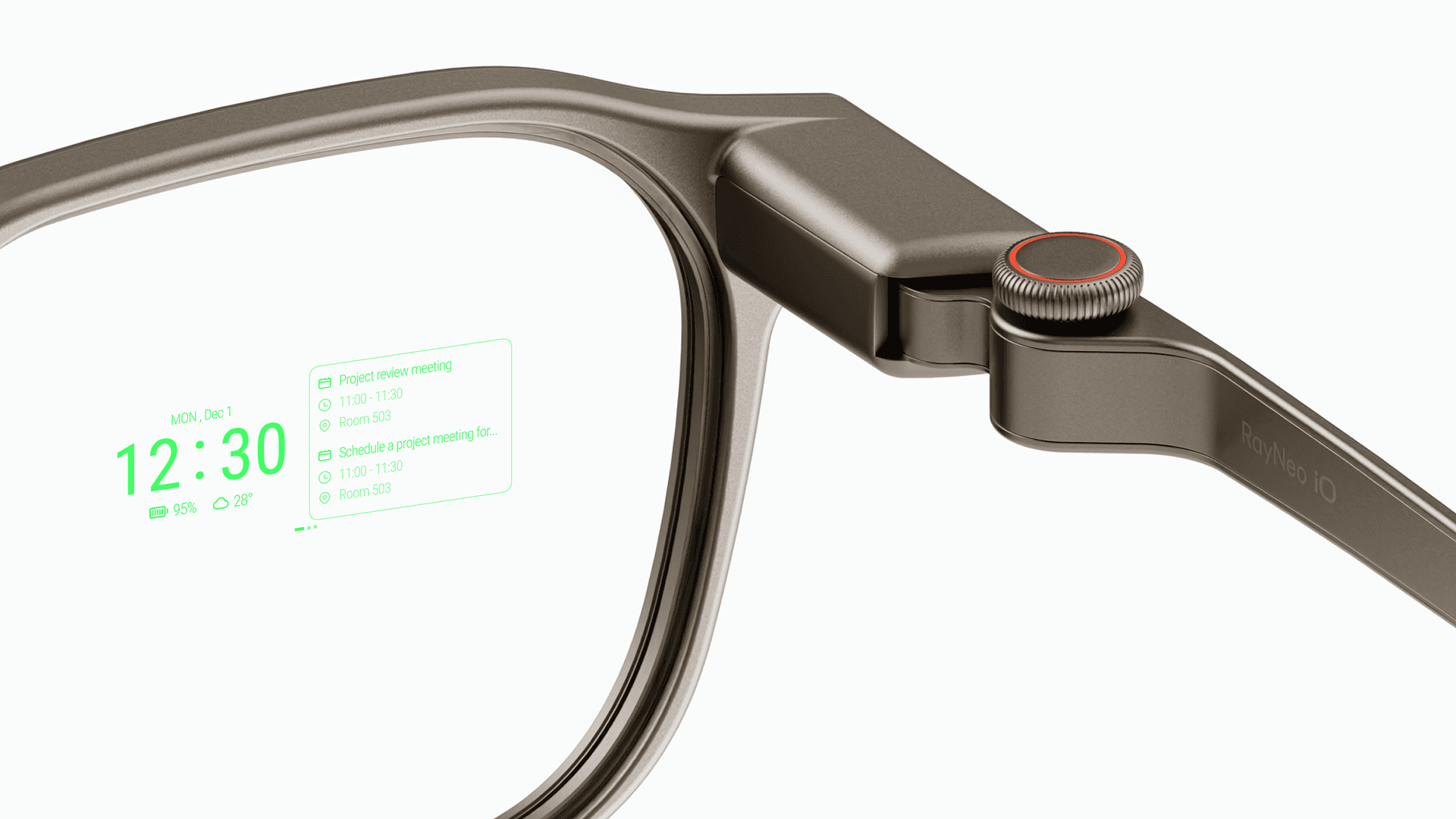
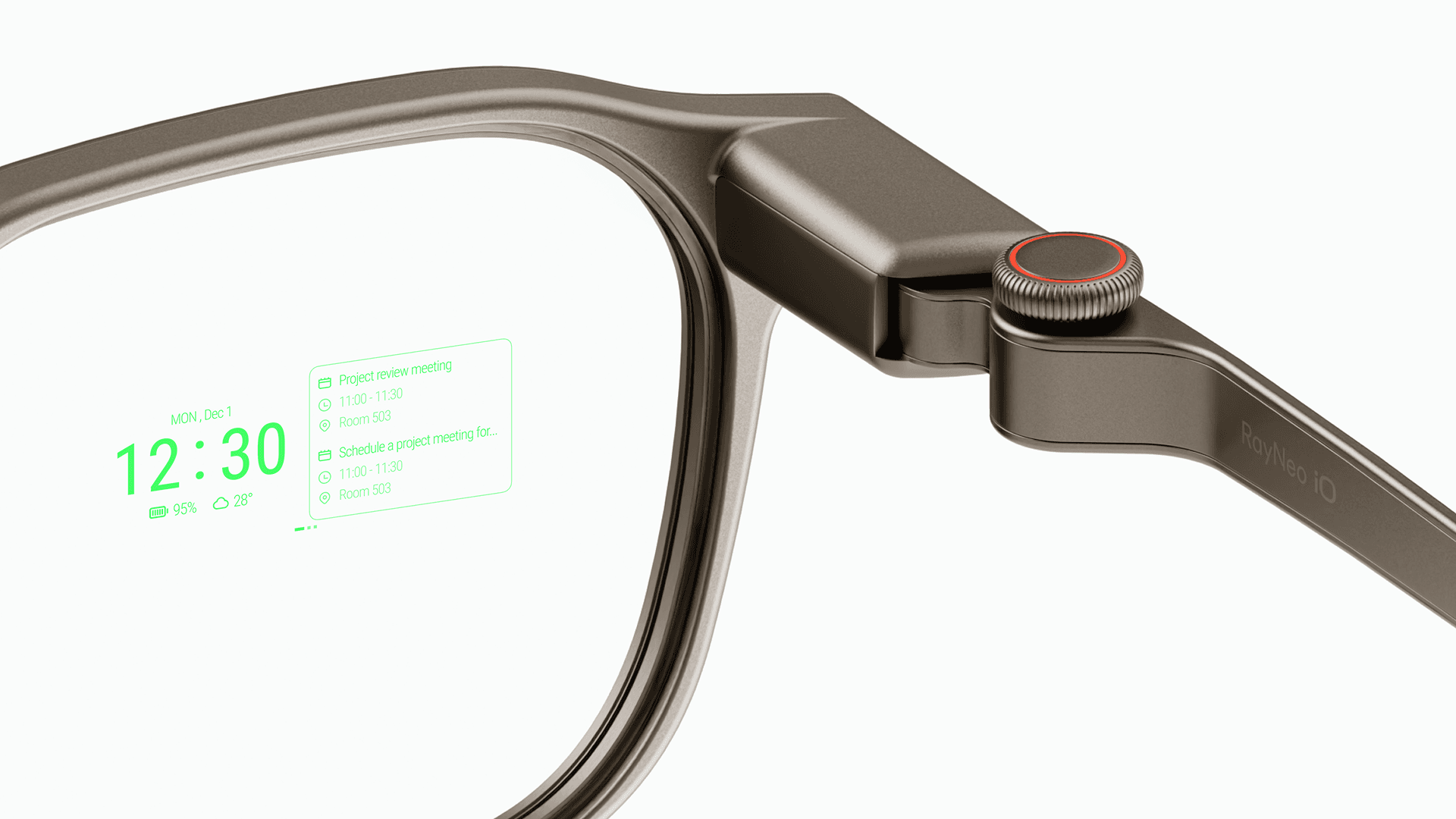

The spec sheet answers a question this site raised in February based on intel that Garmin is planning microLED HUD glasses for sports use: is microLED HUD technology finally practical enough for a new generation of Garmin sports glasses? Engo already leads the sports end of the HUD market Garmin vacated in 2016. There’s now evidence Garmin can do this.
RayNeo’s iO Smart Glasses go on sale September 4 for $479. The spec sheet answers a question this site raised in February based on intel that Garmin is planning microLED HUD glasses for sports use: is microLED HUD technology finally practical enough for a new generation of Garmin sports glasses?
The iO weighs 33 grams. Its Firefly Nano Engine puts a monochrome green MicroLED into a 0.6mm waveguide, delivering 97% optical transparency and up to 1,300 nits at the eye. A 240mAh battery is rated for up to 48 hours of typical use.
Unlike the Meta equivalent, there is no camera. Instead, the glasses work as a HUD, showing notifications, schedules, live translation and teleprompter text with a glance upward.
That’s clearly not a sports product. What matters for Garmin is the underlying tech: a featherweight 33-gram frame, two-day battery life and a sub-$500 price, built on a waveguide MicroLED display. These displays are now real, shipping products rather than lab demonstrations.
Garmin discontinued Varia Vision in 2016, but the idea behind it still holds: useful information in the field of view of a rider, runner or swimmer, without a glance down at a watch. This site suggested in February that a Varia Vision successor could run on microLED. By August, Garmin’s CEO had declined to rule out new form factors on an earnings call.
Engo already leads the sports end of the HUD market Garmin vacated in 2016. It puts pace, power and structured workouts in a runner’s or cyclist’s line of sight. RayNeo has matched, and undercut, Engo’s weight, battery life and price on the underlying display tech.
Garmin would still have to solve the harder problems: outdoor visibility, sports-specific software, controls, durability, prescription compatibility, and whether athletes want a HUD in their field of view at all. The display technology itself is no longer the blocker it was in 2016.
CIRQA went from leak to shipping product within about a year. The CIRQA Ring is likely to follow a quicker path. Glasses have produced no equivalent product leak yet other than the circumstantial information passed to this site.
There’s now evidence Garmin can do this.
Last Updated on 22 August 2026 by the5krunner
This content is not sponsored. It’s mostly me behind the labour of love, which is this site, and I appreciate everyone who supports it.
Support the site: Follow (free, fewer ads) · Subscribe (paid, ad-free) · Buy Me A Coffee ❤️
All articles are written by real people, fact-checked, and verified for originality. See the Editorial Policy. FTC: Affiliate Disclosure — some links pay commission. As an Amazon Associate, I earn from qualifying purchases.
tfk is the founder and author of the5krunner, an independent endurance sports technology publication. With 20 years of hands-on testing of GPS watches and wearables, and competing in triathlons at an international age-group level, tfk provides in-depth expert analysis of fitness technology for serious athletes and endurance sport competitors. ID
Your email address will not be published. Required fields are marked *