Google's innovative tablet idea seemingly vanished after the release of the Pixel Tablet.
A 3-in-1 moment for tablets that others chose to ignore for one cynical reason.
Tablets face a peculiar issue. Originally envisioned as highly portable devices with large screens, they often spend most of their time unused at home.
While tablets may be used occasionally for watching videos, they aren't typically carried everywhere like phones. Nor are they used for work as often as laptops or desktop computers.
Given that tablets are frequently idle, wouldn't it be beneficial if they had other functions?
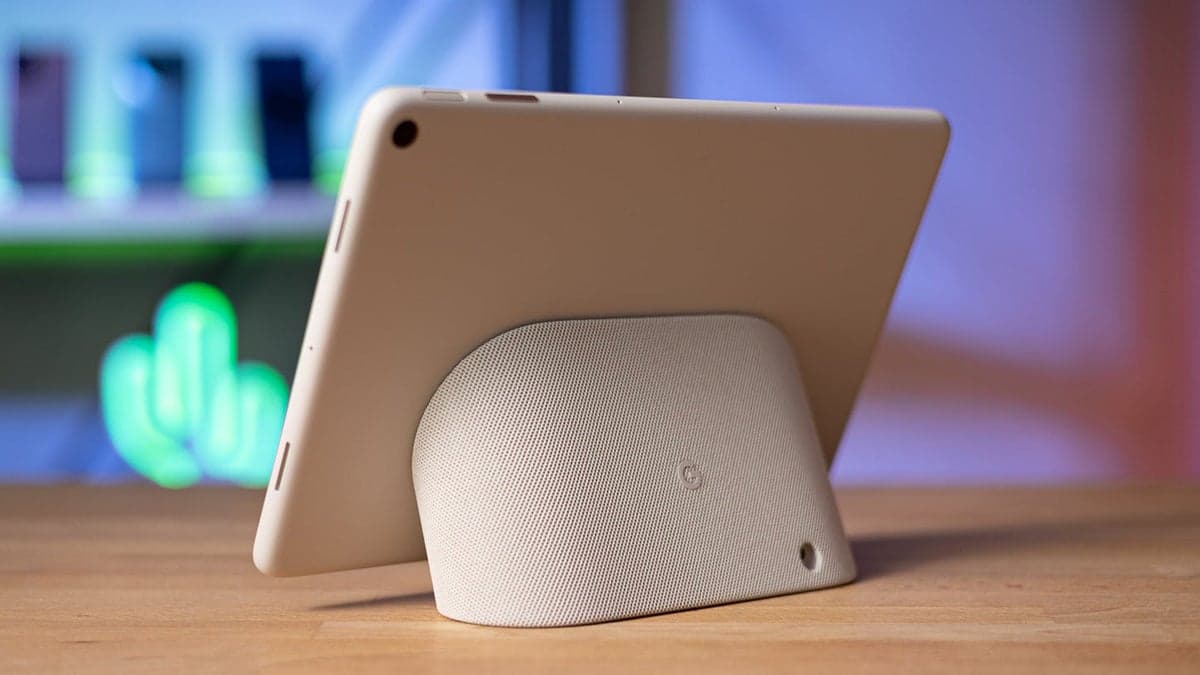
This concept led Google to introduce the Pixel Tablet with a Speaker Dock.
Despite its promise, the idea didn't catch on in the industry, and Google didn't release a follow-up. However, the concept had merit.
When docked, the tablet:
* Charges automatically
* Transforms into a smart display
* Can function as a digital photo frame
* Can serve as a smart home hub
* Can operate as a hands-free media device
The tablet essentially becomes a smart speaker, similar to an Amazon Echo, offering greater utility when not actively in use.
Another advantage is that docking ensures the tablet is always charged. It's not uncommon to find a gadget with a dead battery after it has been left unused for a while.
The dock also provides a designated spot for the device. It can be useful to have a specific place to keep track of devices.
The dock includes a speaker, improving audio quality over standard tablets.
While the speaker might not be exceptional, it could have been enhanced in a subsequent version.
The dock also features far-field microphones, making it suitable for hands-free speakerphone calls.
This setup could potentially eliminate the need for devices like a Nest Hub, Amazon Echo, or other smart displays. This raises the question of why Apple hasn't pursued this approach.
A plausible reason for the lack of an iPad speaker dock is that it could impact Apple's product range.
Imagine an iPad functioning as a smart display or HomePod via a dock.
This could reduce demand for the HomePod Mini and a rumored robotic display. Consequently, fewer HomePods would be purchased.
The potential new HomePad, a smart screen for homes, would face competition, affecting profits. Selling both an iPad and a separate HomePod-like device is more lucrative for Apple than offering a single, more versatile iPad.
This theory explains why the industry hasn't adopted the Pixel Tablet's dock concept; it blurs the lines between different product categories.
A docked Pixel Tablet becomes a versatile device, serving as a powerful tablet, a smart speaker, and a smart display.
Similar to the impact of the first iPhone, this 3-in-1 concept could boost tablet appeal.
Despite the Pixel Tablet's release years ago, current iPads and Galaxy Tabs still lack dock functionality.
It's unfortunate that this idea wasn't embraced more widely, and Google didn't continue to develop it.
Giving tablets a purpose during their idle time is a great idea. It's a missed opportunity that Apple, Samsung, and Lenovo haven't pursued it.