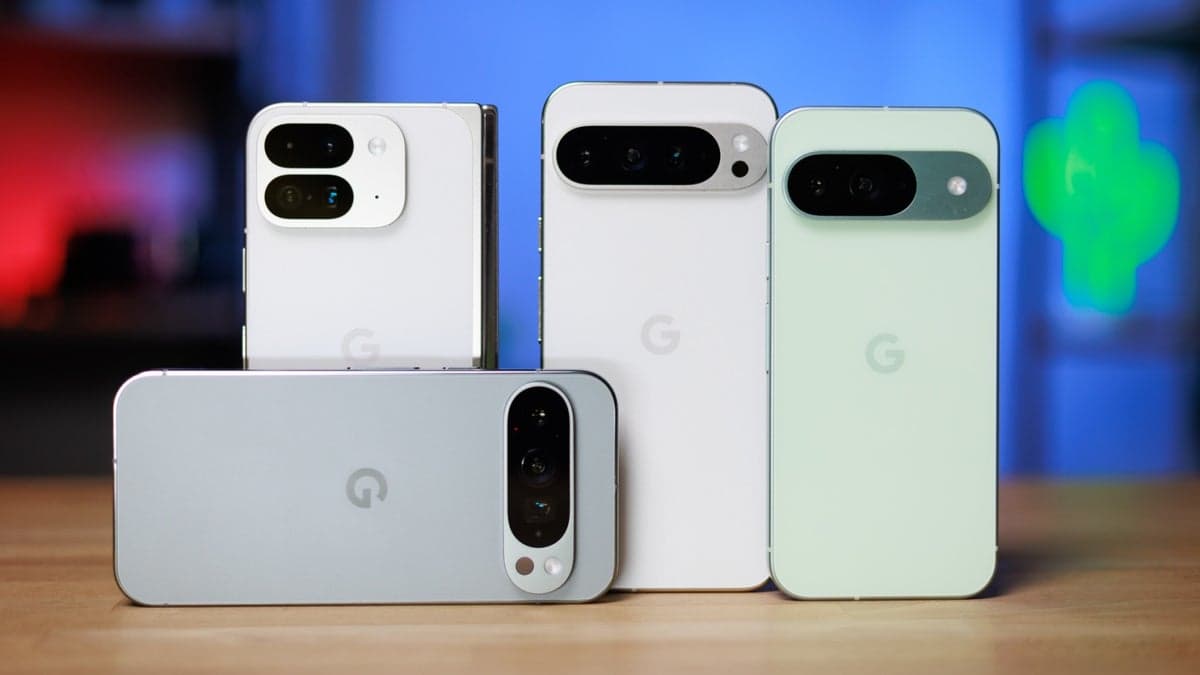
Google's Pixel phone sales surged in the first half of 2025, placing it among the top five premium smartphone vendors globally.
While Apple continues to dominate the global premium smartphone landscape, several other brands have managed to boost their H1 sales far more impressively this year.
Google has received considerable praise for doubling its global premium smartphone sales between the first half of 2024 and the first half of 2025. However, Apple still holds a dominant position, with 62 percent of the market share.
The Cupertino-based tech company accounted for almost two-thirds of all handsets priced at $600 or higher sold globally between January and June 2025. While its volume increased by 3 percent, its market share decreased from 65 percent in the first half of 2024 to 62 percent.
The iPhone 16 series was not specifically mentioned in the recent Counterpoint Research report, although it apparently sold well. Samsung's Galaxy S25 series was highlighted as performing better than the Galaxy S24 models, which helped Samsung maintain its position as the second-largest premium smartphone vendor.
Samsung maintained its market share at 20 percent, reducing the gap to Apple to 42 percent. The existing hierarchy in the premium smartphone market is expected to remain stable. However, if the Pixel line continues its growth, Google could potentially challenge Huawei for third place.
With increased marketing efforts and expansion into new regions, the Pixel 9 series boosted Google's global premium sales by 105 percent. This growth allowed Google to enter the top five vendors for the first time in five years.
Another doubling of sales after the Pixel 10 series launch is unlikely. However, the Pixel 10, Pixel 10 Pro, Pixel 10 Pro XL, and Pixel 10 Pro Fold offer improvements over their predecessors, and Google's marketing efforts appear to be intensifying. If Apple is not careful, its 62 percent share of the premium market could decrease, benefiting Google, Samsung, Huawei, and Xiaomi.
Xiaomi experienced a substantial 55 percent gain in the global premium market, primarily driven by the Chinese premium segment. Huawei maintained its third-place position with a 24 percent increase between the first half of 2024 and the first half of 2025.
The key question is unanswerable for now, but many analysts believe foldables are crucial for Samsung, Google, Huawei, Xiaomi, and potentially Apple in the premium sector. With the Galaxy Z Fold 7 exceeding expectations, any delays in the iPhone Fold's development could negatively impact Apple's ability to maintain its 62 percent share.
Google needs to improve its launch schedules to prevent future delays like the one experienced with the Pixel 10 Pro Fold. Samsung appears well-positioned for both short-term and long-term growth, with the Z Fold 7 and a Galaxy S26 Edge potentially outperforming the iPhone 17 Air in battery life.
"Iconic Phones: Revolution at Your Fingertips" is a new book that chronicles the evolution of mobile phones. Sign up now for an early discount.