Google's recent actions highlight a major problem with smartwatches.
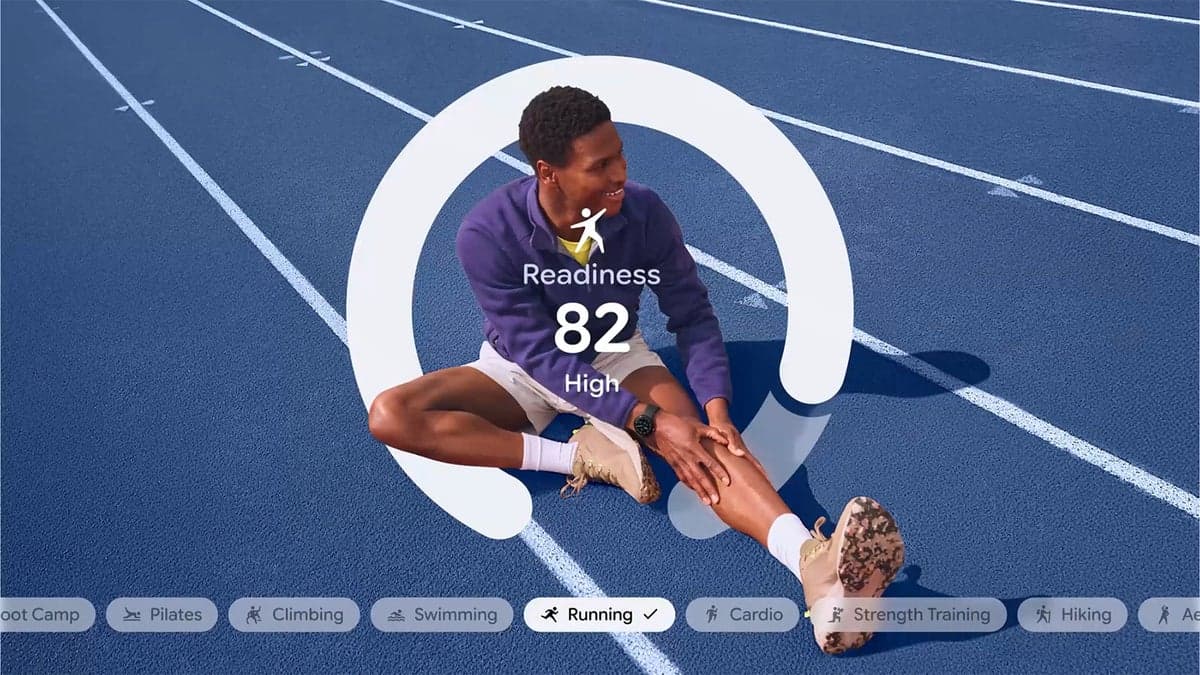
We have tons of data and it's overwhelming, hard to understand and can often be frustrating too.
AI on sports watches has generally been "somewhat helpful" or "easily ignored" so far.
However, Google presented plans for a comprehensive AI health assistant, going beyond simple encouragement for completed workouts, unlike Apple's Workout Buddy in WatchOS 26.
Google aims to create a genuinely helpful tool that can analyze recent workouts and long-term health patterns using data collected over months or years, which is where its potential lies.
Instead of brief summaries or basic data recaps, the post-workout analyses will consist of detailed paragraphs with practical information.
This new Fitbit AI health coach is ambitious and requires access to a lot of data.
While some may worry about their data being used, especially health data, more data analysis is needed to gain valuable health insights.
A key issue with smartwatches that Google identified is the lack of actionable insights.
Although smartwatches provide plenty of data, many users struggle to interpret it. For example, the significance of nightly "breaths per minute" numbers or wrist temperature trends from an Apple Watch remains unclear for most people.
In the areas of health, sleep, and fitness, there is a lot of anecdotal advice, making it difficult to distinguish between pseudo-science and evidence-based facts. A well-trained AI could assist users in filtering out the noise.
Google offers continuous advice and allows users to communicate with the AI coach, which can adjust workouts based on data rather than simply pushing for more repetitions.
The sleep coaching, for example, adapts to different days based on user data.
For an AI coach to be truly effective, it requires a comprehensive understanding of the user's health.
This initiative carries both risk and significant promise.
Using Health Connect and HealthKit, the Fitbit AI coach can access data beyond the watch, such as weight from smart scales or glucose levels from continuous glucose monitors.
Will it also handle blood pressure data for people with hypertension or even lab data?
Although Google might not include lab data, it would be useful for AI to explain the numerous numbers from annual lab tests, democratizing health knowledge.
Before the event, Google released a paper in Nature Magazine regarding its work on a PH-LLM.
The introduction highlights its benefits:
PH-LLM is a Gemini LLM version designed for understanding and reasoning using aggregated daily numerical sensor data. Three benchmark datasets were created to assess sleep and fitness aspects: expert knowledge, personalized insights and recommendations, and predicting sleep quality from longitudinal data. PH-LLM outperformed human experts on sleep medicine (79% versus 76%) and fitness (88% versus 71%) multiple-choice exams.
PH-LLM is a Gemini LLM version designed for understanding and reasoning using aggregated daily numerical sensor data. Three benchmark datasets were created to assess sleep and fitness aspects: expert knowledge, personalized insights and recommendations, and predicting sleep quality from longitudinal data. PH-LLM outperformed human experts on sleep medicine (79% versus 76%) and fitness (88% versus 71%) multiple-choice exams.
Having a specialized LLM that surpasses human experts is a promising start for personal health and fitness. However, as this is a claim from Google, skepticism is reasonable until it can be tested in October.
In addition to AI scientists, basketball star Steph Curry and his performance team are also contributing to the project.
Curry and his team will collaborate with Google's health experts and AI engineers to evaluate upcoming products and experiences. Curry will also actively use the Pixel devices, including phones, watches, and headphones, providing hands-on feedback rather than simple marketing.
Has any other company considered your health on such a large scale? While Apple has Workout Buddy, it is quite limited.
The AI Health coach will be available as a preview for Fitbit Premium subscribers in the US this October.