Huawei remains committed to artificial intelligence development despite ongoing restrictions in the United States.
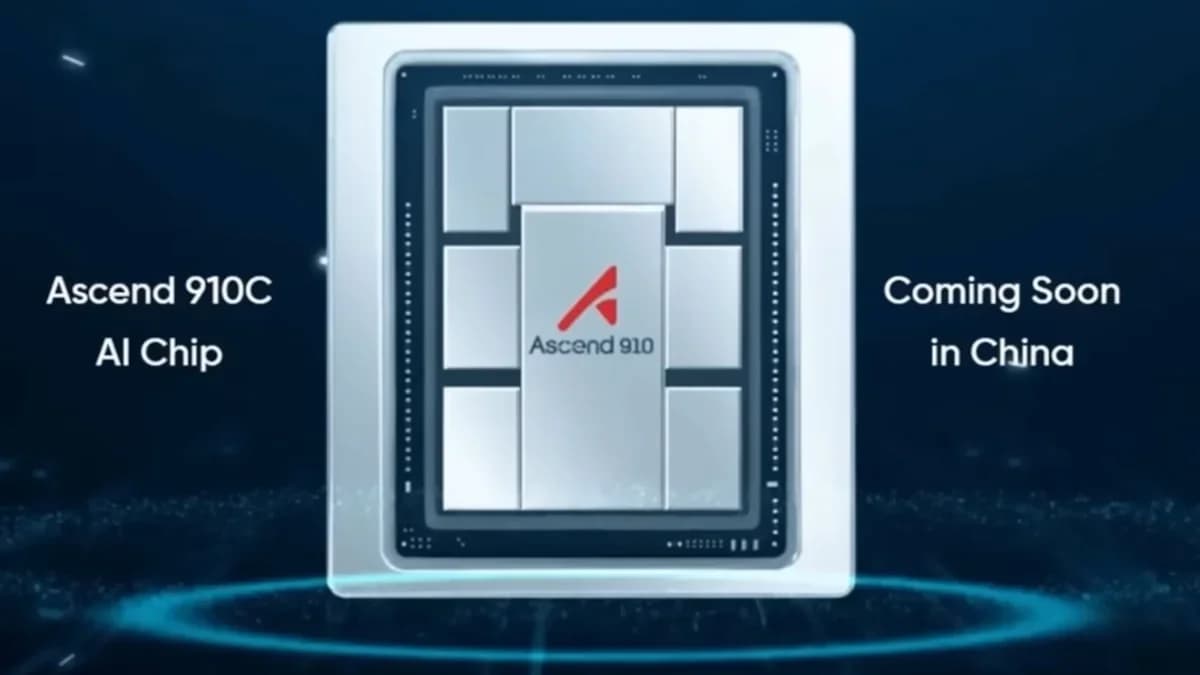
Huawei hopes to produce powerful AI technology despite U.S. sanctions.
Last week, Huawei hosted its yearly customer event in Shanghai, where it announced plans to launch new superpods in late 2026 and 2027. These superpods are interconnected computers that combine the power of thousands of chips to provide the computing power required for AI models. Huawei intends to launch the Atlas 950 and 960 superpods over the next two years.
Despite U.S. sanctions restricting its access to advanced semiconductors, Huawei stated that the Atlas 950 and 960 would be the world's most powerful superpods for years to come, based on competitor product roadmaps. The company plans to connect dozens of these superpods to create powerful "SuperClusters."
Huawei also announced new Ascend series AI accelerator chips to be released over the next three years. The Atlas 950 and 960 superpods will use the Ascend 950 and 960 chips, scheduled for release in 2026 and Q4 2027, respectively, with the Ascend 970 chip potentially arriving in Q4 2028. The Ascend series has limited availability outside China, while Nvidia's AI accelerators face export restrictions in some countries, including China, North Korea, Sudan, Russia, and Venezuela.
AI accelerators enhance the speed of AI and Machine Learning tasks, including training Large Language Models (LLM).
China seeks to compete with AI leaders like OpenAI and Google without access to Nvidia's most powerful AI chips, as the U.S. has restricted exports of chips like the H100 to China. Nvidia has reportedly developed less powerful AI chips for China. Meanwhile, China has restricted some U.S. companies from shipping AI chips into China to encourage domestic production.
At the conference, Huawei's rotating chairman, Eric Xu, stated the company's strategy is to create a new computing architecture and develop computing SuperPoDs and SuperClusters to meet the long-term demand for computing power. Forrester Research analyst Charlie Dai noted that this signals a stronger push toward self-reliance and resilience amid export restrictions.
Eric Xu added that while DeepSeek has developed new ways to train models using less computing power, artificial general intelligence (AGI) and physical AI will still require significant computing power, making computing power key to AI, especially in China.
Despite U.S. restrictions, Huawei continues to innovate. Faced with being unable to use the Google Play version of Android, Huawei developed Harmony OS. When the U.S. restricted Huawei's access to advanced chips, SMIC manufactured 5G application processors using Huawei's designs and the foundry's 7nm process node. Huawei has remained competitive despite challenges.
Huawei's CEO Eric stated that they aim to double compute with each Ascend chip release, improving usability, data format support, and bandwidth to meet the growing demand for AI compute.
In other news, "Iconic Phones: Revolution at Your Fingertips," a coffee table book for tech enthusiasts, will soon be released.