Intel SVP Confirms Razor Lake-AX Will Hit 700 TOPS & Launch In 2028, 3.88x The AI Compute Of Panther Lake - Wccftech
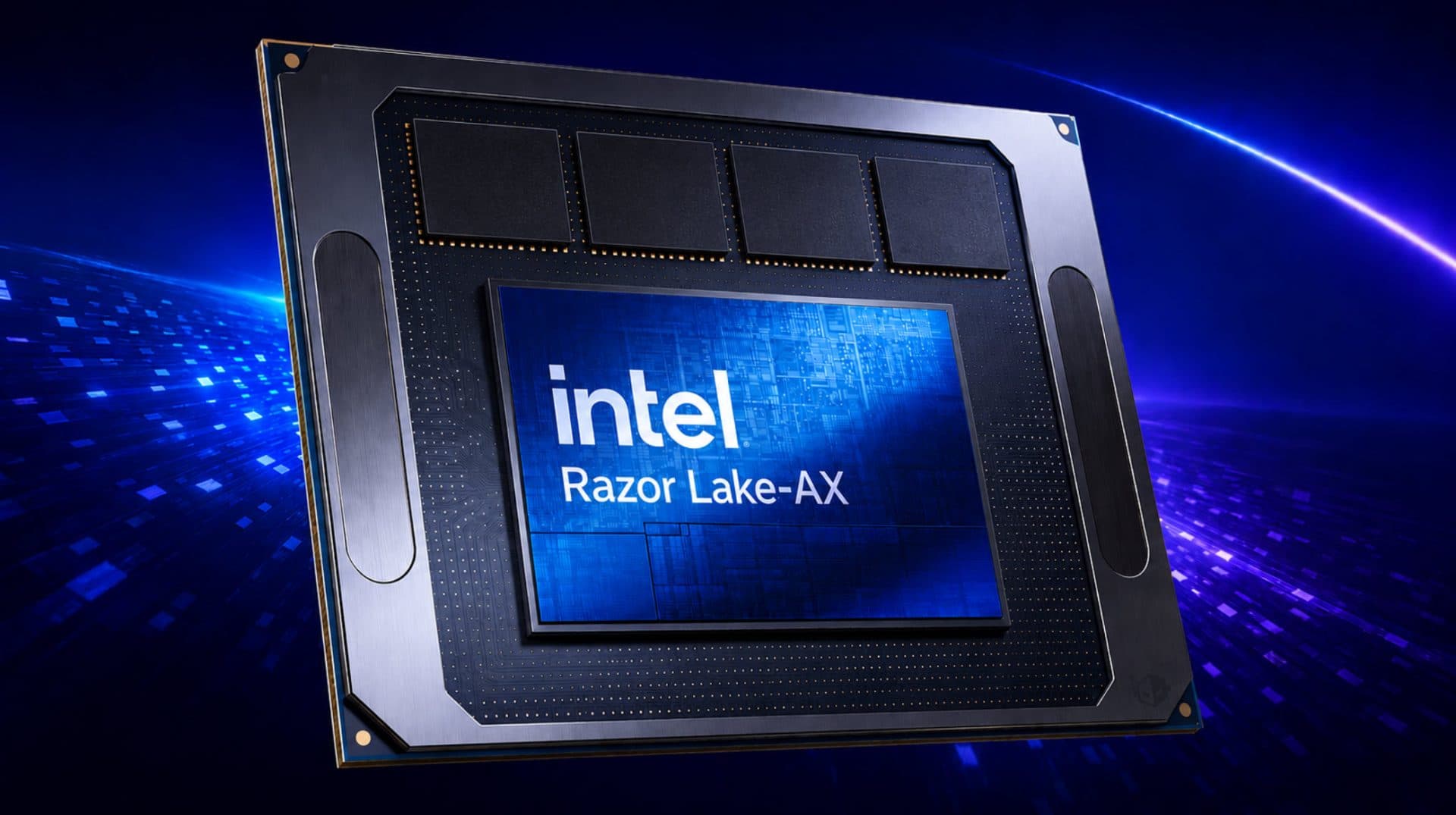



Intel has confirmed that its next-generation Razor Lake-AX SoCs will launch in 2028, bringing increased AI capabilities. But Intel naming Razor Lake this year was definitely a surprise. The Intel Razor Lake-AX SoCs aren't going to be a traditional computing platform.
Intel has confirmed that its next-generation Razor Lake-AX SoCs will launch in 2028, bringing increased AI capabilities.
During the "Semiconductors Powering Humanoids" seminar in South Korea's Samseong-dong, Intel SVP Cho Min-sung confirmed the next-generation Nova Lake and Razor Lake SoCs. These SoCs will be arriving in 2027 and 2028, respectively.
The Intel Nova Lake CPUs have been expected for a while, and we have a fair bit of information that is covered in previous articles. But Intel naming Razor Lake this year was definitely a surprise. The company head outlined the performance aspects of the chip, which look impressive.
"We plan to provide performance at the 700 TOPS level with the next-generation Nova Lake early next year and Razer Lake AX in 2028."
Cho Min-Sung (Intel SVP) via The Elec
Min-sung said that Intel's Razor Lake-AX SoCs will offer 700 TOPS of AI compute, an increase of 3.88x over the existing Panther Lake "Core Series 3" chips, which offer 180 TOPS. The Intel Razor Lake-AX SoCs aren't going to be a traditional computing platform. It will be similar to AMD's Ryzen Halo platform, offering several cores, massive GPUs, and increased memory capabilities. The chip will be aimed at premium devices, and one of the markets it will tackle is Physical AI.
Intel stated that Razor Lake-AX's 700 TOPS will far exceed the NVIDIA Jetson AGX Orin platform, which offers 275 TOPS. That's a 2.5x increase in AI compute. NVIDIA recently released updated versions of its Jetson SoCs, which scale from 160 to 275 TOPS in the mainstream segment. These platforms feature 8 GB and up to 64 GB of VRAM. The Jetson Thor T2000 platform offers around 400 TFLOPS while the T3000 offers 865 TFLOPS of FP4 AI compute. These chips are rated at 40W and 70W, respectively.
Having a large memory pool is essential for AI, so Intel is likely going to have a unified and large pool available on Razor Lake-AX SoCs. These SoCs are expected to feature on-package memory, which will be a return to MoP design first featured on Lunar Lake "Core Series 2" SoCs a few years back.
As the industry doubles down on AI, Physical and Agentic AI-specific chips are becoming the new standard. We have seen NVIDIA venture into the PC space with its latest RTX Spark SoCs, & AMD has been offering Ryzen AI MAX+ Halo chips for a while. Intel creating its own SoC and focusing on the Agentic/Physical AI space is further going to accelerate these segments. Intel's Panther Lake is already a potent solution in the Physical AI space, & Nova Lake/Razor Lake are only going to take them further in this growing market.
About the author: A Software Engineer by training and a PC enthusiast by passion, Hassan Mujtaba serves as Wccftech's Senior Editor for hardware section. With years of experience in the industry, he specializes in deep-dive technical analysis of next-generation CPU and GPU architectures, motherboards, and cooling solutions. His work involves not only breaking news on upcoming technologies but also extensive hands-on reviews and benchmarking.
Follow Wccftech on Google to get more of our news coverage in your feeds.