iPhone 18 Pro vs iPhone 15 Pro: Three-year upgrade - AppleInsider

The iPhone 18 Pro uses the new A20 Pro chip. This is unchanged in the iPhone 18 Pro. For an iPhone 15 Pro owner, the iPhone 18 Pro is a meaningful upgrade.
Fri Sep 11 2026, 01:55 PM EDT · 12 minute read
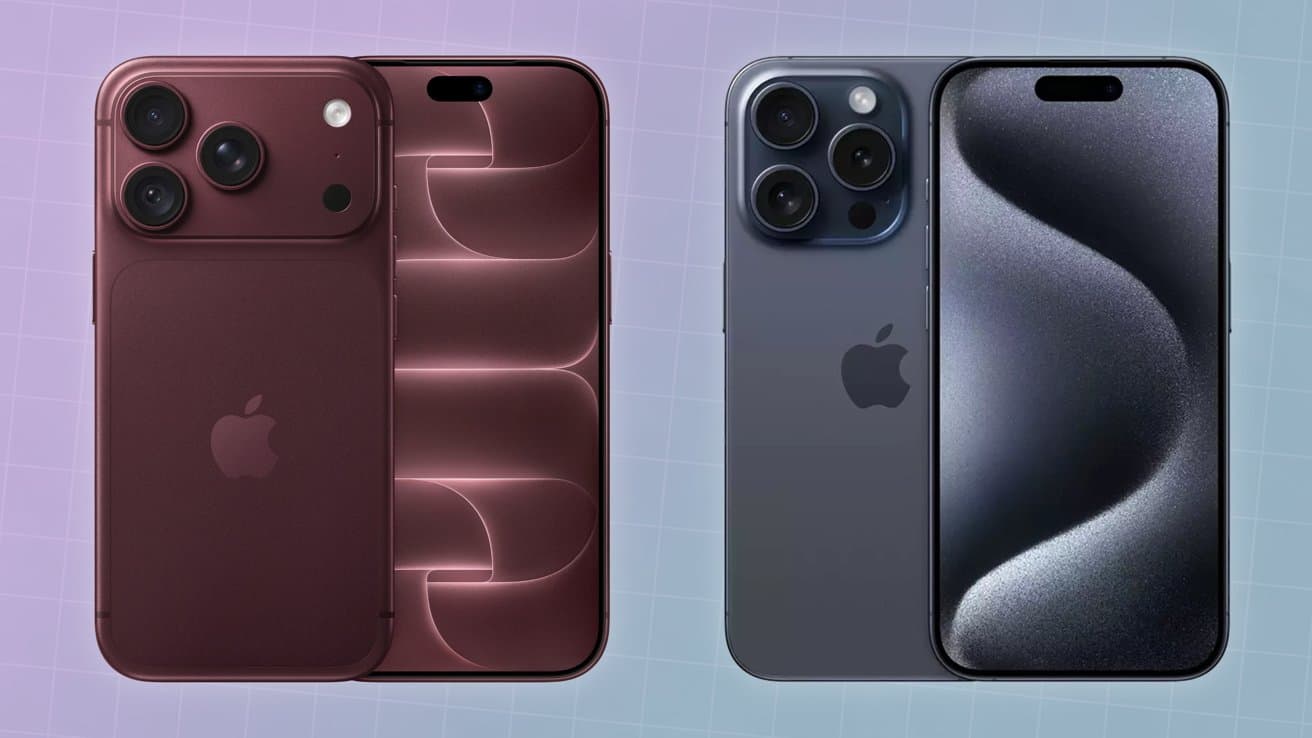
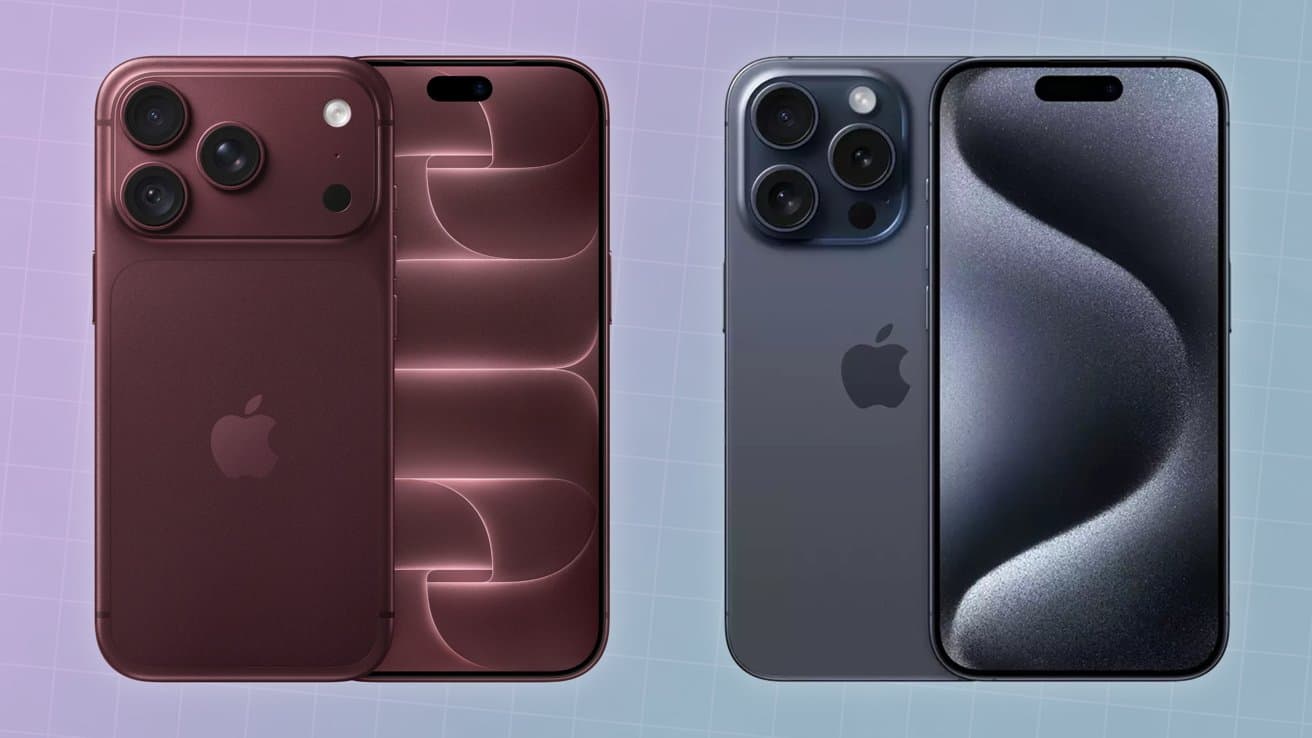
iPhone 18 Pro [left] vs iPhone 15 Pro [right]
The average timetable between pro iPhone upgrades is three years. Apple's iPhone 18 Pro has arrived, with iPhone 15 Pro owners taking a close look. Here's how the two compare, both in feature changes and in benchmarks.
Apple launched the iPhone 18 Pro at its fall event, the latest in the Pro line. Three years ago, the same thing happened for the iPhone 15 Pro.
A lot can change in three years. That means owners of the iPhone 15 Pro are now seriously considering taking advantage of all of the updates by upgrading to a newer device.
This is how the iPhone 18 Pro compares against the iPhone 15 Pro, and if it's worth the upgrade.
The iPhone 15 Pro was the first Pro to adopt a titanium frame, replacing stainless steel for a more favorable strength-to-weight ratio. At 5.77 inches tall and 2.78 inches wide, it was adequately sized for the time.
The iPhone 18 Pro instead opts for an aluminum unibody frame, introduced with the iPhone 17 Pro. It's a little larger than its three-year-old counterpart, at 5.91 inches tall and 2.83 inches wide.
When it comes to thickness, the older model is just ahead at 8.25mm to 8.75mm in the new one.
The iPhone 18 Pro also tips the scales at 7.44 ounces, close to an ounce heavier than the titanium-clad iPhone 15 Pro.
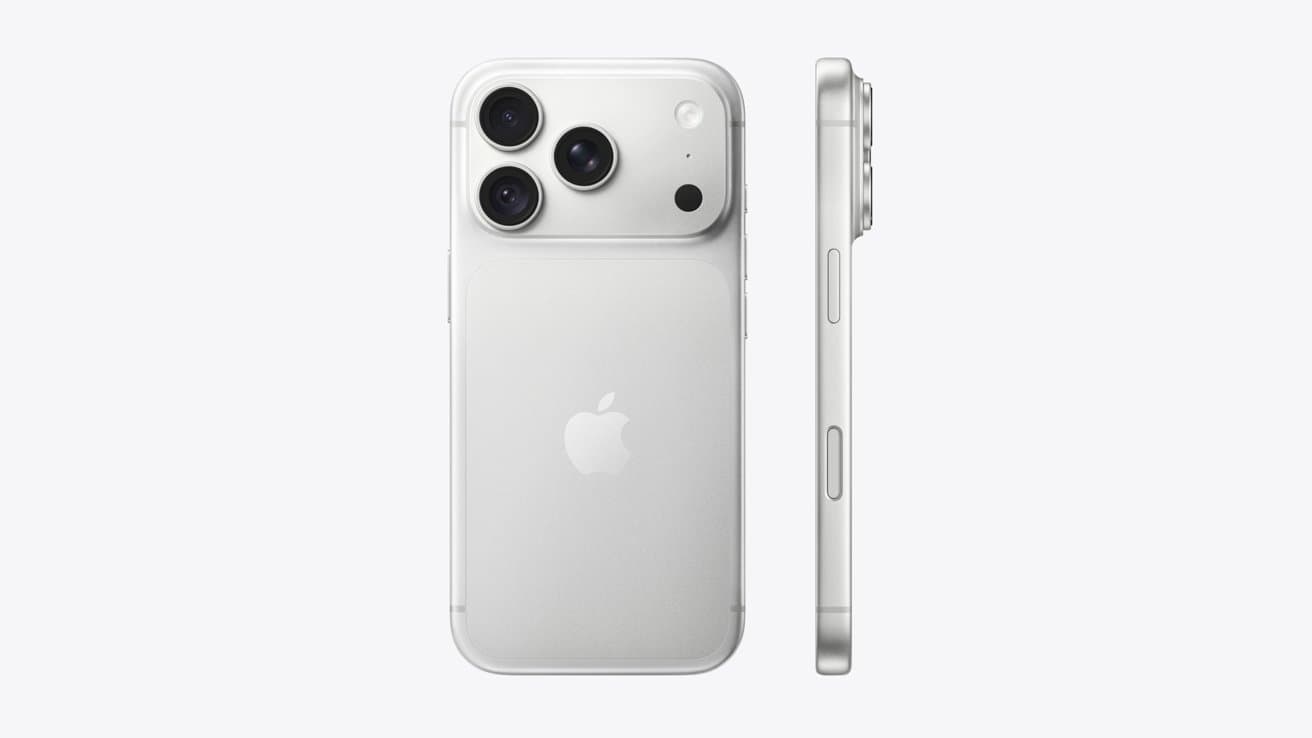
iPhone 18 Pro vs iPhone 15 Pro: Rear and side views of the iPhone 18 Pro
When it comes to appearances, the iPhone 18 Pro has a marginally bigger display, as well as a width-covering Camera Plateau around the back. The iPhone 15 Pro still used a camera bump, just as the iPhone 16 Pro does.
Button-wise, the iPhone 15 Pro has volume, a side standby button, and also the Action button. This last one debuted on the device, replacing the physical mute switch with a configurable alternative.
The iPhone 18 Pro also adds Camera Control, which can be used to more finely control the camera for photography purposes, without accessing the Camera app's menus.
Both carry an IP68 rating for water and dust resistance. That means both can survive a maximum depth of 6 meters for up to 30 minutes.
There's some evolution over the three years, but not a massive amount between the models. Weight is certainly a devolution.
The iPhone 15 Pro uses a 6.1-inch Super Retina XDR OLED display. At 2,556 by 1,179, it delivers 460 pixels per inch, Apple's usual pixel density.
The screen also had ProMotion up to 120Hz, as well as an always-on mode. Brightness started at 1,000 nits for typical usage, rising to 1,600 nits at peak for HDR content, and 2,000 nits for outdoor usage.
The Dynamic Island, introduced on the iPhone 14 Pro, carries through here as the pill-shaped cutout.
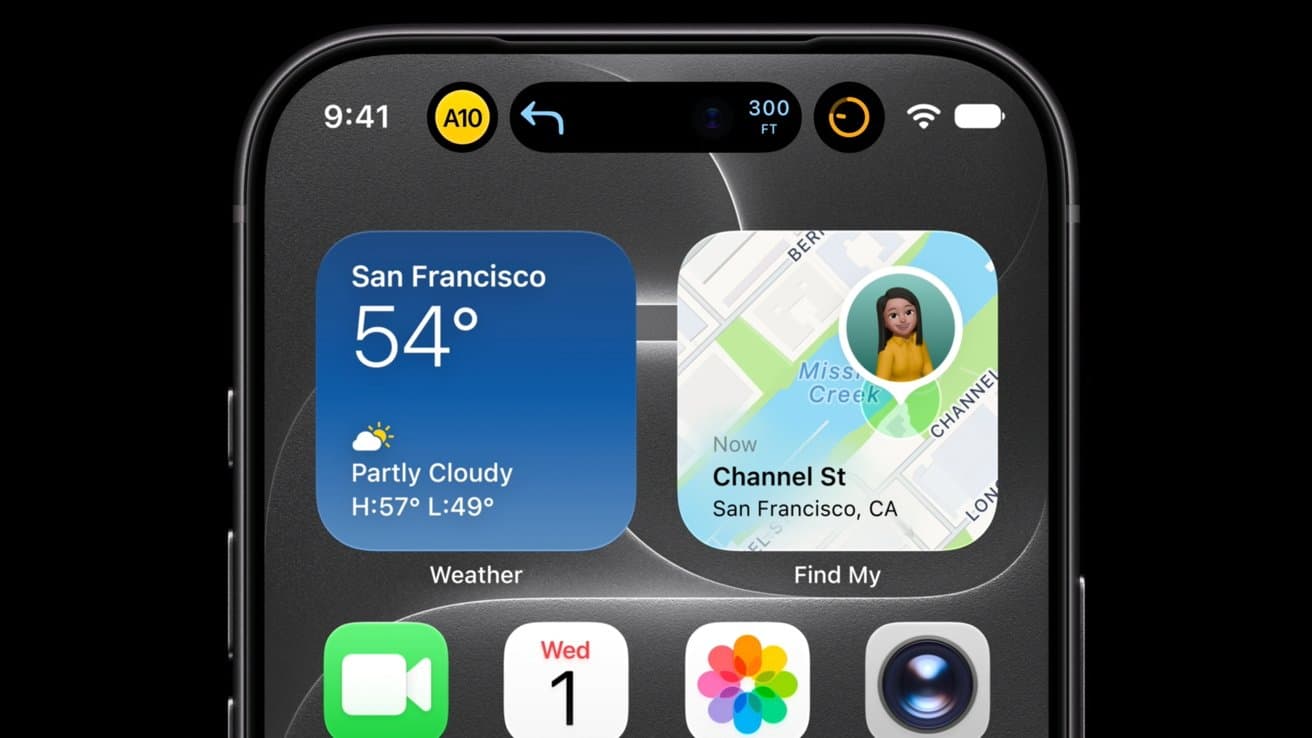
iPhone 18 Pro vs iPhone 15 Pro: The new display is brighter and has an even better Dynamic Island
The iPhone 18 Pro uses a slightly larger 6.3-inch Super Retina XDR panel at 2,622 by 1,206. Again, that's a 460 pixels-per-inch density Apple is so fond of using.
Features like ProMotion and the always-on display continue through to the iPhone 18 Pro, including a 2 million-to-one contrast ratio, TrueTone, and Wide Color P3 support.
The brightness is improved for outdoor usage, though, with the new model getting up to 3,000 nits.
Though the display tech functions mostly the same, Apple has made the Dynamic Island a little bit smaller in the iPhone 18 Pro. This now allows up to three Live Activities to be shown in what is UI-based camouflage for the TrueDepth camera array.
This is one of the largest gaps between the two phones. While the front screen has seen small changes, the camera systems are three generations apart.
The iPhone 15 Pro uses a 48MP Main, a 12MP Ultra Wide, and a 12MP 3x Telephoto at 77mm. That 3x telephoto was the shorter of the two 2023 Pro models, with the Pro Max going up to a 5x telephoto instead.
That longer zoom was implemented thanks to a tetraprism lens system, which was exclusive to the iPhone 15 Pro Max that year.
The iPhone 18 Pro moves to a triple 48MP system, with all three rear cameras at 48MP, and gains the word "Fusion" in each of their names.
iPhone 18 Pro vs iPhone 15 Pro: Apple has the Camera Plateau instead of a bump on the iPhone 18 Pro.
When it comes to telephoto, Apple bumps the iPhone 18 Pro to 4x for optical zoom, but 8x for an "Optical Quality" version. This uses a trick that's also used on the Main cameras of the iPhone 15 Pro and iPhone 18 Pro, in strategically cropping the image to "zoom" in.
The headline camera feature for the iPhone 18 Pro is a variable aperture on the main sensor. It adjusts between f/1.48 and f/4.0, giving mechanical control over depth of field that no iPhone 15 Pro could offer.
This is a massive deal for photographers and videographers, since they have far more options for creative shots. While the iPhone 15 Pro can create that blurry bokeh for portrait shots digitally, the iPhone 18 Pro can do it in-camera instead.
Furthering the iPhone 18 Pro's case are Pro Controls, which can be used to adjust the lens aperture, shutter speed, and white balance, as well as providing a histogram.
The iPhone 18 Pro also benefits from things like smart focus tracking and Apple Reference Image. This refers to Apple's method of making a digital negative of the shot, which it says can prove it's a genuine image and not tainted by AI edits.
iPhone 18 Pro vs iPhone 15 Pro: The new variable aperture system.
When it comes to video, there's Dolby Vision 4K on both, but the iPhone 18 Pro is better at 120fps versus 60fps on the iPhone 15 Pro. Likewise, Cinematic Mode goes to 4K Dolby Vision at 60fps on the newer model, against 30fps on the older one.
Action Mode continues to exist at 2.8K Dolby Vision at 60fps, as does Spatial Video at 1080p 30fps. Slo-mo on the iPhone 15 Pro reached 1080p at 240fps, but there's a 4K Dolby Vision mode at 120fps on the iPhone 18 Pro.
You also get Time-lapse video at 4K Dolby Vision on the newer model, complete with stabilization.
The iPhone 15 Pro was also hyped as a more professional-forward camera, with it having ProRes video support at 4K 60fps with external recording, ACES support, and Apple Log video recording.
The iPhone 18 Pro goes further, adding Pro controls again, smart focus tracking, Dual Capture, Genlock support, and ProRes RAW.
Audio-wise, the stereo recording capability of the iPhone 15 Pro is trumped by the studio-quality four-mic array on the iPhone 18 Pro. That, plus features like wind noise reduction and Audio Mix.
On the front, the iPhone 18 Pro uses an 18MP Center Stage camera, up from the iPhone 15 Pro's 12MP TrueDepth. It's an upgrade that enables users to take both portrait and landscape orientation shots, without needing to change the iPhone's angle.
That front camera also benefits from Center Stage on the iPhone 18 Pro, along with smart focus tracking, improved low-light video, and Time-lapse video with 4K Dolby Vision.
For anyone upgrading from the iPhone 15 Pro, the camera system is the standout reason to do so.
The iPhone 15 Pro was a milestone for Apple Silicon. Its A17 Pro was the industry's first 3-nanometer smartphone chip, with a six-core CPU and a six-core GPU that added hardware ray tracing.
That chip still performs well today. It also powers Apple Intelligence, with it serving as the minimum iPhone specification to use the AI functionality.
The iPhone 18 Pro uses the new A20 Pro chip. Built on a newer 2-nanometer process, it has a 6-core CPU with two super cores and four efficiency cores, which are faster than the two performance and four efficiency cores in the iPhone 15 Pro.
There's also vapor chamber cooling in the iPhone 18 Pro, which the iPhone 15 Pro completely lacks.
iPhone 18 Pro vs iPhone 15 Pro: Vapor chamber cooling is a big aid to sustained iPhone 18 Pro performance.
For the GPU, there are the usual claims of improvements on the iPhone 18 Pro, partly caused by an upgrade to a 7-core GPU.
A major thing this time around is AI, and beyond the Siri AI upgrade at that.
The iPhone 15 Pro has the 16-core Neural Engine to handle machine learning tasks with ease. The iPhone 18 Pro has a Dual 16-core Neural Engine, making it 32 cores.
That's not all, as the A20 Pro also adds Neural Accelerators to each of the GPU cores. This will be a significant boost to on-device processing for iPhone 18 Pro users, especially when using the newer Apple Foundation Models.
Benchmarks are starting to come in for the iPhone 18 Pro on Geekbench, with some using older Geekbench versions and others on the modern version 7. Among the initial pile are some results that look very plausible, enough for comparison purposes.
The product page states that the A20 Pro's CPU is 50% faster than the iPhone 15 Pro's A17 Pro. However, as single-core performance and multi-core are two different tests and ways of processing, we can't break that down.
iPhone 18 Pro vs iPhone 15 Pro: Single-core Geekbench 7 scores
When it comes to the published listings on Geekbench's browser for version 7, the A20 Pro in the iPhone 18 Pro scores 4,006. That represents an increase of about 60% over the single-core score of 2,509 reported for the iPhone 15 Pro.
Turning to multi-core, the difference is seemingly much larger.
iPhone 18 Pro vs iPhone 15 Pro: Multi-core Geekbench 7 scores
At 11,460 for the A20, the newer iPhone has a massive lead. It's a 68% improvement over the 6,827 score of the iPhone 15 Pro.
On to Metal, and the A20 Pro again is a barnstormer at 62,302. With the 22,997 scored by the iPhone 15 Pro, that represents a 171% improvement, or close to triple the performance.
iPhone 18 Pro vs iPhone 15 Pro: Metal Geekbench 7 scores
We do have to warn that this is based upon the initial benchmarks to surface post-announcement and before the iPhone 18 Pro gets into the hands of consumers. While we have tried to make sure the results for the new model are sane and reflect reality, they may still be off a bit.
Even if the later results show a small drop, it's not going to be able to outweigh the seismic shift in performance anyone upgrading their device will experience.
Wireless standards have moved on across the three years, and so has the iPhone.
The iPhone 15 Pro uses Wi-Fi 6E and Bluetooth 5.3.It does include a second-generation Ultra Wideband chip and Thread.
The iPhone 18 Pro moves up to Wi-Fi 7 and Bluetooth 6, while still retaining the same Ultra Wideband chip and Thread support. This time, they're handled by the Apple-designed N1 wireless chip.
Apple also includes the C2 modem in the iPhone 18 Pro, said to improve efficiency and speed. Both models still support 5G on sub-6GHz and mmWave bands.
As usual, NFC is present on both models to handle Apple Pay transactions.
USB-C also debuted on the iPhone 15 Pro, at USB 3 speeds of up to 10Gb/s. This is unchanged in the iPhone 18 Pro.
Crash detection is present on both devices, as well as Apple's satellite-based services. This includes Emergency SOS via satellite and Roadside Assistance via satellite.
The iPhone 15 Pro reaches up to 23 hours of video playback, or 20 hours when streamed. This was a competitive figure in 2023, but three years of battery changes has raised the game.
The iPhone 18 Pro reaches up to 36 hours of video playback, 33 hours when streamed. That is 13 hours more than the iPhone 15 Pro on paper, which is a substantial gain.
Charging is also faster on the new model. The iPhone 18 Pro reaches 50 percent in around 15 minutes with a 60W adapter on USB-C, while the iPhone 15 Pro needed around 30 minutes with a compatible 20W adapter.
Wireless charging on the iPhone 15 Pro included MagSafe and Qi2 at up to 15W, and Qi at 7.5W. The iPhone 18 Pro can go up to 25W on both Qi2 and MagSafe.
The iPhone 15 Pro started at $999 for 128GB in 2023, with upgrade options for 256GB, 512GB, and 1TB.
That model shipped in four colorways: Black, White, Blue, and Natural Titanium.
iPhone 18 Pro vs iPhone 15 Pro: The iPhone 15 Pro color range
The iPhone 18 Pro starts at $1,199, $200 more than its three-year-old counterpart. The base storage is also now 256GB, with the four-option range topping out at a new 2TB option.
It comes in Black, Silver, Glacier, and Burgundy. The iPhone 17 Pro's Cosmic Orange was a stand-out option, but this time Apple's gone with a more understated range.
For an iPhone 15 Pro owner, the iPhone 18 Pro is a meaningful upgrade. Three generations of change add up to a substantially different iPhone.
The biggest gains for most users are in the cameras. The jump from a 3x telephoto to an 8x optical-quality reach, 48MP across the board, and the new variable aperture functionality are all significant.
That said, getting an extra 13 hours of video playback is also very significant. In terms of normal use, while you could expect the iPhone 15 Pro to last a weekend, the iPhone 18 Pro will still have battery life to spare.
The display's brighter 3,000-nit capability outdoors is also a step up. The smaller and improved Dynamic Island is less so, but still welcomed.
iPhone 18 Pro vs iPhone 15 Pro: The iPhone 18 Pro color range
Aside from the cameras, the processing performance is also a massive improvement. One that's completely expected at a time when AI is an important thing for consumers to consider.
The Neural Engine capability is more than doubled, thanks to the GPU Neural Accelerators. And that's even beyond the usual number-crunching performance for running non-AI apps.
For iPhone 15 Pro owners on a typical three-year upgrade cycle, this is a natural point to shift models. The improvements touch nearly every part of the phone, and the camera gains alone will justify it for many.
It is, as ever, a steady and cumulative process for Apple when it comes to inter-model improvements.
While some iPhone 15 Pro owners may feel they can get another year or two out of their current devices, there's more than enough to justify a trade-in to the new version.
Preorders for Apple's iPhone 18 Pro begin on Saturday, September 12, 2026, and wireless carriers are going to be running incentives to encourage shoppers to upgrade.
Jump straight to carrier deals at:
Refurbished deals are available on the iPhone 15 Pro, with prices sitting in the mid- to high-$500 range at Amazon and Backmarket.
Updated September 12, 2026 at 11:37AM Eastern: Added comparisons based on initial benchmark results.
Good article thanks - and very relevant to me with a 15 Pro. A couple of other items that you haven’t covered.
I am finally going to upgrade from my iPhone 11Pro - it has been a workhorse but I need to be sure to get latest software updates. The 11Pro has such a nice size and hand feel - it will be a big shock to go to the 18Pro.
What I really would like to see is a good comparison tool between the two. Things like thickness is mostly a lie as you still have to put that camera bump into your pocket or bag (and any case you add on top of that) - that is over 5mm of extra thickness that Apple does not mention.
As someone with an iPhone 15 Pro Max, who has historically upgraded every 2-3 years, I don't see the value. Even with some discount from the carrier, its going to cost 600-800 more than likely. The battery is the only meaningful upgrade and the screen brightness; the camera is an upgrade but not earth shattering.
Processing power is irrelevant unless you are a gamer or complete heavy work on the phone. I use computers for the heavy work, which is likely true of most, and don't really play games.
Phones are becoming so incremental, even a 3-year horizontal is too short for significant change. 5-6 years is about to be the new norm, closer to the service life of a decent laptop.
Also have 15 Pro (Max), also don’t see a need to upgrade. Besides: almost an ounce heavier, no way. And by not upgrading I can avoid Liquid Glass even longer. A bonus I’m very happy with.