Nothing has responded to the criticism surrounding its new lock screen feature.
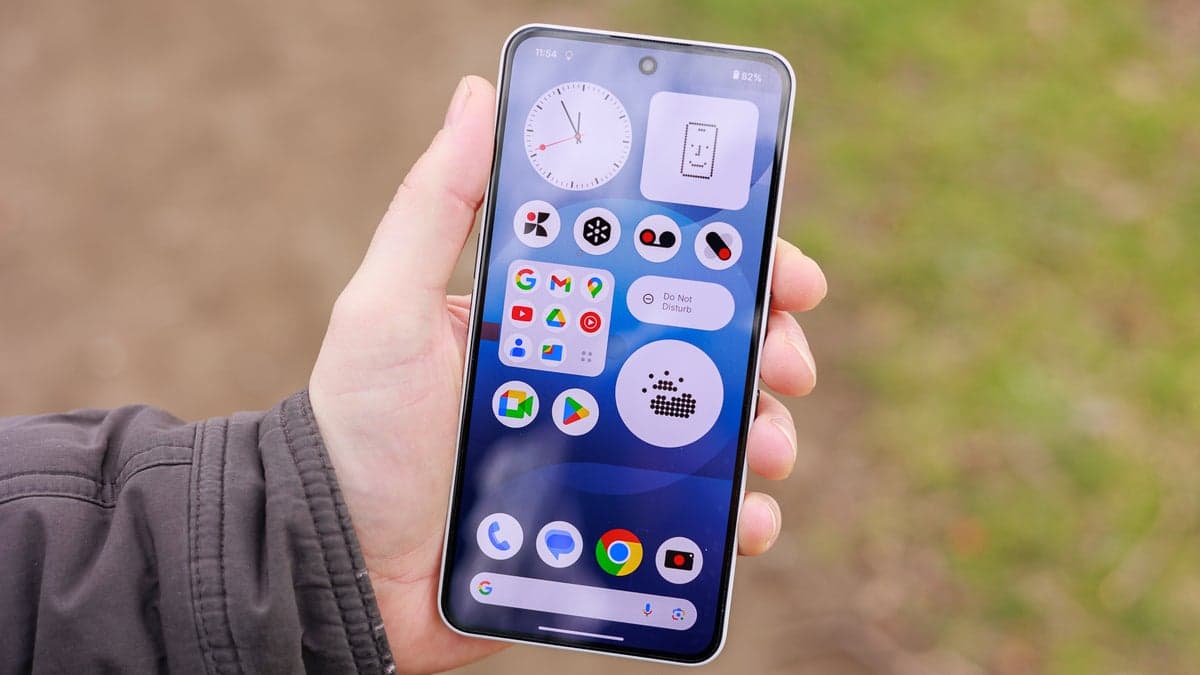
The company clarifies its new opt-in 'Lock Glimpse' feature and why it's needed on some devices.
Nothing users recently expressed concern over a beta test that seemed to introduce advertising on their devices' lock screens. The company has since clarified that the feature, called "Lock Glimpse," is optional and intended for feedback collection, not standard ads. The company further explained the reasons behind these adjustments.
The Nothing community was recently stirred by the discovery. Users in the Nothing OS 4.0 Beta for the Phone (3a) series noticed what appeared to be ads on their lock screens. Given Nothing's emphasis on a clean, ad-free user experience, this caused considerable concern.
Nothing responded with clarification in a community post, stating that building a phone company from the ground up is difficult and costly. Their component costs are higher than those of established companies, and they lack the software revenue streams of larger competitors such as Samsung. They are working with very narrow profit margins.
To sustain growth and avoid raising prices for consumers, especially on mid-range phones, they need to find sustainable revenue streams. This will involve two strategies: first, a few carefully selected pre-installed apps (such as Instagram) on non-flagship devices, which users can uninstall. Second, the "Lock Glimpse" feature that caused the initial alarm.
Nothing insists that this is not standard advertising. Instead, it is an opt-in feature to display content. The company explained that:
It is disabled by default and must be enabled in settings or by swiping left on the lock screen.
It delivers high-quality wallpapers from various categories, as well as timely updates and useful content.
It is fully customizable, allowing users to change categories, refresh content, or disable it entirely.
Nothing confirms that no personal data is shared.
Future versions will allow users to use their own photos with the feature.
The company's transparency is noteworthy. It is rare for a company to openly acknowledge the financial challenges of its operations. However, the situation could be perceived as a slippery slope.
The issue resonated strongly because lock screen advertisements are widely unpopular and are often seen as intrusive. Other companies have attempted similar strategies with negative results. Amazon's "Prime Exclusive" phones, which offered a discount in exchange for lock screen ads, made the phones cheaper but negatively impacted the user experience. Samsung also faced criticism for ads in notifications and native apps, a practice they have reduced.
The fact that the feature is disabled by default makes it more acceptable. As long as users' choices are respected, the situation is reasonable. The company is acknowledging that its less expensive phones will require software support while aiming to maintain a pure experience on flagship models.
While the author prefers a clean lock screen and will likely not use the feature, they appreciate the company's explanation for its implementation.
Nothing is testing potential lock screen ads in its latest beta software.
Nothing expands its Android 16 beta to more of its phones.
"Iconic Phones: Revolution at Your Fingertips," a book celebrating iconic phones from the past 20 years, will be released in a few months.
The book explores the stories of over 20 notable devices and chronicles the mobile revolution. Sign up now for an early-bird discount.
Travel easily with Nomad eSIM and get 25% off.
Use code IPHONE25 for data-only plans & global coverage.
We may earn a commission on purchases.
Check out the offer.
Travel easily with Nomad eSIM and get 25% off.
Use code IPHONE25 for data-only plans & global coverage.
We may earn a commission on purchases.
Check out the offer.
Use code IPHONE25 for data-only plans & global coverage.
We may earn a commission on purchases.
Use code IPHONE25 for data-only plans & global coverage.
We may earn a commission on purchases.