Samsung is planning for 6G technology by addressing the shortcomings of 5G.
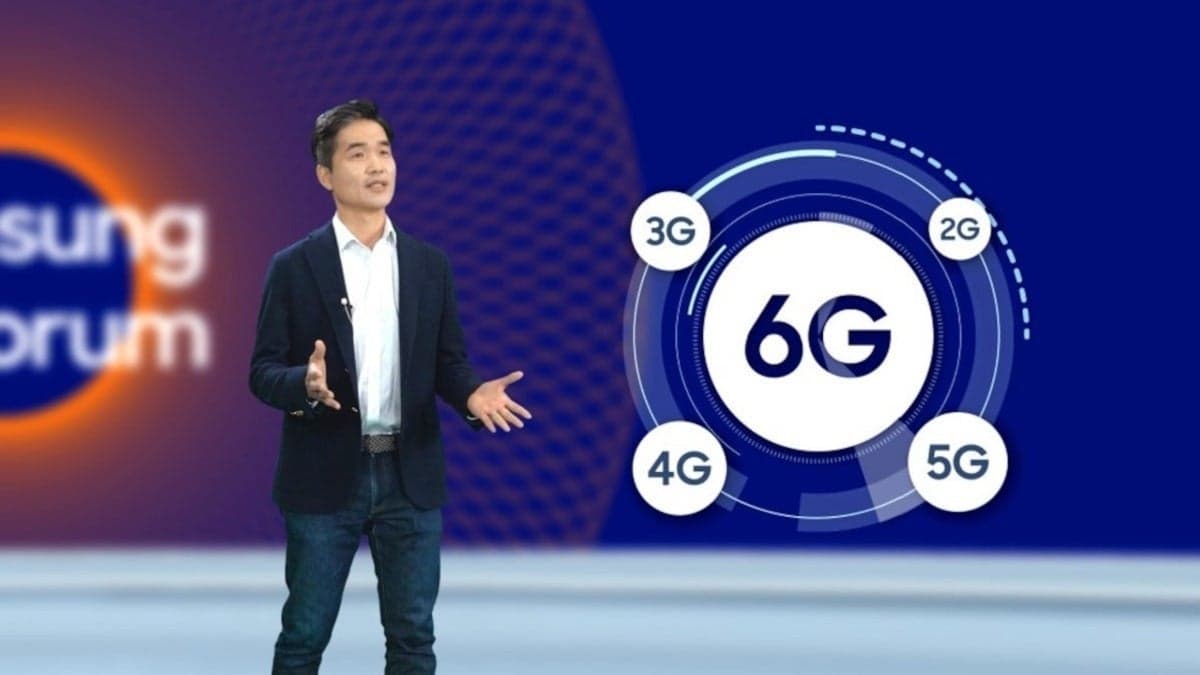
Samsung believes 6G shouldn’t repeat 5G’s mistakes, and that starts with focusing less on the numbers.
At the Global 6G Conference in South Korea, Samsung Research Fellow Lee Ju-Ho shared a message suggesting the mobile industry reflect on the development of 6G and avoid repeating the same errors made with 5G.
Rather than focusing on faster download speeds and lower latency, Samsung suggests the next wireless connectivity generation should prioritize intelligence, dependability, and its practical value for users. Lee Ju-Ho stated that the benefits of 6G "cannot be expressed in numbers," and that the industry should "change the direction of the technology."
The statement is philosophical but could steer the industry correctly. Many consumers have not yet experienced noticeable improvements from 5G, despite marketing and its promotion to manufacturers and users.
Globally, 5G coverage is still inconsistent. Many benefits, such as faster speeds, low latency, and IoT connectivity, are limited to specific regions.
Samsung's message is that 6G requires a new approach to ensure its success.
AI is central to 6G
While 5G focused on faster connections, 6G will emphasize smarter connections.
Lee Ju-Ho stated that AI-native networking would be a key feature of Samsung’s 6G plan. The system needs direct AI integration at the network layer for real-time self-management, optimization, and repair. AI could detect signal interference, adjust frequency use, and optimize power consumption based on user behavior.
This shift towards intelligent efficiency mirrors the broader trend in mobile hardware. Samsung's smartphone division uses AI in camera processing and battery management, and their future development will apply this to network operations.
Samsung envisions 6G technology as a solution for serving aging populations, improving accessibility, and managing autonomous systems like smart vehicles through Integrated Sensing and Communication (ISAC) — a technology combining radar-like spatial awareness with traditional connectivity.
A global race is underway
Samsung is collaborating with Arm on parallel packet processing, an open-source initiative for data throughput up to 1TB/s. This is equivalent to streaming approximately 30 Blu-ray movies per second. The goal is to make it manageable and power-efficient, helping future networks handle dense AI and IoT ecosystems.
Other companies are also developing 6G technology. Qualcomm and MediaTek have announced their 6G plans.
Qualcomm says that 6G standardization will begin in 2025, with Nokia Bell Labs and Rohde & Schwarz, focusing on AI-native protocols. MediaTek is exploring hybrid computing that combines cloud, RAN (Radio Access Network), and device intelligence, while collaborating with NVIDIA and Intel on new low-latency communication methods.
Peking University in China has demonstrated an "all-frequency" chip supporting wireless bands from 0.5GHz to 115GHz. The device operated at 100Gbps, exceeding U.S. 5G speeds by 100 times, allowing developers to create miniaturized 6G transceiver systems.
Samsung's 6G vision
Samsung’s 6G vision stands out not for its ambition, but for its measured approach. The company's engineers recognize that consumers are tired of "x-times-faster" claims. Instead, 6G will likely be promoted for its dependability, power efficiency, and AI-assisted automation, qualities easier to appreciate than gigabit speeds.
The fact that this message was conveyed during the Global 6G Conference indicates that 6G discussions have advanced. Rather than competing on performance alone, tech companies are focusing on networks that think, learn, and adapt. While 5G has potential, 6G will create an optimized network integrating AI systems with human needs.
The first commercial 6G standard is expected by 2029, and early demonstrations will likely occur before then. For now, Samsung aims to ensure that the next "G" is more than just a faster iteration.
"Iconic Phones" is coming this Fall!
Relive the most iconic and unforgettable phones from the past 20 years! Iconic Phones is a stunningly illustrated book we’ve been crafting for over a year—and it’s set to launch in just a couple of months!
Iconic Phones: Revolution at Your Fingertips is the ultimate coffee table book for any phone enthusiast. Featuring the stories of more than 20 beloved devices, it takes you on a nostalgic journey through the mobile revolution that transformed our world. Don’t miss out—sign up today to lock in your early-bird discount!
Samsung is collaborating with Arm on parallel packet processing, an open-source initiative for data throughput up to 1TB/s. This is equivalent to streaming approximately 30 Blu-ray movies per second. The goal is to make it manageable and power-efficient, helping future networks handle dense AI and IoT ecosystems.
Other companies are also developing 6G technology. Qualcomm and MediaTek have announced their 6G plans.
Qualcomm says that 6G standardization will begin in 2025, with Nokia Bell Labs and Rohde & Schwarz, focusing on AI-native protocols. MediaTek is exploring hybrid computing that combines cloud, RAN (Radio Access Network), and device intelligence, while collaborating with NVIDIA and Intel on new low-latency communication methods.
Peking University in China has demonstrated an "all-frequency" chip supporting wireless bands from 0.5GHz to 115GHz. The device operated at 100Gbps, exceeding U.S. 5G speeds by 100 times, allowing developers to create miniaturized 6G transceiver systems.
Samsung’s 6G vision stands out not for its ambition, but for its measured approach. The company's engineers recognize that consumers are tired of "x-times-faster" claims. Instead, 6G will likely be promoted for its dependability, power efficiency, and AI-assisted automation, qualities easier to appreciate than gigabit speeds.
The fact that this message was conveyed during the Global 6G Conference indicates that 6G discussions have advanced. Rather than competing on performance alone, tech companies are focusing on networks that think, learn, and adapt. While 5G has potential, 6G will create an optimized network integrating AI systems with human needs.
The first commercial 6G standard is expected by 2029, and early demonstrations will likely occur before then. For now, Samsung aims to ensure that the next "G" is more than just a faster iteration.
Relive the most iconic and unforgettable phones from the past 20 years! Iconic Phones is a stunningly illustrated book we’ve been crafting for over a year—and it’s set to launch in just a couple of months!
Iconic Phones: Revolution at Your Fingertips is the ultimate coffee table book for any phone enthusiast. Featuring the stories of more than 20 beloved devices, it takes you on a nostalgic journey through the mobile revolution that transformed our world. Don’t miss out—sign up today to lock in your early-bird discount!
Travel Easy with Nomad eSIM – 25% Off
Data-only plans & global coverage - enter code IPHONE25 or sign up to receive the discount automatically
We may earn a commission if you make a purchase
Check Out The Offer
Travel Easy with Nomad eSIM – 25% Off
Data-only plans & global coverage - enter code IPHONE25 or sign up to receive the discount automatically
We may earn a commission if you make a purchase
Check Out The Offer
Data-only plans & global coverage - enter code IPHONE25 or sign up to receive the discount automatically
We may earn a commission if you make a purchase
Data-only plans & global coverage - enter code IPHONE25 or sign up to receive the discount automatically
We may earn a commission if you make a purchase