Samsung might save money by manufacturing its own processors for the Galaxy S26.
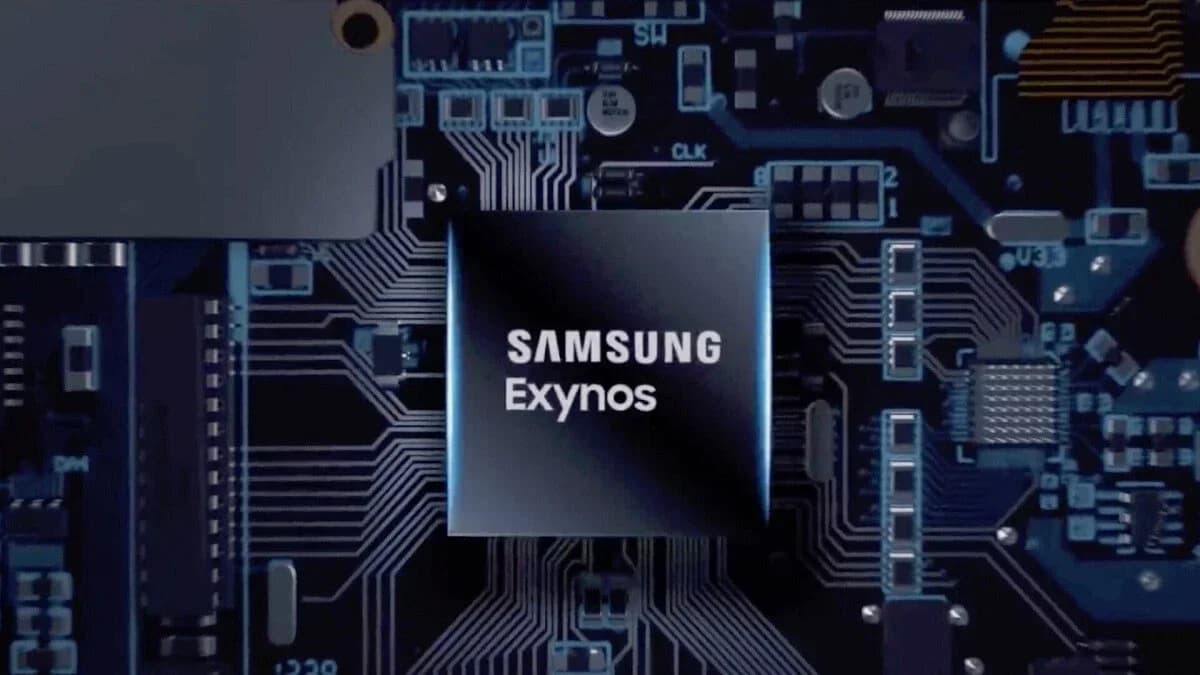
With the Exynos 2600 SoC showing promising signs, the Galaxy S26 series might use some of Samsung's homegrown chipsets.
A recent report from Korea indicates that the application processor (AP) can account for over 30% of a smartphone's total cost. The increased prices for Qualcomm's Snapdragon APs are expected to drive up expenses for manufacturers. This could make the Exynos 2600 a more appealing option for smartphone makers. Samsung's financial data illustrates the potential impact of higher AP costs.
Samsung's latest quarterly report showed that the company spent 10.9275 trillion won ($7.45 billion) on mobile AP purchases during the first three quarters of the year. This represents a 25.5% increase compared to the 8.0751 trillion won ($5.51 billion) spent during the same period last year. The increase is attributed to Samsung's decision to use Qualcomm's AP in some Galaxy S25 models, instead of the initially planned Exynos 2500 AP.
Last year, due to low 3nm yields from Samsung Foundry, which affected the production of the Exynos 2500 APs for the Galaxy S25 series, the company had to use the Snapdragon 8 Elite AP in certain models. This resulted in an additional $400 million expenditure for purchasing the Qualcomm chipsets.
The Galaxy S26 and Galaxy S26+ are projected to utilize the Exynos 2600 in Europe, South Korea, parts of Asia, and other regions. The Snapdragon 8 Elite Gen 5 will power these models in the U.S., Japan, and China. The Galaxy S26 Ultra will use the Snapdragon AP in all markets.
Historically, Exynos APs have been criticized for subpar performance and overheating issues. However, the Exynos 2600 AP is a deca-core chipset manufactured using Samsung Foundry's 2nm GAA process. It uses smaller transistors to enhance transistor density and Gate-All-Around (GAA) transistors, which employ nanosheets to surround all four sides of the channel. This reduces current leakage, boosts drive current, and enables the creation of more efficient and powerful SoCs.
Reportedly, the Exynos 2600 achieved a single-core score of 4,217 and a multi-core score of 13,482 in a benchmark test. This outperformed the Snapdragon 8 Elite Gen 5, which is built by TSMC using its 3nm process, and scored 2,865 and 9,487 in single-core and multi-core tests, respectively. The Exynos 2600's single-core result could be the highest among smartphone SoCs, surpassing Apple's A-series APs. The Exynos 2600's single-core score also matched that of Apple's M5 chip.
Early reports suggest that the Snapdragon 8 Elite Gen 5 chip is experiencing overheating issues, which bodes well for the Exynos 2600. If the Exynos 2600 AP demonstrates strong real-world performance in the Galaxy S26 series next year, other manufacturers might consider incorporating Exynos APs into their flagship phones.
Despite these developments, many consumers still prefer Snapdragon chipsets over the Exynos 2600 in their Galaxy S26 devices, based on previous perceptions of Exynos APs. Fortunately for Samsung, as Snapdragon prices increase and Exynos 2600 AP prices decrease, the company may benefit financially next year by relying less on Snapdragon chips and more on their in-house Exynos processors for their latest flagship smartphones.