Samsung's improved chip production could lead to their Exynos 2600 processor powering the Galaxy S26 and S26+.
With a hike to its 2nm yield, Samsung Foundry should be able to supply enough APs to power the Galaxy S26 and S26+.
Samsung is moving away from FinFET transistors, which they first used in their 14nm mobile processors in 2015, and adopting Gate-All-Around (GAA) transistors. These transistors utilize vertical nanosheets as gates, covering all four sides of the channel. This design minimizes current leakage and enhances drive current, leading to more efficient and powerful chips.
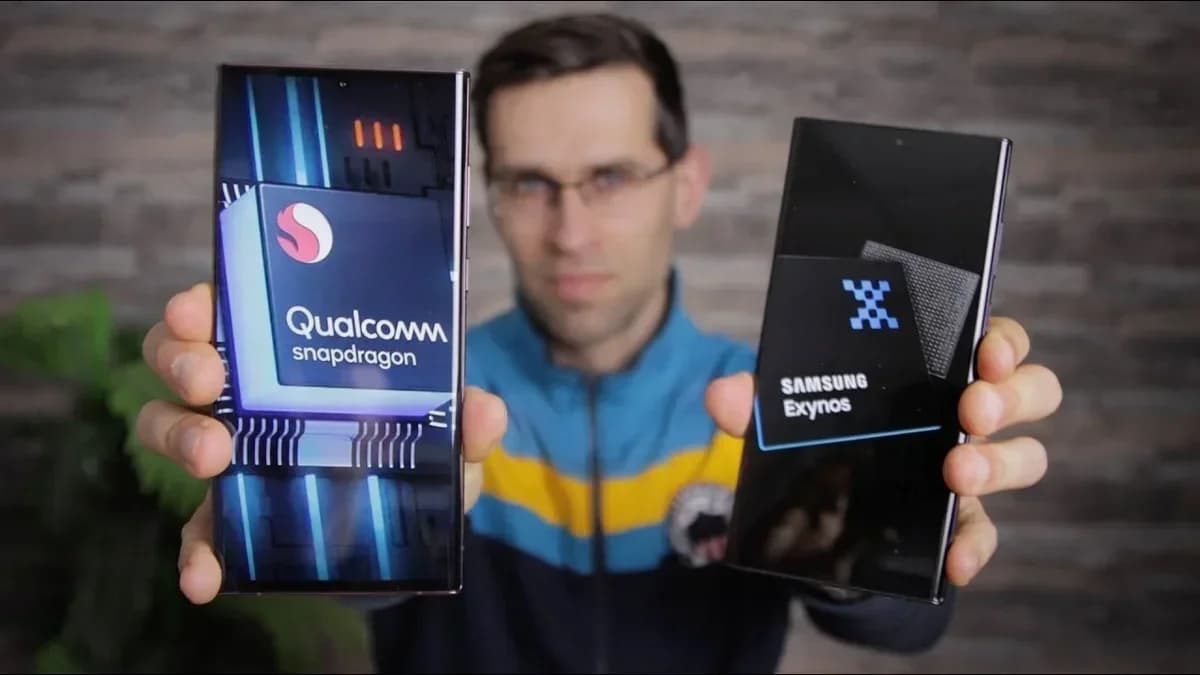
If everything proceeds as expected, the Samsung Galaxy S26 may be the first smartphone to use a 2nm chip. The iPhone was the first to use the 7nm A12 Bionic, the 5nm A14 Bionic, and the 3nm A17 Pro APs. The Galaxy S26 and S26+ might use the Exynos 2600 in Europe and South Korea, while the 3nm Snapdragon 8 Gen 5 Elite AP could power the models in the U.S., China, and Japan. The Galaxy S26 Ultra will exclusively use the Qualcomm SoC across all markets.
How much better is the 2nm Exynos 2600 compared to the 3nm Exynos 2500? Initial projections estimated that 2nm SoCs would deliver:
Up to 12% higher performance compared to 3nm.
Up to 25% improved power efficiency compared to 3nm.
Up to 5% smaller area compared to 3nm.
Samsung's recent data indicates:
Up to 5% higher performance compared to 3nm.
Up to 8% improved power efficiency compared to 3nm.
Up to 5% smaller area compared to 3nm.
Samsung Foundry's 2nm yield has increased from 30% to between 50% and 60%. This improvement allows Samsung Foundry to increase wafer production beyond the previous 15,000 units per month. As a result, Samsung Foundry should be able to provide enough Exynos 2600 processors for Samsung's 2026 flagship devices.
Due to Samsung Foundry's low 3nm yield last year, there were not enough Exynos 2500 chips available for the Galaxy S25 series. Consequently, Samsung had to allocate an extra $400 million to purchase Snapdragon 8 Elite chips for the Galaxy S25 and S25+, which were initially planned to use the Exynos 2500 AP.
Samsung Foundry has secured deals with MicroBT and Canaan, major cryptocurrency mining equipment companies, for 2nm GAA chips. The foundry also has a significant deal with Tesla. While Samsung Foundry held 7.3% of the foundry market in the second quarter of this year, compared to TSMC's 70.2%, profitability is expected in 2027, with a goal to reach 20% market share.
This would be a significant recovery for Samsung Foundry. Several years ago, Qualcomm moved the Snapdragon 8 Gen1 AP from Samsung, revised the specifications, and had TSMC manufacture the Snapdragon 8+ Gen 1. Since then, TSMC has produced all Snapdragon chips. Despite ongoing rumors, Qualcomm has not returned to Samsung Foundry.