SMIC is testing China's first domestically-built immersion lithography machine.
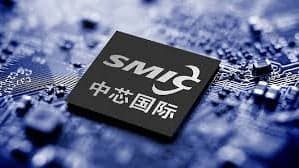
Will this eventually result in SMIC and other Chinese foundries catching up to TSMC?
The extreme ultraviolet lithography (EUV) machine, which is used for creating circuitry on silicon wafers, is the most critical piece of chipmaking equipment that is restricted from being sold to China. This equipment is used in the production of 7nm chips, and the newest models enable foundries to reduce process nodes to 2nm. SMIC, China's leading foundry, still uses older technology like deep ultraviolet lithography (DUV). Some DUV machines, including immersion DUVs, are banned in China because they contain parts manufactured in the U.S.
There has been ongoing discussion about China's potential to overcome the EUV ban by creating its own machine. Several years ago, there were rumors that Huawei was seeking a patent for components of a Chinese-made EUV machine, but no progress has been reported. Currently, SMIC is reportedly testing the first domestically produced DUV machine in China, which was assembled by Shanghai Yuliangsheng Technology Co., a company affiliated with Huawei.
According to the Financial Times, the Yuliangsheng DUV utilizes immersion lithography to produce chips using the 28nm process. Traditional lithography involves a gap of air between the projection lens and the wafer, which can decrease resolution and result in a less sharp image on the wafer. Higher resolution machines are able to create thinner lines, which is important for manufacturing chips that contain billions of transistors.
Immersion lithography replaces the air gap with a liquid, usually purified water, which increases the numerical aperture (NA) and enables the creation of more complex circuitry patterns on the wafer. The wafer is the base of a chip, as chips are built in layers on top of it.
The Yuliangsheng DUV uses parts that are primarily made in China, although some components are imported. The company intends to eventually manufacture the machine using only domestically sourced parts, which would allow SMIC to acquire immersion DUV equipment without being subject to U.S. sanctions. The machine being tested by SMIC is similar to ASML's Twinscan NXT:1950i, which was released in 2008. It was designed for single exposures that could be used to produce 32nm chips.
While the Yuliangsheng DUV can create patterns in a single exposure that can be used to build a 28nm component, the immersion DUV could potentially be used to manufacture chips using SMIC's 7nm and 5nm nodes by using multiple patterns. However, this multi-patterning method is more expensive and can cause overlay errors, which occur when the layers are misaligned. Pitch walking is another issue that can lead to inconsistent spacing between features. Using multiple patterns will likely result in lower yields and increase the cost of the component.
Ultimately, SMIC aims to be able to obtain a domestically produced High NA EUV for itself and other Chinese foundries. If that happens, SMIC could theoretically manufacture 2nm chips and compete with TSMC and Samsung Foundry.
In 2023, SMIC and Huawei surprised the smartphone market by producing the 7nm Kirin 9000S for the Huawei Mate 60 Pro. This was the first new Kirin application processor (AP) since the Kirin 9000 AP-powered Mate 40 series in 2020, and it restored native 5G capability to Huawei flagship phones. Due to U.S. sanctions, Huawei-powered flagships such as the Mate 50, P50, and P60 used older Snapdragon chipsets made by Qualcomm that were modified to disable 5G.
Since then, Huawei has been attempting to improve its chips by designing internal changes to its silicon. However, significant progress has not been made, and China will need to develop its own lithography machines to achieve this. SMIC is anticipated to begin using the Yuliangsheng DUV for its 28nm production by 2027.
Coming Soon: "Iconic Phones: Revolution at Your Fingertips" is a new book that explores the technological revolution of the 21st century. More details to follow.