Steve Jobs' demanding personality pushed Corning to create the original iPhone's display.
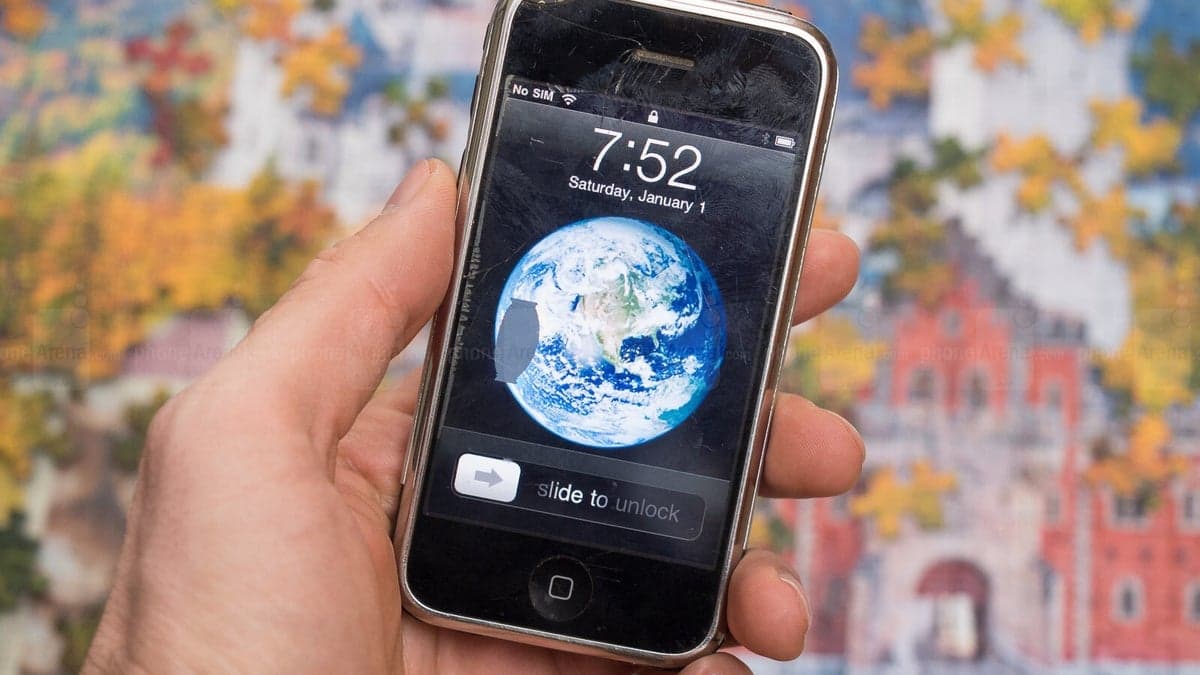
Apple originally planned to use a plastic display for the first-generation iPhone.
Many have wondered if Steve Jobs understood the significance of the iPhone. The first touchscreen smartphone undeniably transformed society. In cities such as New York, many people can be seen constantly looking at their phones. Its impact is comparable to the business world's adoption of the BlackBerry pager, though the iPhone's influence is much greater.
Originally, the iPhone was slated to feature a plastic screen, as used in the prototypes. However, Jobs was unhappy with the scratches caused by items like keys. He needed to find a company to provide scratch-resistant glass for the initial iPhone model.
Corning CEO Wendell Weeks discussed Corning's involvement in the iPhone's production on Fortune's "Leadership Next" podcast. Weeks had pitched Apple on a smartphone projector using a green laser. At the time, smartphones were devices like the Motorola Q and Samsung BlackJack.
Jobs responded negatively, calling it "the dumbest idea I’ve ever effing heard in my life." However, he then realized Corning might be able to provide a solution for the iPhone's display. He requested mass production of scratch-resistant glass within six months, as the iPhone was scheduled to launch in January 2007.
Weeks told Jobs about Gorilla Glass, a new material Corning had developed. However, Corning lacked the facilities for large-scale production. Corning's board suggested Weeks find another supplier, as Corning couldn't meet Apple's demands alone. Jobs insisted Corning would handle the entire order, but Weeks said it was impossible.
According to the story, Jobs then challenged Weeks, asking if he knew what his problem was. Jobs stated, "You’re afraid...I’m going to launch the biggest product in history, and I’m not going to be able to do it because you failed, and I’m going to eviscerate you."
Jobs continued, "You are putting your reputation [first]...You’re worried about you looking bad, and you’re keeping your people from greatness." Weeks conceded that Jobs was correct. Corning then repurposed its Cold War-era facility in Harrodsburg, Kentucky, to manufacture the glass for the original iPhone.
In August, Apple pledged $2.5 billion to Corning, enabling them to produce all iPhone and Apple Watch cover glass at the Kentucky facility. Apple CEO Tim Cook called it "The largest and most advanced production line ever created for smartphone glass." He added that every new iPhone and Apple Watch worldwide would contain glass made in Kentucky.
Weeks noted that Jobs' comment spurred Corning to create a business that has generated billions in revenue. Weeks said, "Most of us view risk as all the ways that that you personally can look like an idiot." Steve Jobs, Weeks noted, "looks at things very straightforwardly and is damn fearless."
"Iconic Phones: Revolution at Your Fingertips" is coming out soon.
Travel Easy with Nomad eSIM – 25% Off
Data-only plans & global coverage - enter code IPHONE25 or sign up to receive the discount automatically
We may earn a commission if you make a purchase
Check Out The Offer
Travel Easy with Nomad eSIM – 25% Off
Data-only plans & global coverage - enter code IPHONE25 or sign up to receive the discount automatically
We may earn a commission if you make a purchase
Check Out The Offer
Data-only plans & global coverage - enter code IPHONE25 or sign up to receive the discount automatically
We may earn a commission if you make a purchase
Data-only plans & global coverage - enter code IPHONE25 or sign up to receive the discount automatically
We may earn a commission if you make a purchase