Taiwan has declined a request to move half of its chip production to the United States.
U.S. Commerce Secretary Howard Lutnick proposed a huge shift in chip production that Taiwan rejected.
Taiwanese Vice Premier Cheng Li-chiun stated on Wednesday that a "50-50" division of chip production between Taiwan and the U.S. was not a topic during recent trade discussions. Cheng said that her discussions with U.S. officials were centered on tariffs, including the possibility of lower rates and exemptions from tariff stacking. Tariff stacking involves the imposition of multiple tariffs on a product as it goes through different production stages across borders.
U.S. Commerce Secretary Howard Lutnick said that the U.S. had conversations with Taiwan about the importance of the U.S. producing 50% of chips. Lutnick said that his proposal to Taiwan was to reach a 50-50 split in production. Lutnick noted recently that 95% of the chip demand in the U.S. is fulfilled by Taiwanese-made chips.
Speaking to reporters at Taiwan Taoyuan International Airport, Cheng refuted Lutnick's proposition, saying that their team has not committed to a "50-50" chip production split. Eric Chou, chairman of Kuomintang, Taiwan's main opposition party, considers Lutnick's suggestion an insult, calling it an act of exploitation. He added that Taiwan and TSMC can't be sold out, and Taiwan’s silicon shield cannot be undermined.
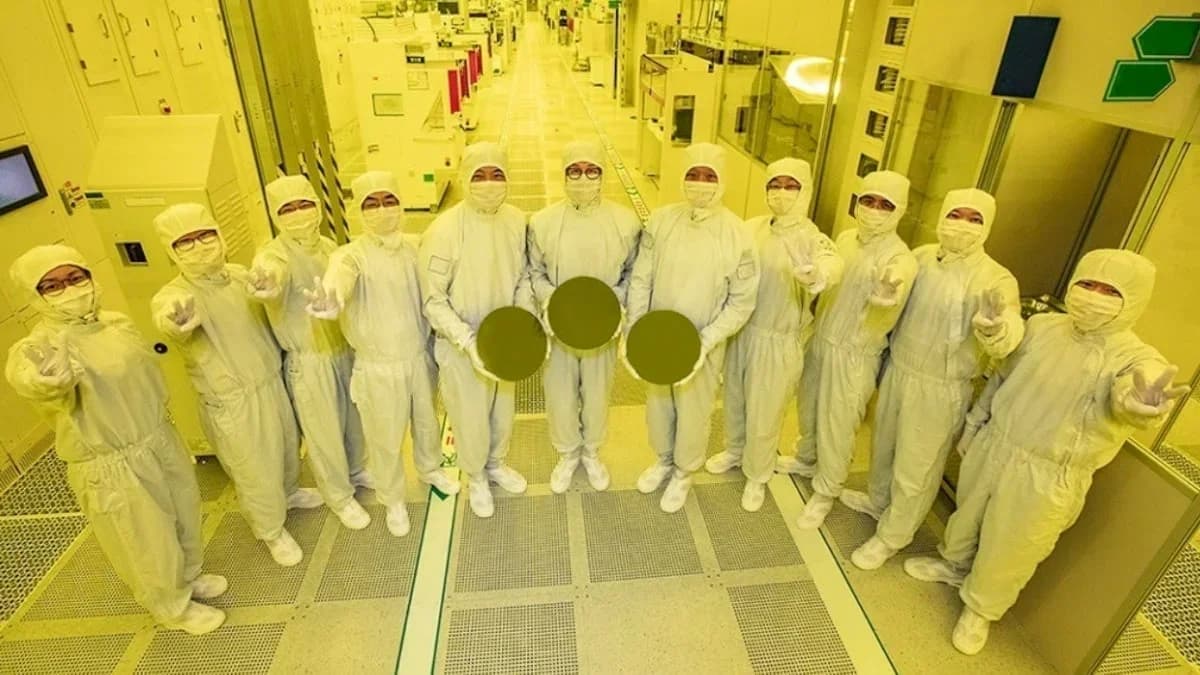
According to the silicon shield theory, Taiwan's dominance in chip production would protect it from a Chinese invasion because the U.S., Europe, and Japan depend on Taiwan. Taiwan's leaders are concerned that giving up a large portion of its chip production capacity would result in the loss of this protection. TSMC reportedly has measures in place to prevent China from seizing its facilities in the event of an invasion, including a scorched earth policy that would make the facilities unusable. This could entail damaging the cleanrooms required for chip production.
Arisa Liu, a director at the Taiwan Institute of Economic Research, said that Lutnick's request is more detrimental than beneficial to Taiwan. She told CNN that substantial investments and shifts in capacity toward the U.S. would weaken Taiwan's ecosystem and compromise the integrity of its supply chain.
During Donald Trump's presidency, a major achievement was getting TSMC to construct fabs in Phoenix. The Trump administration had concerns at the time, most of which still exist. One aim is for the U.S. to achieve self-sufficiency in the chip sector. Another worry is that China, which also wants to be self-sufficient in chip manufacturing, views TSMC as a target to seize by invading Taiwan.
Joe Biden also signed the CHIPS and Science Act in 2022. The legislation made it economically feasible for TSMC to build foundries in the U.S. by providing $52.7 billion in subsidies, grants, and tax credits for domestic semiconductor manufacturing.
TSMC has pledged to invest $65 billion in building multiple fabrication plants in Arizona. The initial fab is operational and producing 4nm chips. By 2028-2029, the foundry anticipates producing 2nm integrated circuits in the U.S., which could turn the country into a global hub for chip manufacturing.
"Iconic Phones: Revolution at Your Fingertips" is a coffee table book for tech enthusiasts that explores the technological revolution of the 21st century.
Travel Easy with Nomad eSIM – 30% Off
Data-only plans & global coverage – use code IPHONEARENA30
We may earn a commission if you make a purchase
Check Out The Offer
Travel Easy with Nomad eSIM – 30% Off
Data-only plans & global coverage – use code IPHONEARENA30
We may earn a commission if you make a purchase
Check Out The Offer
Data-only plans & global coverage – use code IPHONEARENA30
We may earn a commission if you make a purchase
Data-only plans & global coverage – use code IPHONEARENA30
We may earn a commission if you make a purchase