The Exynos 2600 chip reportedly performs similarly to Apple's M5 in benchmark tests.
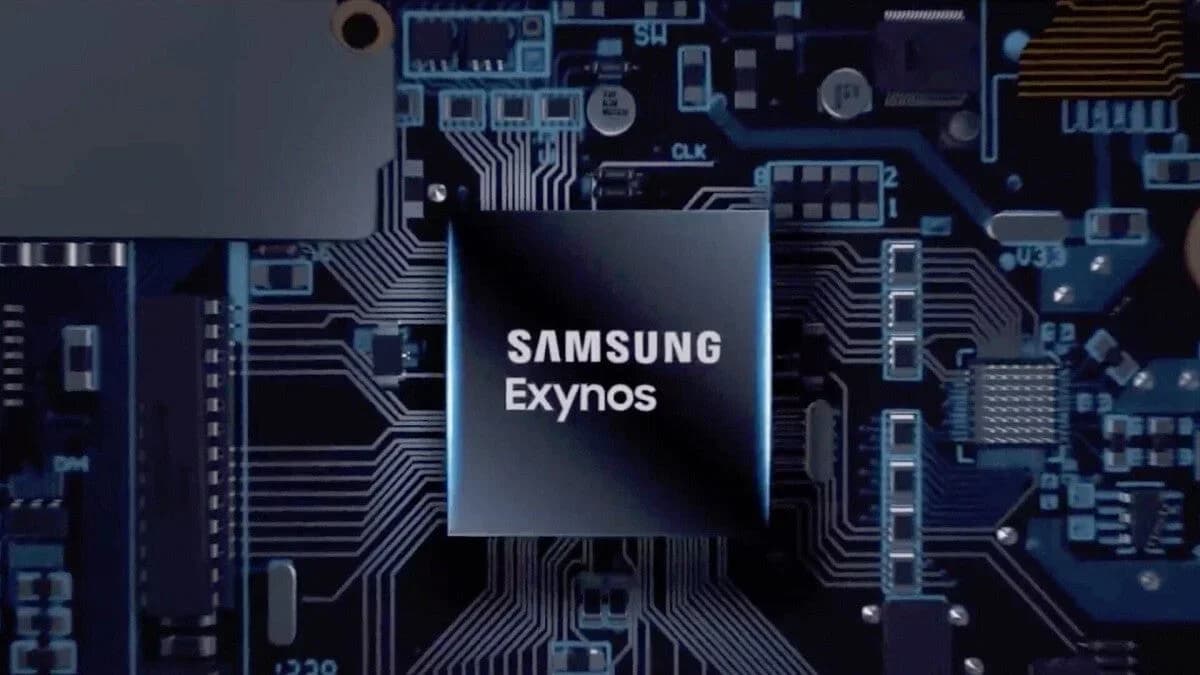
The 2nm deca-core AP from Samsung allegedly generated an amazing Geekbench result.
The Galaxy S26 series for the U.S., China, and Japan may exclusively use the Snapdragon 8 Elite Gen 5 for Galaxy. Previously, there would have been skepticism if a Galaxy S Ultra used an Exynos chip. Samsung has seemingly made great improvements to this chipset. Utilizing a 2nm process and Gate-All-Around (GAA) transistors, current leakage is prevented, and drive current improves. The chip is expected to be more powerful and energy efficient as a result.
The Exynos 2600 contains a deca-core CPU using a 1 + 3 + 6 cluster configuration. The Prime Core is clocked at 4.20GHz, while three performance cores are clocked at 3.56GHz. The remaining six cores have a clock speed of 2.76GHz. A user on "X," @lafaiel, posted a Geekbench 6 score for the Exynos 2600, showing a single-core score of 4,217 and a multi-core score of 13,482. This is an impressive result, exceeding prior leaked scores of 3,455 and 11,621.
These scores should be viewed with caution, as they aren't currently found in Geekbench's database, suggesting they may have been removed, fabricated, or never conducted. If accurate, the single-core performance would rival Apple's M5 chip, potentially leading the smartphone SoC category, which Apple's A-series chips have typically dominated.
If the score is valid, the Exynos 2600 outperforms the Snapdragon 8 Elite Gen 5, which achieved single-core and multi-core scores of 2,865 and 9,487, respectively. This could benefit Samsung Foundry, currently second to TSMC in contract manufacturing. In the second quarter, TSMC held 70.2% of the foundry market, while Samsung Foundry held 7.3%.
Using the Exynos 2600 for the Galaxy S26 could save Samsung money. Due to low yields of the Exynos 2500, Samsung spent an extra $400 million on Qualcomm's Snapdragon 8 Elite for Galaxy to replace the Exynos 2500 in most regions.
Yields at Samsung Foundry are reportedly much improved. While unconfirmed by Samsung, yield issues became evident in 2022 when Qualcomm moved its Snapdragon 8 Gen 1 production to TSMC. Subsequently, Qualcomm launched the Snapdragon 8+ Gen 1 with a slight design change. Since then, TSMC has been Qualcomm's sole manufacturer for flagship application processors.
It is difficult to compare the Exynos 2600 to Apple's M5. Samsung discontinued its custom core development team in 2019-2020 because its "Mongoose" cores caused Exynos chips to underperform Snapdragon chips with poor efficiency. The M5 scored 4,263 in single-core tests, 1.09% higher than the Exynos 2600. Its multi-core score of 17,862 was 32% higher than the Exynos 2600.
Exynos processors have progressed considerably since 2020. That year, Samsung angered its South Korean Exynos team by releasing the Galaxy S20 in South Korea with Qualcomm's Snapdragon 865. Progress has been gradual, but the Exynos 2600 may have finally elevated Samsung's application processor to the level of its memory and imaging products.