Using iPhone chips in MacBooks could be a smart move for Apple.
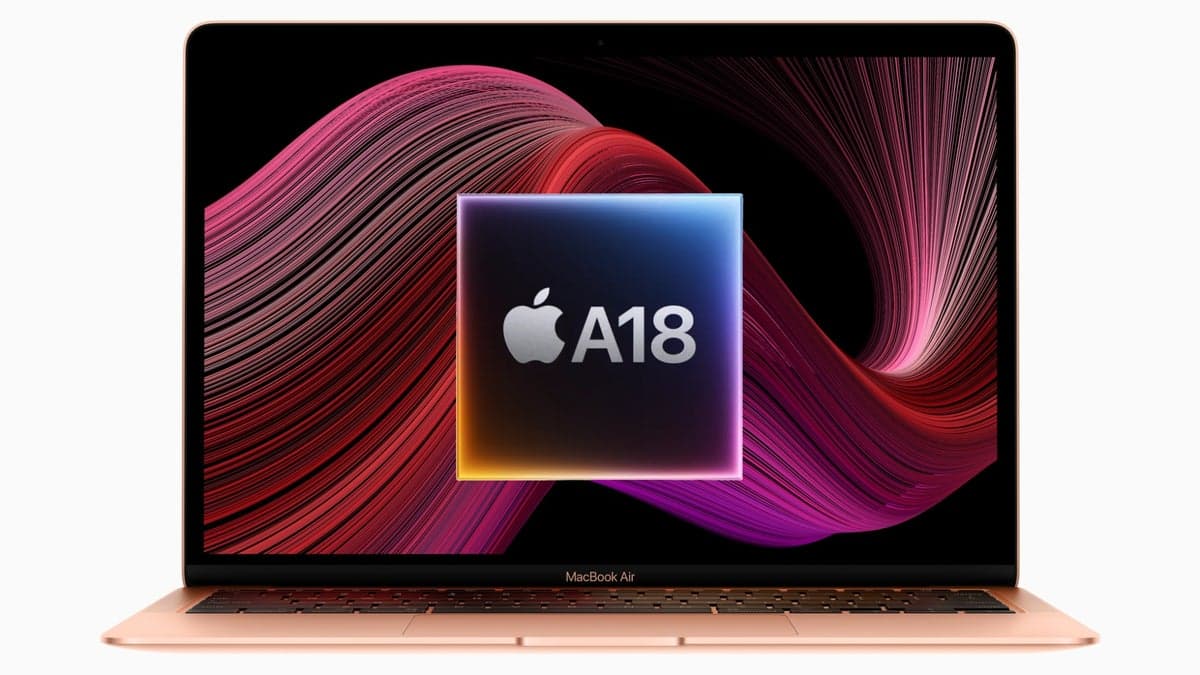
Desktop chip in a tablet and a phone chip in a laptop? Has Apple lost the plot?
To the untrained eye, it might seem unusual, but the traditional idea of separate "desktop-grade" and "mobile-only" processors no longer holds true in today's chip industry, a fact that Apple is taking advantage of.
This rumored affordable MacBook is expected to have a lower-quality LCD screen, slightly smaller than 13.6 inches, and a price under $1,000. Paired with macOS, it would offer more capability than even an iPad Pro with a Magic Keyboard, which uses the more limited iPadOS.
Apple's processors share a fundamental design. Despite different names, Apple's A-series chips, typically in iPhones and lower-end iPads, and the M-series chips for Macs and iPad Pro models have significant similarities. They both belong to the Apple Silicon family, use the ARM architecture, and M-series chips often build upon existing A-series designs.
Despite different names, Apple's A-series chips, typically in iPhones and lower-end iPads, and the M-series chips for Macs and iPad Pro models have significant similarities. They both belong to the Apple Silicon family, use the ARM architecture, and M-series chips often build upon existing A-series designs.
The original Apple Silicon chip, the M1, was essentially a modified A14X chip with additional performance cores, slightly faster clock speeds, and extra features for laptops.
The latest M5 chip follows this pattern, resembling a more powerful A19 Pro, found in the current iPhone 17. Consequently, devices using the M5 and A19 Pro chips show almost identical CPU and GPU performance gains compared to previous models.
Based on these trends, the future M6 chip will likely follow the A20 Pro chipset expected in next year's iPhones.
While M-series chips are more powerful and have different power characteristics than the A-series chips designed for efficiency, and can support more external displays, the core design of Apple's two processor lines is very similar.
The distinction between mobile and desktop chips began to blur when Apple introduced the M1 chip in the 5th generation iPad Pro in 2021.
While the idea of Apple mixing chips and devices might seem strange, the recent rumors of a low-cost MacBook powered by an iPhone chip appear to be a practical solution to battery life concerns.
Although M chips suit any MacBook, their capabilities are often excessive for the average user, with much of the performance going unused when running basic tasks.
A MacBook Air using an A-series chip would be ideal for students and light users, who mainly use a web browser.
Such a device could offer impressive battery life because of its efficiency and thermal management. This would complement the MacBook Air's passive cooling and larger battery, further improving performance and efficiency.
Potential drawbacks include limited external monitor support, possibly with only basic screen mirroring.
So, while Pro iPads use M-series chips, entry-level MacBooks might use A-series chips, which is the opposite of what one might expect.
However, this makes sense, as each device family targets a different audience. Pro iPads are for professional users who need the extra performance, while regular users who want a good laptop with long battery life may not need the more powerful processors.
Whether this low-cost MacBook uses an A18 Pro or A19 Pro chip, it will likely be popular, and the lack of a high-end Apple Silicon chip may not be a problem for many users.
Nomad eSIM offers 25% off eSIM data plans & global coverage with code IPHONE25. Sign up required.
Nomad eSIM offers 25% off eSIM data plans & global coverage with code IPHONE25. Sign up required.
25% off eSIM data-only plans & global coverage - enter code IPHONE25, sign up required
25% off eSIM data-only plans & global coverage - enter code IPHONE25, sign up required